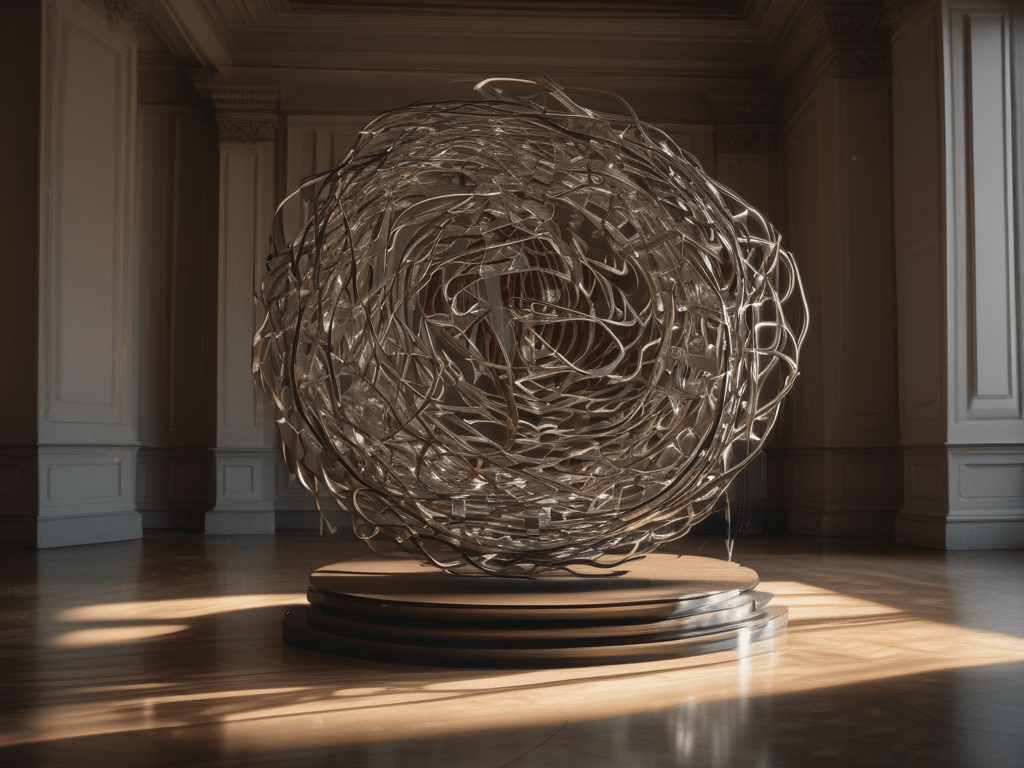
Introduction to Kinetic Art and Animation
Kinetic art is an art form that involves motion, either real or perceived, to engage viewers dynamically. Unlike static art forms, kinetic art relies on movement to capture the observer’s attention and create an interactive experience. This movement can be mechanical, optical, or virtual, allowing artists to explore the fourth dimension—time—in their works.
Historically, kinetic art has roots in the early 20th century, with artists like Alexander Calder and Jean Tinguely pioneering this genre. Calder’s mobiles, delicate structures suspended in air and designed to move with the slightest breeze, revolutionized the concept of sculpture by introducing motion as a fundamental element. Jean Tinguely took a different approach with his mechanical sculptures that often self-destructed, commenting on the impermanence and constant change in life.
In contemporary practice, kinetic art has expanded to include digital and interactive forms, blending technology with traditional artistic techniques. This integration not only enhances the visual appeal but also deepens the engagement between the artwork and the viewer, making the experience more immersive and memorable.
Types of Kinetic Art
Sculptures
Kinetic sculptures can range from small, intricate mobiles to large, complex installations. Alexander Calder’s mobiles are a quintessential example of kinetic sculptures, where balance and air currents bring life to otherwise static forms. Stabiles, on the other hand, are static sculptures that imply movement through their dynamic forms and structures.
Jean Tinguely’s machines are another notable example, often designed to perform specific actions or to self-destruct. These works highlight the mechanical and ephemeral nature of kinetic art, challenging the notion of permanence in sculpture.
Installations
Large-scale kinetic installations often occupy public spaces, creating immersive environments that interact with viewers on a grand scale. These installations can incorporate various elements such as light, sound, and mechanical motion to create a holistic sensory experience. For instance, the “Rain Room” by Random International allows visitors to walk through a simulated rainstorm without getting wet, thanks to precise motion sensors that stop the rain around the person.
Such installations transform spaces into dynamic environments, making the audience an integral part of the artwork. They also often explore themes of nature, technology, and human interaction, making the experience both visually and intellectually stimulating.
Virtual Kinetic Art
With the advent of digital technology, virtual kinetic art has emerged as a significant field. This form of art uses digital tools to create the illusion of movement. Artists can create dynamic visuals that change based on viewer interaction or pre-set algorithms, offering endless possibilities for creativity.
An example of virtual kinetic art is interactive projections that change based on audience movements, creating an ever-evolving artwork that never looks the same twice. These digital pieces can be experienced through screens or augmented reality (AR) setups, making the art accessible to a broader audience and allowing for more complex and immersive experiences.
Techniques for Adding Motion
Mechanical Systems
Mechanical systems are foundational in kinetic art, employing gears, pulleys, and motors to create movement. These systems can range from simple to highly complex, depending on the desired effect. Alexander Calder’s mobiles, which move with air currents, and Jean Tinguely’s self-destructing machines are classic examples of mechanical kinetic art.
Modern kinetic artists often use microcontrollers and robotics to enhance their creations. By integrating sensors and programmable components, artists can create sculptures that react to environmental stimuli or perform predetermined actions, adding layers of interactivity and complexity.
Optical Illusions
Optical illusions are another technique used in kinetic art to create the perception of movement. Moiré patterns, for example, are used to create visual effects that seem to move as the viewer changes their perspective. Anamorphic art, which looks distorted from a standard viewpoint but reveals a coherent image from a specific angle, also leverages the principles of optical illusion.
Artists like Bridget Riley have mastered the use of optical illusions, creating pieces that seem to vibrate and shift as viewers move around them. These techniques challenge viewers’ perception and invite them to engage with the artwork more actively.
Light and Shadow
Light and shadow play are powerful tools in kinetic art. By manipulating light sources and shadow-casting objects, artists can create dynamic scenes that change with the lighting conditions. Kinetic light sculptures by artists like Anthony McCall and Olafur Eliasson explore the interaction between light, shadow, and space.
For example, McCall’s “solid light” works use beams of light in darkened rooms to create three-dimensional shapes that viewers can interact with, walking through the light as if it were a physical form. Eliasson’s installations often incorporate natural elements, like water and mist, to create ephemeral and changing environments that highlight the transient nature of light and shadow.
Kinetic Typography
Kinetic typography combines text with motion to create dynamic visual narratives. This technique is widely used in advertising, music videos, and film title sequences, where moving text can convey emotions, themes, and information more effectively than static text.
In advertising, kinetic typography can draw attention and communicate messages quickly and memorably. Music videos often use kinetic text to synchronize lyrics with music, enhancing the auditory and visual experience. Title sequences in films use this technique to set the tone and mood, drawing viewers into the story right from the start.
A notable example of kinetic typography is the opening sequence of the film “Catch Me If You Can,” which uses animated text to introduce characters and plot elements in a playful and engaging way. For those interested in learning more about this technique, a popular YouTube tutorial offers a step-by-step guide on creating kinetic typography animations using Adobe After Effects.
Interactive Kinetic Art
Sensor-Based Art
Sensor-based kinetic art reacts to environmental changes such as proximity, touch, or sound. These artworks use sensors to detect audience interaction, triggering movements or changes in the piece. This interaction makes the viewer an active participant, creating a personalized experience.
An example of sensor-based art is “Wave” by Daniel Palacios, where a suspended rope moves in response to nearby sound waves. This kinetic sculpture transforms invisible sound energy into visible motion, providing a tangible representation of sound.
Generative Art
Generative art uses algorithms to create dynamic visuals in real-time. These artworks evolve based on predefined rules or input data, offering endless variations. By integrating motion into generative art, artists can create pieces that continuously change and adapt, offering a unique experience each time.
For instance, a generative art installation might use real-time weather data to alter its appearance, reflecting changes in temperature, wind, and precipitation through motion and color shifts. This approach not only adds a dynamic element to the art but also connects it to the external environment.
Augmented Reality (AR)
Augmented Reality enhances kinetic experiences by overlaying digital elements onto the physical world. AR kinetic art can interact with viewers through their smartphones or AR glasses, providing an immersive experience that combines real and virtual elements.
An AR artwork might appear static when viewed normally but come to life with animation when seen through an AR app. This blend of physical and digital worlds opens up new possibilities for creating interactive and engaging art experiences that are accessible to a wider audience.
Famous Kinetic Artists
Chris Burden
Chris Burden is known for his kinetic sculptures and performance art. His work “Metropolis II,” a large-scale kinetic sculpture, represents a bustling city with thousands of cars moving through an intricate system of roads and tracks. This piece not only captures the energy of urban life but also comments on the complexities and chaos of modern society.
Nam June Paik
Nam June Paik is a pioneer of video art and interactive installations. His work often incorporates television sets, video cameras, and electronic imagery, creating dynamic pieces that explore the intersection of art and technology. Paik’s innovative use of media and motion has had a lasting impact on the field of kinetic art.
Rebecca Horn
Rebecca Horn is renowned for her poetic kinetic sculptures. Her works often feature delicate movements and interactions, exploring themes of balance, tension, and transformation. Horn’s installations invite viewers to experience the subtle interplay between motion and stillness, creating a sense of intimacy and contemplation.
Case Studies and Inspirational Examples
“Metropolis II” by Chris Burden
“Metropolis II” is a large-scale kinetic sculpture that depicts a bustling cityscape with over 1,000 cars moving through an intricate network of roads. This installation captures the frenetic energy of urban life and explores themes of congestion, speed, and modernity. Burden’s meticulous attention to detail and dynamic use of motion make “Metropolis II” a captivating example of kinetic art.
“Rain Room” by Random International
The “Rain Room” by Random International is an immersive installation that allows visitors to walk through a simulated rainstorm without getting wet. Motion sensors detect the presence of visitors and stop the rain around them, creating a surreal experience that blends technology with nature. This installation highlights the potential of kinetic art to create interactive and thought-provoking experiences.
“Wave” by Daniel Palacios
“Wave” by Daniel Palacios is a kinetic sculpture that uses a suspended rope to visualize sound waves. The rope moves in response to nearby sounds, transforming invisible sound energy into visible motion. This piece explores the relationship between sound and movement, providing a tangible representation of auditory phenomena.
Tools and Resources
Processing
Processing is a popular programming environment for creating generative art and interactive installations. It provides a simple syntax and powerful graphics capabilities, making it ideal for artists and designers. Processing can be used to create kinetic animations, interactive visuals, and real-time data visualizations.
Adobe After Effects
Adobe After Effects is widely used for creating kinetic typography and motion graphics. It offers a range of tools for animating text and graphics, allowing designers to create dynamic and engaging visual content. After Effects is particularly popular for creating title sequences, advertisements, and music videos.
Unity
Unity is a powerful platform for creating 3D interactive experiences. It supports a wide range of features, including physics simulations, real-time rendering, and VR/AR integration. Unity is ideal for creating complex kinetic installations, virtual art experiences, and interactive games.
Conclusion
Kinetic art and animation have profoundly impacted contemporary aesthetics, offering new ways to engage and interact with art. By incorporating motion, artists can create dynamic and immersive experiences that captivate audiences and challenge traditional notions of art. The tools and techniques available today make it easier than ever to explore this exciting field, encouraging artists to experiment and innovate with their own kinetic creations.
FAQ
What is kinetic art?
- Kinetic art involves motion, either real or perceived, to engage viewers dynamically.
Who are some famous kinetic artists?
- Notable kinetic artists include Alexander Calder, Jean Tinguely, Chris Burden, Nam June Paik, and Rebecca Horn.
How is kinetic art created?
- Kinetic art can be created using mechanical systems, optical illusions, light and shadow play, and digital technologies.
What is kinetic typography?
- Kinetic typography combines text with motion to create dynamic visual narratives, often used in advertising, music videos, and films.
How does sensor-based kinetic art work?
- Sensor-based kinetic art reacts to environmental changes like proximity, touch, or sound, using sensors to detect interactions.
What tools are used for creating kinetic art?
- Tools include Processing, Adobe After Effects, and Unity, among others.
What is generative art?
- Generative art uses algorithms to create dynamic visuals in real-time, often incorporating motion and interactivity.
Can kinetic art be interactive?
- Yes, kinetic art can be interactive, responding to viewer interactions and environmental changes.
What is the “Rain Room”?
- The “Rain Room” by Random International is an immersive installation that allows visitors to walk through a simulated rainstorm without getting wet.
How does augmented reality enhance kinetic art?
- Augmented reality overlays digital elements onto the physical world, enhancing kinetic experiences and making them more immersive.
What is “Metropolis II”?
- “Metropolis II” by Chris Burden is a large-scale kinetic sculpture depicting a bustling cityscape with moving cars and tracks.
What is the significance of motion in art?
- Motion adds a dynamic element to art, engaging viewers and creating interactive experiences.
What are the benefits of kinetic art?
- Benefits include enhanced viewer engagement, interactive experiences, and the ability to explore themes of time and movement.
What challenges do kinetic artists face?
- Challenges include technical complexity, maintenance of mechanical systems, and ensuring smooth and reliable motion.
How can I start creating kinetic art?
- Begin by learning basic principles of motion and mechanics, experiment with tools like Processing and Unity, and explore online tutorials and resources.
 Visual Alchemist