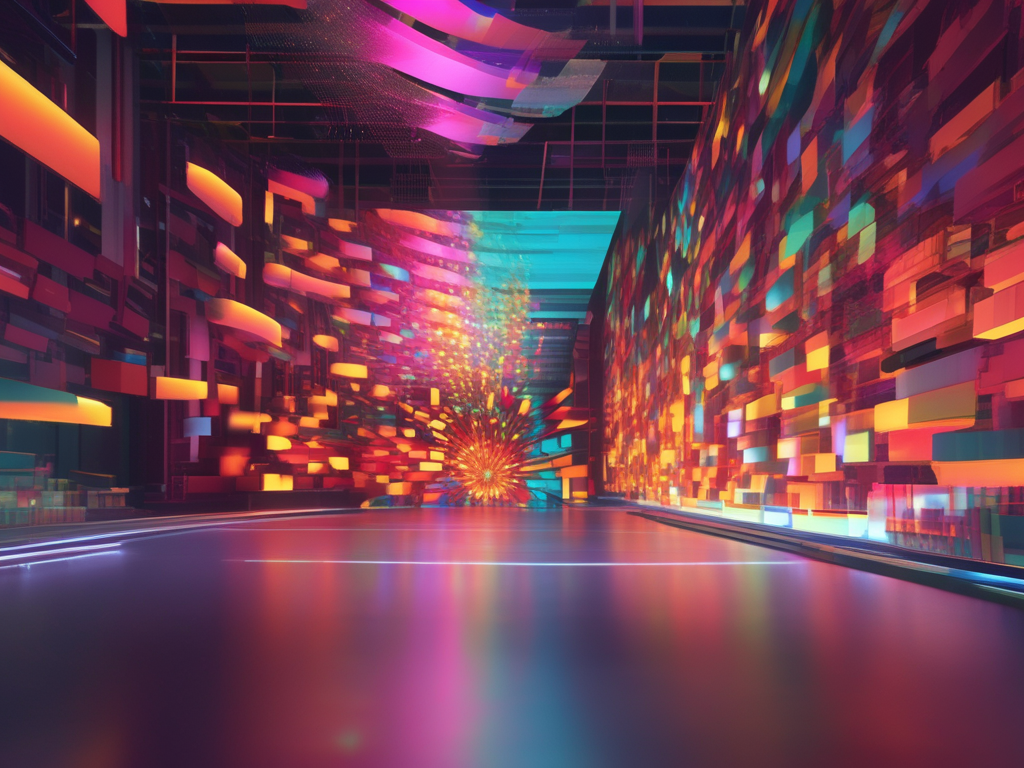
As I sit at my desk, surrounded by screens displaying an array of colorful data visualizations, I can’t help but reflect on the incredible journey that data-driven art has taken in the 21st century. It’s a subject that has captivated me for years, both as an artist and a technology enthusiast. The intersection of data and art has always fascinated me, offering a unique lens through which we can view and interpret the world around us.
Alright, imagine you’re standing in front of a huge canvas. Now, instead of using traditional paints and brushes, we’re going to create a masterpiece using data. Yes, data! This is what we call data-driven art. Let me break it down for you.
What is Data-Driven Art?
Data-driven art is a form of creative expression that uses data as the primary medium. Just like a painter uses colors and shapes to convey a message or evoke emotions, a data-driven artist uses data sets, algorithms, and visualizations to create art.
How Does It Work?
- Collecting Data: First, you need data. This can come from anywhere – weather patterns, social media activity, sensor readings, you name it. For example, let’s say we have data on the daily temperatures in New York City over the past year.
- Analyzing Data: Next, we analyze this data to find interesting patterns, trends, or anomalies. Maybe we notice that temperatures tend to spike on certain days or that there’s a gradual warming trend over the months.
- Visualizing Data: This is where the magic happens. We take our analyzed data and convert it into visual elements. Using coding and algorithms, we can turn those temperature spikes into colorful splashes on our canvas or transform gradual trends into flowing lines.
An Example
Let’s say we’re working with our New York City temperature data. We could create a visual piece where:
- Each day of the year is represented by a tiny square.
- The color of each square represents the temperature on that day, ranging from cool blues for cold days to fiery reds for hot days.
- We arrange these squares in a grid, creating a mosaic that tells the story of the city’s climate over the year.
As viewers, we can see and feel the data in a way that a simple chart or graph can’t convey. The cold, wintry blues gradually give way to the warm, summery reds, and we experience the ebb and flow of the seasons through color and form.
Why is it Exciting?
Data-driven art is exciting because it bridges the gap between science and creativity. It allows us to see data not just as numbers on a spreadsheet but as a dynamic, living thing that can be beautiful and thought-provoking. It also helps us understand complex information in an intuitive, emotional way.
I vividly remember stumbling upon a piece of data-driven art. It was an online exhibition that used real-time social media data to create an ever-changing digital landscape. The way the colors shifted and the shapes morphed with each new post left me awestruck. It was then that I realized the immense potential of merging data with artistic expression.
Data-driven art, in its essence, is a form of creative expression that uses data as both a medium and a subject. It’s a reflection of our increasingly data-centric world, exploring the aesthetic, conceptual, and informational potential of the vast amounts of information we generate every day. As someone who has spent countless hours experimenting with various data sets and artistic techniques, I can attest to the transformative power of this approach.
The roots of data-driven art stretch back further than many might realize. In my studies, I’ve come across early pioneers like Sol LeWitt and John Cage, who incorporated mathematical principles and chance operations into their work. These artists laid the groundwork for what we now consider contemporary data-driven practices. It’s humbling to think about how their experimental approaches have evolved into the sophisticated data art we see today.
I often find myself explaining to friends and colleagues that data-driven art isn’t just about creating pretty visualizations (although that can certainly be a part of it). At its core, it’s about using data as a fundamental component in the creative process. This can manifest in various ways, from transforming complex data sets into visually stunning representations to using algorithms that generate art based on data inputs.
One concept that has profoundly influenced my understanding of data-driven art is complexity theory. I remember spending late nights poring over books and articles, trying to wrap my head around systems that exhibit both order and chaos. It was like discovering a new language that could describe the intricate patterns I saw in nature and society. Complexity theory provides a rich context for generative and data-driven art, allowing for the creation of works that can dynamically change and adapt over time, mirroring the complex systems found in our world.
As I delved deeper into the world of data-driven art, I found myself exploring various techniques and tools. Software like Processing became my constant companion. I can vividly recall the excitement I felt when I first used Processing to create a piece that visualized my daily routines over a year. The patterns that emerged from such a personal data set were both surprising and revealing. It was a moment that truly underscored the power of data to tell stories and uncover hidden narratives.
Data visualization, in particular, has become a passion of mine. There’s something magical about transforming raw, often incomprehensible data into visually engaging and interpretable forms. I’ve spent countless hours experimenting with different visualization techniques, trying to find the perfect balance between aesthetic appeal and informational clarity. One project that stands out in my memory involved visualizing the emotional content of my favorite books based on sentiment analysis of their text. Seeing the emotional journey of each story laid out before me in colors and shapes was a revelation.
But data-driven art isn’t just about static visualizations. Generative art, which employs algorithms to autonomously create art, has opened up entirely new avenues for exploration. I remember the first time I created a generative piece that evolved based on weather data. Watching the artwork change in real-time as weather conditions shifted was a thrilling experience. It felt like I had created a living, breathing entity that was constantly adapting to its environment.
The advent of big data has been a game-changer for data-driven art. The sheer volume and variety of data available today provide an almost limitless palette for artistic expression. I’ve found myself working with data sets that would have been unimaginable just a few years ago – from global climate patterns to the collective emotional state of entire cities as expressed through social media. The challenge lies in finding meaningful ways to interpret and represent this vast sea of information.
One project that particularly challenged me involved working with a massive dataset of human migration patterns. As I sifted through the data, trying to find a way to visually represent the complex flows of people across the globe, I was struck by the human stories hidden within the numbers. It was a powerful reminder of the responsibility we have as artists working with data – to not lose sight of the individuals behind the statistics.
This brings me to an important point that I always stress when discussing data-driven art: the ethical considerations. As artists, we have a duty to use data responsibly and respectfully. I’ve grappled with questions of privacy and consent in my own work, particularly when using personal data. There was a project where I had to decide whether to use publicly available social media data in a piece. While the data was technically accessible, I had to consider the ethical implications of using people’s personal information without their explicit consent. These are the kinds of dilemmas that data-driven artists often face, and they require careful consideration and a strong ethical framework.
The impact of data-driven art on the contemporary art world has been profound. It has challenged traditional notions of authorship and originality, shifting the role of the artist from that of a creator to a curator of systems and data. I’ve had many spirited debates with fellow artists about the nature of creativity in the age of algorithms. Some argue that art created by algorithms lacks the human touch, but I see it differently. To me, the creativity lies in designing the systems and choosing the data that will drive the artistic process. It’s a different kind of artistry, but no less valid or meaningful.
Looking to the future, I’m incredibly excited about the possibilities that emerging technologies like artificial intelligence and machine learning bring to data-driven art. I’ve been experimenting with AI-driven algorithms that can analyze and interpret vast amounts of data, creating works that evolve and respond to their environment in ways I could never have imagined. There’s something thrilling about creating a piece of art that has the potential to surprise even its creator.
Interactive installations are another area that I believe will continue to grow in importance. I recently had the opportunity to create an interactive piece that allowed viewers to manipulate data in real-time, creating their own unique visualizations. Seeing people engage with the data, exploring and discovering patterns for themselves, was incredibly rewarding. It reinforced my belief in the power of data-driven art to not just inform, but to engage and inspire.
As I reflect on the state of data-driven art in the 21st century, I’m filled with a sense of wonder at how far we’ve come and excitement for what lies ahead. This art form represents a significant evolution in the relationship between art and technology, harnessing the power of data to create works that are not only visually compelling but rich in information and context.
In my journey as a data-driven artist, I’ve come to see data not just as numbers and statistics, but as a reflection of human experiences, behaviors, and emotions. Each dataset tells a story, and as artists, we have the privilege of interpreting and sharing these stories in new and meaningful ways.
The challenges we face in this field are numerous. How do we make sense of the ever-increasing volume of data available to us? How do we balance aesthetic considerations with the need for accurate representation of information? How do we ensure that our work remains accessible and engaging to a wide audience? These are questions that I grapple with daily in my practice.
But with these challenges come incredible opportunities. Data-driven art has the potential to help us understand complex issues in new ways, to reveal hidden patterns and connections, and to spark important conversations about our data-driven world. As we move forward, I believe we’ll see even more innovative approaches to data visualization and generative art, pushing the boundaries of what’s possible in artistic expression.
One area that I’m particularly excited about is the potential for data-driven art to address pressing global issues. I’m currently working on a project that uses climate data to create immersive installations that help people viscerally understand the impacts of climate change. It’s a perfect example of how data-driven art can bridge the gap between abstract information and personal experience.
As I look back on my journey in this field, I’m grateful for the opportunities I’ve had to explore, experiment, and grow as an artist. Each project, each dataset, each line of code has taught me something new about art, technology, and the world we live in. And yet, I feel like I’ve only scratched the surface of what’s possible.
To those who are just beginning to explore data-driven art, I say: embrace the complexity, don’t be afraid to experiment, and always keep in mind the human stories behind the data. This field offers endless possibilities for creative expression and exploration. Whether you’re a programmer, a visual artist, or simply someone fascinated by the stories data can tell, there’s a place for you in this exciting and evolving art form.
As we move further into the 21st century, I believe data-driven art will continue to evolve and expand, offering new and exciting ways to understand and engage with the world around us. It challenges our perceptions, invites us to explore hidden patterns and stories within data, and pushes the boundaries of artistic expression. In a world increasingly shaped by data and algorithms, this art form provides a crucial bridge between technology and human experience.
The state and evolution of data-driven art in the 21st century reflect a broader cultural shift towards a data-centric world. As an artist working in this field, I feel a great responsibility to use this powerful medium to create works that not only captivate and inspire but also inform and provoke thought. The future of data-driven art is limited only by our imagination and our ability to harness the vast potential of the data that surrounds us. As we continue to push the boundaries of what’s possible, I’m excited to see what new forms of expression and understanding will emerge. The canvas of data is infinite, and we’ve only just begun to paint.
 Visual Alchemist