Introduction
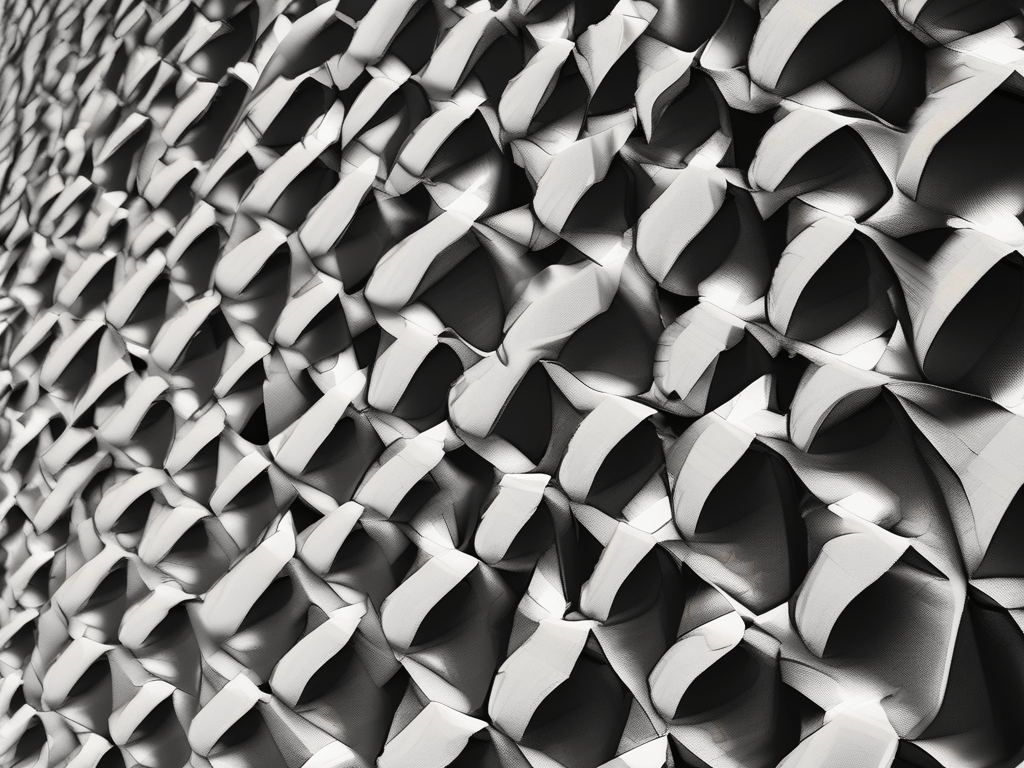
Generative textures and patterns are a cornerstone of creative coding, offering endless possibilities for creating intricate and visually stunning designs. By leveraging algorithms and mathematical principles, artists can generate complex textures and patterns that can be used in various applications, from digital art and graphic design to animation and interactive installations. This blog will explore various techniques for creating generative textures and patterns using tools like p5.js and Processing.
What are Generative Textures and Patterns?
Generative textures and patterns are designs created using algorithms and computational processes. These designs can range from simple geometric patterns to complex, organic textures. The key characteristic of generative textures and patterns is that they are produced through a set of rules or algorithms, allowing for infinite variations and unique results.
Benefits of Generative Textures and Patterns
- Endless Variations: Algorithms can generate countless variations of a texture or pattern, ensuring uniqueness.
- Efficiency: Automated processes save time and effort compared to manual creation.
- Complexity: Algorithms can create highly intricate designs that would be challenging to produce by hand.
Techniques for Creating Generative Textures and Patterns
There are several techniques and algorithms commonly used to create generative textures and patterns. Each technique offers unique possibilities and can be customized to achieve different effects.
Perlin Noise
Perlin noise is a type of gradient noise that produces natural-looking textures. It is often used in procedural generation for terrain, clouds, and other organic forms.
Example in p5.js:
function setup() {

 createCanvas(600, 600);

 pixelDensity(1);

 loadPixels();

 for (let x = 0; x < width; x++) {

 for (let y = 0; y < height; y++) {

 let n = noise(x * 0.01, y * 0.01) * 255;

 let index = (x + y * width) * 4;

 pixels[index] = n;

 pixels[index + 1] = n;

 pixels[index + 2] = n;

 pixels[index + 3] = 255;

 }

 }

 updatePixels();

}
This code generates a grayscale noise texture using Perlin noise, creating a natural, organic pattern.
Cellular Automata
Cellular automata consist of grids of cells that evolve based on a set of rules. They can produce complex, dynamic patterns through simple, repeated interactions.
Example in Processing:
int cols, rows;

int[][] grid;

int[][] nextGrid;

void setup() {

 size(600, 600);

 cols = width / 10;

 rows = height / 10;

 grid = new int[cols][rows];

 nextGrid = new int[cols][rows];

 for (int i = 0; i < cols; i++) {

 for (int j = 0; j < rows; j++) {

 grid[i][j] = int(random(2));

 }

 }

}

void draw() {

 background(255);

 for (int i = 0; i < cols; i++) {

 for (int j = 0; j < rows; j++) {

 if (grid[i][j] == 1) {

 fill(0);

 } else {

 fill(255);

 }

 stroke(0);

 rect(i * 10, j * 10, 10, 10);

 }

 }

 generate();

}

void generate() {

 for (int i = 0; i < cols; i++) {

 for (int j = 0; j < rows; j++) {

 int state = grid[i][j];

 int neighbors = countNeighbors(grid, i, j);

 if (state == 0 && neighbors == 3) {

 nextGrid[i][j] = 1;

 } else if (state == 1 && (neighbors < 2 || neighbors > 3)) {

 nextGrid[i][j] = 0;

 } else {

 nextGrid[i][j] = state;

 }

 }

 }

 int[][] temp = grid;

 grid = nextGrid;

 nextGrid = temp;

}

int countNeighbors(int[][] grid, int x, int y) {

 int sum = 0;

 for (int i = -1; i <= 1; i++) {

 for (int j = -1; j <= 1; j++) {

 int col = (x + i + cols) % cols;

 int row = (y + j + rows) % rows;

 sum += grid[col][row];

 }

 }

 sum -= grid[x][y];

 return sum;

}
This example implements Conway’s Game of Life, generating dynamic patterns through cellular automata rules.
L-Systems (Lindenmayer Systems)
L-Systems are recursive algorithms used to model the growth processes of plants. They can generate intricate, branching patterns.
Example in p5.js:
let axiom = "F";

let sentence = axiom;

let rules = [

 { a: "F", b: "FF+[+F-F-F]-[-F+F+F]" }

];

let len = 100;

let angle;

function generate() {

 let nextSentence = "";

 for (let i = 0; i < sentence.length; i++) {

 let current = sentence.charAt(i);

 let found = false;

 for (let j = 0; j < rules.length; j++) {

 if (current == rules[j].a) {

 nextSentence += rules[j].b;

 found = true;

 break;

 }

 }

 if (!found) {

 nextSentence += current;

 }

 }

 sentence = nextSentence;

 len *= 0.5;

 turtle();

}

function turtle() {

 background(255);

 resetMatrix();

 translate(width / 2, height);

 stroke(0);

 for (let i = 0; i < sentence.length; i++) {

 let current = sentence.charAt(i);

 if (current == "F") {

 line(0, 0, 0, -len);

 translate(0, -len);

 } else if (current == "+") {

 rotate(angle);

 } else if (current == "-") {

 rotate(-angle);

 } else if (current == "[") {

 push();

 } else if (current == "]") {

 pop();

 }

 }

}

function setup() {

 createCanvas(600, 600);

 angle = PI / 6;

 turtle();

 let button = createButton("generate");

 button.mousePressed(generate);

}
This code generates a fractal tree using L-Systems, creating complex, branching patterns.
Combining Techniques for Complex Patterns
By combining different generative techniques, you can create even more complex and interesting patterns. For example, you can use Perlin noise to modulate the parameters of an L-System or apply cellular automata rules to a noise-generated texture.
Example: Combining Perlin Noise and L-Systems
p5.js Sketch:
let axiom = "F";

let sentence = axiom;

let rules = [

 { a: "F", b: "FF+[+F-F-F]-[-F+F+F]" }

];

let len = 100;

let angle;

function generate() {

 let nextSentence = "";

 for (let i = 0; i < sentence.length; i++) {

 let current = sentence.charAt(i);

 let found = false;

 for (let j = 0; j < rules.length; j++) {

 if (current == rules[j].a) {

 nextSentence += rules[j].b;

 found = true;

 break;

 }

 }

 if (!found) {

 nextSentence += current;

 }

 }

 sentence = nextSentence;

 len *= 0.5;

 turtle();

}

function turtle() {

 background(255);

 resetMatrix();

 translate(width / 2, height);

 stroke(0);

 for (let i = 0; i < sentence.length; i++) {

 let current = sentence.charAt(i);

 if (current == "F") {

 let noiseVal = noise(i * 0.1) * len;

 line(0, 0, 0, -noiseVal);

 translate(0, -noiseVal);

 } else if (current == "+") {

 rotate(angle + noise(i) * PI / 6);

 } else if (current == "-") {

 rotate(-angle + noise(i) * PI / 6);

 } else if (current == "[") {

 push();

 } else if (current == "]") {

 pop();

 }

 }

}

function setup() {

 createCanvas(600, 600);

 angle = PI / 6;

 turtle();

 let button = createButton("generate");

 button.mousePressed(generate);

}
This example combines Perlin noise with an L-System to create a dynamic, evolving fractal tree.
Applications of Generative Textures and Patterns
Generative textures and patterns have a wide range of applications in art, design, and technology.
Digital Art and Graphic Design
Artists and designers use generative textures and patterns to create unique and visually appealing artworks, backgrounds, and illustrations.
Animation and Visual Effects
Generative techniques are used in animation and visual effects to create dynamic and complex scenes, such as procedural landscapes, fire, smoke, and water.
Interactive Installations
Interactive installations often use generative patterns to respond to user input, creating engaging and immersive experiences.
Game Development
Game developers use generative textures and patterns to create procedurally generated environments, characters, and assets, enhancing the variability and replayability of games.
Conclusion
Generative textures and patterns offer a powerful and versatile toolset for artists, designers, and developers. By understanding and experimenting with different generative techniques, you can create intricate and dynamic designs that are both visually stunning and functionally versatile. Whether you are creating digital art, interactive installations, or game environments, generative textures and patterns provide endless possibilities for creative exploration.
TL;DR for Each Section
- Introduction: Generative textures and patterns are created using algorithms, offering endless possibilities for intricate and visually stunning designs.
- What are Generative Textures and Patterns?: Designs produced through computational processes, allowing for infinite variations and unique results.
- Techniques for Creating Generative Textures and Patterns: Common techniques include Perlin noise, cellular automata, and L-Systems.
- Combining Techniques for Complex Patterns: Combine different generative techniques to create more complex and interesting patterns.
- Applications of Generative Textures and Patterns: Used in digital art, graphic design, animation, visual effects, interactive installations, and game development.
- Conclusion: Generative textures and patterns provide a versatile toolset for creating intricate and dynamic designs, offering endless possibilities for creative exploration.
FAQs
What are generative textures and patterns?
- Generative textures and patterns are designs created using algorithms and computational processes.
How is Perlin noise used in generative art?
- Perlin noise is used to create natural-looking textures and patterns, often applied in procedural generation for terrain and organic forms.
What are cellular automata?
- Cellular automata consist of grids of cells that evolve based on a set of rules, producing complex, dynamic patterns.
What are L-Systems?
- L-Systems are recursive algorithms used to model the growth processes of plants, generating intricate, branching patterns.
How can you combine different generative techniques?
- Combine techniques like Perlin noise and L-Systems to create more complex and evolving patterns.
What are some applications of generative textures and patterns?
- Applications include digital art, graphic design, animation, visual effects, interactive installations, and game development.
What is the benefit of using generative techniques in art and design?
- Generative techniques offer endless variations, efficiency, and the ability to create highly intricate designs.
Can generative textures be used in real-time applications?
- Yes, generative textures can be used in real-time applications like interactive installations and game environments.
What is the fractal dimension?
- The fractal dimension is a measure of a fractal’s complexity, often not a whole number.
How do you create interactive generative art?
- Use tools like p5.js to create interactive generative art that responds to user input in real-time.
What are some tools for creating generative textures and patterns?
- Popular tools include p5.js, Processing, and other creative coding platforms.
Can generative art be used in animations?
- Yes, generative art techniques are used to create dynamic and visually stunning animations.
What is the significance of self-similarity in fractals?
- Self-similarity means that smaller parts of the fractal resemble the whole structure, a key characteristic of fractals.
How does noise modulation enhance generative patterns?
- Noise modulation introduces variability and natural randomness, enhancing the complexity of generative patterns.
What is the role of algorithms in generative art?
- Algorithms define the rules and processes for generating patterns and textures, allowing for automated creation.
Can generative art be used in game development?
- Yes, generative art is used in game development for procedural generation of environments, characters, and assets.
What are some famous generative artists?
- Famous generative artists include Casey Reas, John Maeda, and Manfred Mohr.
How do generative techniques contribute to visual effects?
- Generative techniques create dynamic and complex visual effects, such as fire, smoke, and water, in animation and film.
What is the importance of recursion in generative art?
- Recursion allows for the creation of self-similar and infinitely detailed patterns, commonly seen in fractals.
Where can you learn more about generative textures and patterns?
- Explore online tutorials, courses, and books dedicated to generative art and creative coding.
Bibliography
- Peitgen, Heinz-Otto, and Saupe, Dietmar. “The Science of Fractal Images”.
- Mandelbrot, Benoit. “The Fractal Geometry of Nature”.
- Reas, Casey, and Fry, Ben. “Processing: A Programming Handbook for Visual Designers and Artists”.
- McCarthy, Lauren, Reas, Casey, and Fry, Ben. “Getting Started with p5.js”.
- Processing Official Website.
- p5.js Official Website.
 Visual Alchemist