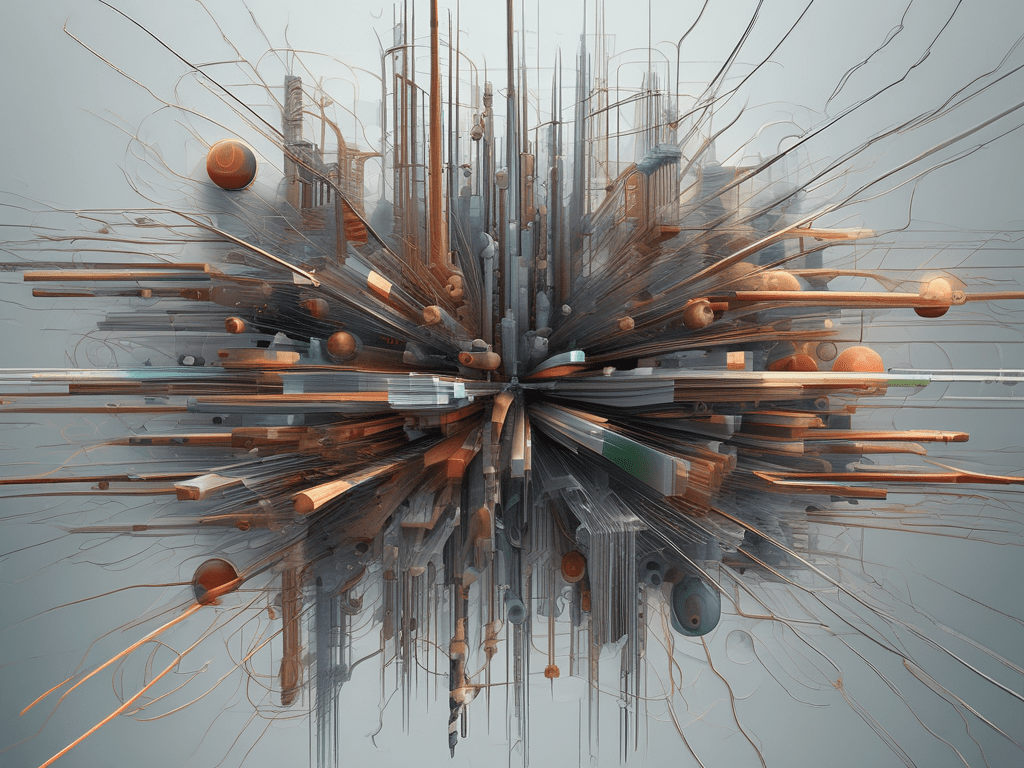
“Art is not what you see, but what you make others see”
– Edgar Degas
These words resonate deeply with the philosophy of generative art, where the artist creates systems that, in turn, create art. This indirect approach to creativity not only challenges traditional notions of authorship and aesthetics but also opens up new realms of possibility in artistic expression.
In my own exploration of generative art, I have discovered its profound impact not only on the art world but also on technology, science, and society as a whole. The importance of generative art lies in its ability to bridge disciplines, foster innovation, and provide new ways of seeing and understanding the world around us.
Expanding the Boundaries of Creativity
Generative art pushes the limits of what is considered possible in artistic creation. By utilizing algorithms, rules, and systems, artists can generate works that are complex, intricate, and often unpredictable. This expansion of creative possibilities allows artists to explore new forms, patterns, and structures that would be impossible to achieve manually.
One of the key advantages of generative art is its ability to produce a vast array of variations from a single set of rules. This capacity for endless iteration enables artists to experiment and refine their ideas in ways that traditional methods cannot match. As a result, generative art is continually evolving, producing fresh and innovative works that captivate and inspire.
Interdisciplinary Connections
Generative art sits at the intersection of art, science, and technology. This interdisciplinary nature fosters collaboration and cross-pollination between fields, leading to new insights and breakthroughs. For example, the principles of generative art have been applied in fields such as architecture, music, and design, where they have revolutionized the creative process.
In architecture, generative design tools enable architects to create structures that are both aesthetically pleasing and functionally optimized. By simulating natural processes such as growth and adaptation, these tools can generate designs that are efficient, sustainable, and responsive to their environment. This approach has led to the creation of iconic buildings and structures that push the boundaries of architectural innovation.
Enhancing Scientific Understanding
Generative art also plays a significant role in enhancing scientific understanding. By visualizing complex data sets and processes, generative techniques can reveal patterns and insights that would otherwise remain hidden. This capability is particularly valuable in fields such as biology, physics, and environmental science, where understanding complex systems is crucial.
For example, in biology, generative models can simulate the growth and development of organisms, providing insights into genetic and environmental factors that influence these processes. In physics, generative algorithms can model the behavior of particles and fields, helping scientists to explore and understand fundamental forces and interactions. These applications demonstrate the power of generative art to not only create beauty but also to advance knowledge and discovery.
Challenging Traditional Notions of Authorship
One of the most intriguing aspects of generative art is its challenge to traditional notions of authorship and creativity. In generative art, the artist creates a system that generates the artwork, rather than directly creating the artwork themselves. This shift raises questions about the nature of creativity and the role of the artist in the creative process.
Generative art blurs the line between the creator and the created, suggesting that creativity can emerge from the interaction of simple rules and systems. This perspective aligns with broader philosophical debates about the nature of art and the role of the artist, encouraging us to rethink our assumptions and explore new ways of understanding creativity.
Democratizing Artistic Creation
Generative art has the potential to democratize artistic creation by making it more accessible to a wider audience. With the advent of user-friendly generative art tools and platforms, individuals with little or no formal training in art or programming can create their own generative works. This democratization empowers more people to express their creativity and contribute to the cultural landscape.
Tools like Processing, p5.js, and TouchDesigner provide intuitive interfaces and extensive libraries that enable users to experiment with generative techniques. Online communities and resources further support this accessibility, offering tutorials, examples, and forums where users can share their work and learn from each other. As a result, generative art is becoming an increasingly popular and inclusive form of creative expression.
Inspiring Innovation
The principles of generative art have inspired innovation across a wide range of industries. By embracing systems thinking and algorithmic processes, companies and designers can develop new products and solutions that are both creative and functional. This approach is particularly valuable in fields such as product design, fashion, and media, where innovation is essential to staying competitive.
For example, in product design, generative algorithms can optimize materials and forms to create products that are lighter, stronger, and more sustainable. In fashion, generative techniques can produce unique patterns and designs that respond to individual preferences and trends. In media, generative art can create immersive and interactive experiences that captivate audiences and push the boundaries of storytelling.
Addressing Environmental Challenges
Generative art also has the potential to address environmental challenges by promoting sustainability and resilience. By mimicking natural processes and systems, generative techniques can create designs and solutions that are more in harmony with the environment. This approach can help to reduce waste, conserve resources, and promote more sustainable practices in various industries.
In architecture and urban planning, generative design can optimize the use of space and materials, creating buildings and cities that are more energy-efficient and environmentally friendly. In product design, generative techniques can reduce waste and improve the lifecycle of products, promoting a circular economy. These applications demonstrate the potential of generative art to contribute to a more sustainable future.
Engaging and Educating Audiences
Generative art has the power to engage and educate audiences by making complex concepts more accessible and understandable. Through visualizations and interactive experiences, generative art can communicate scientific and mathematical ideas in ways that are both informative and aesthetically pleasing. This educational potential makes generative art a valuable tool for teaching and public outreach.
For example, interactive installations and visualizations can help to explain complex scientific phenomena, such as climate change or genetic processes, to a broad audience. By making these concepts more tangible and relatable, generative art can inspire curiosity and foster a deeper understanding of the world around us.
Creating Emotional Connections
Despite its algorithmic nature, generative art has the ability to evoke strong emotional responses. The dynamic and often unpredictable nature of generative works can create a sense of wonder and surprise, drawing viewers into the experience. This emotional engagement is a testament to the power of generative art to connect with audiences on a deep and personal level.
Artists like Refik Anadol and Quayola have created generative works that explore themes of memory, perception, and identity, using algorithms to produce visuals that are both abstract and deeply evocative. These works demonstrate the potential of generative art to not only challenge our intellectual understanding but also to touch our hearts and minds.
The importance of generative art lies in its ability to expand the boundaries of creativity, foster interdisciplinary connections, enhance scientific understanding, and challenge traditional notions of authorship. By democratizing artistic creation, inspiring innovation, and addressing environmental challenges, generative art is making a significant impact on both the art world and society as a whole.
As we continue to explore the possibilities of generative art, we are reminded of its potential to not only create beauty but also to advance knowledge, inspire change, and connect us with the world in new and meaningful ways. Generative art is more than just a technique; it is a powerful tool for creativity, exploration, and transformation.
 Visual Alchemist
3 responses to “Democratizing Artistic Creation with Generative Art Tools and Platforms”
[…] To delve deeper into the intersection of art and AI, explore our article on Generative Art: Techniques, Tools, and Platforms. […]
LikeLike
[…] For insights into democratizing artistic creation, consider reading Democratizing Artistic Creation with Generative Art Tools and Platforms. […]
LikeLike
[…] as AI tools become more accessible, the democratization of art has expanded the reach of creative expression. Platforms now allow individuals without a background […]
LikeLike