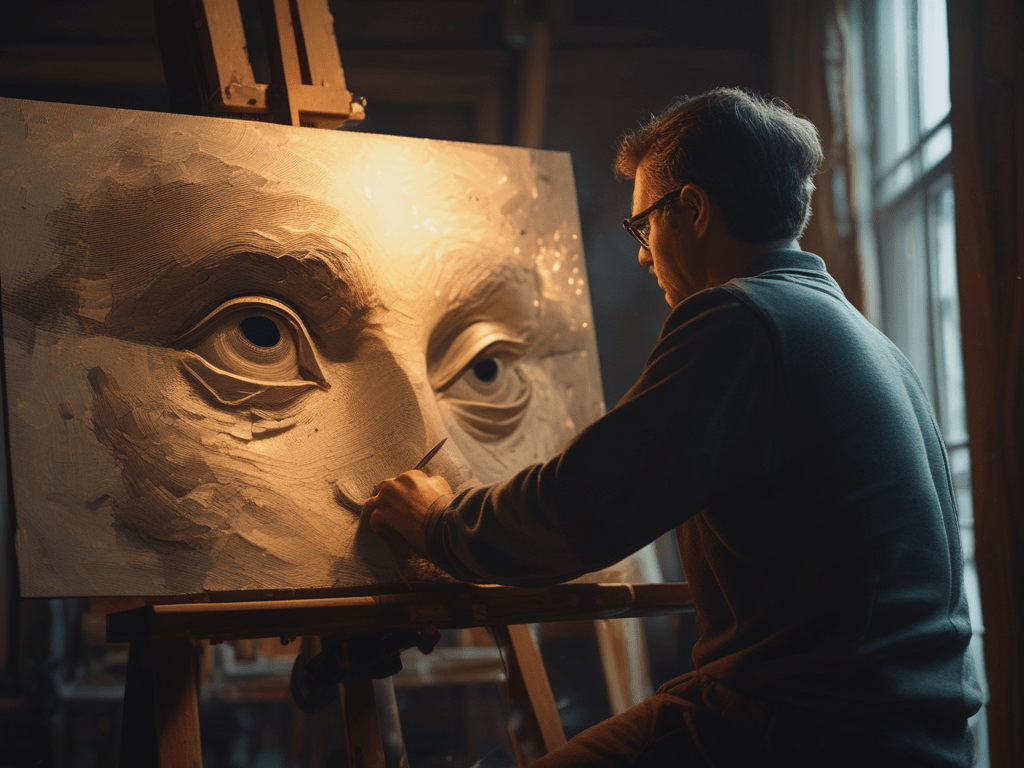
“Art is the journey of a free soul”
– Alev Oguz, reflecting the essence of artistic creation.
This journey takes different paths in the spheres of generative and traditional art, each offering unique experiences and insights. As I explore these two worlds, I am fascinated by their distinct approaches, techniques, and impacts on artists and audiences alike.
Generative art and traditional art represent two ends of a spectrum in the artistic process. While traditional art relies heavily on the artist’s direct intervention and manual skills, generative art leverages algorithms and systems to produce works that can be both predictable and surprising. This comparison will delve into the defining characteristics, techniques, and philosophies of both art forms, highlighting their unique contributions to the art world.
Defining Characteristics
Traditional Art: Traditional art encompasses a wide range of mediums and techniques, from painting and sculpture to drawing and printmaking. The defining characteristic of traditional art is the direct involvement of the artist in the creation process. Each stroke of the brush or chisel mark on stone reflects the artist’s skill, intuition, and emotional expression.
Generative Art: Generative art, on the other hand, is defined by its use of autonomous systems to create artwork. These systems can include algorithms, computer programs, mechanical processes, or even biological growth patterns. The artist’s role is to design the rules or parameters that guide the system, which then generates the final piece. This approach can produce highly intricate and complex patterns that would be difficult or impossible to create manually.
Techniques and Tools
Traditional Art Techniques: Traditional artists use a variety of tools and materials depending on their chosen medium. Painters may use brushes, palettes, and canvas, while sculptors might work with chisels, hammers, and clay or stone. Each medium has its own set of techniques and traditions, passed down through generations and often honed over years of practice.
Generative Art Techniques: Generative artists use computational tools and software to create their works. Programs like Processing, p5.js, and TouchDesigner allow artists to write code that generates visual patterns, shapes, and forms. These tools enable artists to experiment with mathematical functions, random variables, and iterative processes to produce unique and often unexpected results.
Philosophies and Approaches
Traditional Art Philosophy: Traditional art is often rooted in the artist’s personal vision and emotional expression. The creative process is seen as a deeply introspective and personal journey, where the artist’s hand and mind are intimately connected to the work. This approach values craftsmanship, technique, and the tangible presence of the artist in the finished piece.
Generative Art Philosophy: Generative art embraces a different philosophy, one that values systems, processes, and the emergent properties of complex algorithms. The artist sets the initial conditions and rules, but the system itself plays a significant role in the creation of the artwork. This approach highlights the beauty of order and chaos, the interplay of randomness and structure, and the potential for infinite variation within a defined set of parameters.
Aesthetics and Visual Impact
Traditional Art Aesthetics: The aesthetics of traditional art are often influenced by the artist’s skill and the physical properties of the materials used. Brushstrokes, texture, and color blending all contribute to the visual impact of a painting, while the form, balance, and surface finish are crucial in sculpture. Traditional art can evoke strong emotional responses and connect viewers with the artist’s inner world.
Generative Art Aesthetics: Generative art offers a different kind of visual experience, one that can be both highly structured and dynamically unpredictable. The aesthetics of generative art often emphasize patterns, repetition, and complexity. The visual impact can range from mesmerizing geometric designs to organic forms that mimic natural processes. Generative art invites viewers to explore the underlying systems and appreciate the beauty of emergent phenomena.
Historical Context
Traditional Art History: Traditional art has a long and rich history, dating back to prehistoric cave paintings and evolving through various cultural and artistic movements. Each era and culture has contributed to the development of different styles, techniques, and mediums. From the Renaissance masters to the modernists, traditional art reflects the changing values, beliefs, and technological advancements of human society.
Generative Art History: Generative art is a relatively recent development, emerging in the mid-20th century with the advent of computer technology. Early pioneers like Frieder Nake and Vera Molnar used computers to create algorithmic art, challenging traditional notions of authorship and creativity. The field has since expanded with advances in computational power and software, leading to a diverse and dynamic landscape of generative practices.
Accessibility and Democratization
Traditional Art Accessibility: Traditional art often requires access to specific materials, tools, and training. While anyone can pick up a pencil or brush, achieving mastery typically involves formal education, practice, and mentorship. Art schools and workshops provide valuable resources for aspiring artists, but barriers such as cost and location can limit accessibility.
Generative Art Accessibility: Generative art, facilitated by digital tools and open-source software, can be more accessible to a broader audience. Online communities, tutorials, and resources make it easier for individuals to learn and experiment with generative techniques. Platforms like Processing and p5.js offer extensive documentation and examples, empowering people with minimal programming experience to create their own generative art.
Impact on Art and Culture
Traditional Art Impact: Traditional art has had a profound impact on culture, shaping our understanding of beauty, expression, and human experience. Masterpieces from artists like Leonardo da Vinci, Michelangelo, and Vincent van Gogh continue to inspire and influence contemporary art and society. Traditional art serves as a record of human history, capturing moments, emotions, and ideas that define our collective heritage.
Generative Art Impact: Generative art is influencing contemporary culture in new and exciting ways. It intersects with fields such as design, architecture, music, and digital media, pushing the boundaries of what art can be. Generative art projects often address modern themes such as data visualization, artificial intelligence, and interactive installations, reflecting the technological and cultural shifts of our time.
Future Directions
Traditional Art Future: The future of traditional art lies in its continued evolution and adaptation. While digital tools and new media offer new possibilities, the foundational skills and techniques of traditional art remain relevant. Artists will continue to draw inspiration from the past while exploring innovative ways to incorporate traditional methods into contemporary practice.
Generative Art Future: The future of generative art is boundless, driven by advances in technology and a growing interest in algorithmic and data-driven approaches. Emerging fields such as virtual reality, augmented reality, and machine learning will further expand the possibilities for generative art. As artists continue to experiment with these tools, generative art will likely play a significant role in shaping the future of artistic expression.
Generative art and traditional art represent two distinct but equally valuable approaches to creativity. Each offers unique insights, techniques, and experiences that contribute to the rich tapestry of human expression. By understanding and appreciating the differences and similarities between these art forms, we can gain a deeper appreciation for the diverse ways in which artists explore and interpret the world around us.
As we move forward, the integration of traditional and generative methods may lead to new hybrid forms of art that combine the best of both worlds. This fusion has the potential to create innovative and inspiring works that reflect the complexity and beauty of our ever-evolving cultural landscape.
 Visual Alchemist
One response to “Generative Art vs. Traditional Art”
[…] expression that push the boundaries of imagination and challenge the status quo. Our exploration of Generative Art vs. Traditional Art delves into these very contrasts, highlighting the unique contributions of […]
LikeLike