The realm of digital art is in constant flux, driven by the relentless pace of technological innovation. One software that has significantly impacted this dynamic landscape is TouchDesigner. Known for its versatility and capability to integrate art with technology, TouchDesigner has found a home across various creative domains—from brand activations and interactive installations to immersive fashion shows and beyond. In this article, we delve into the works of some remarkable art collectives and studios that leverage TouchDesigner to craft extraordinary visual experiences, each pushing the boundaries of creativity in their unique ways.
The Rise of TouchDesigner in Artistic Innovation
TouchDesigner, developed by Derivative, is a visual programming language that excels at real-time 3D graphics and interactive multimedia applications. Its node-based interface allows artists to visualize and manipulate data, create dynamic visuals, and develop interactive experiences without the constraints of traditional programming. This flexibility makes TouchDesigner an essential tool in the arsenal of modern digital artists, enabling them to seamlessly blend creativity with technology to produce stunning works of art.
TouchDesigner’s influence has permeated various artistic fields. Its ability to handle complex visual data and integrate seamlessly with other technologies makes it a preferred choice for creating everything from interactive stage shows to large-scale public art installations. Its role in live events, where real-time processing and interaction are key, showcases its capability to adapt and respond dynamically to different inputs. By allowing artists to create responsive environments, TouchDesigner transforms static visual art into something that is alive and interactive.
Quiet Ensemble: Balancing Chaos and Control
Location: Italy
Website: quietensemble.com
Instagram: @quiet_ensemble
Founded by Fabio di Salvo and Bernardo Vercelli in 2009, Quiet Ensemble is an Italian art collective that thrives on exploring the interplay between chaos and control, nature and technology. Their works are characterized by the fusion of organic and artificial elements, capturing the beauty in the mundane and the extraordinary alike. Their artistic vision often finds expression through observing the simple yet profound details of the world—such as the movement of a fly or the subtle sounds of a tree.
Highlighted Project: Solardust

“Solardust” is one of Quiet Ensemble’s most enchanting installations, showcasing the power of TouchDesigner to create immersive experiences. The installation transports viewers into a surreal, celestial environment, where shimmering stars seem to hover in a three-dimensional cloud above, casting a gentle, magical glow. These luminescent particles, akin to digital fireflies, move and pulse in harmony with the accompanying sounds, creating a mesmerizing spectacle that blurs the line between reality and fantasy. By simulating light emerging from the void, “Solardust” envelops spectators in a transcendent experience, encouraging them to lose themselves in the beauty of the digital cosmos.
In “Solardust,” TouchDesigner plays a critical role in managing the intricate light patterns and synchronization with sound. The use of generative algorithms allows for an ever-changing display, ensuring that no two moments are exactly alike. This unpredictability is what makes “Solardust” captivating, as it embodies the delicate balance between chaos and order that Quiet Ensemble strives to achieve. The installation becomes a living entity, constantly evolving and reacting to its environment, providing a unique experience for every viewer.
TUNDRA: Exploring Audiovisual Synesthesia
Website: wearetundra.org
Instagram: @wearetundra
Based in Russia, TUNDRA is a collective comprising Alexandr Sinitsa, Klim Sukhanov, and Semyon Perevoshchikov. The group originated from the collaboration between visual artists and electronic music producers, aiming to explore the synesthetic relationship between sound and visuals. Their artistic practice encompasses audiovisual performances, sound and light installations, and generative art, all underpinned by the use of cutting-edge technology to interact with and respond to changing environmental contexts.
Highlighted Project: ROW
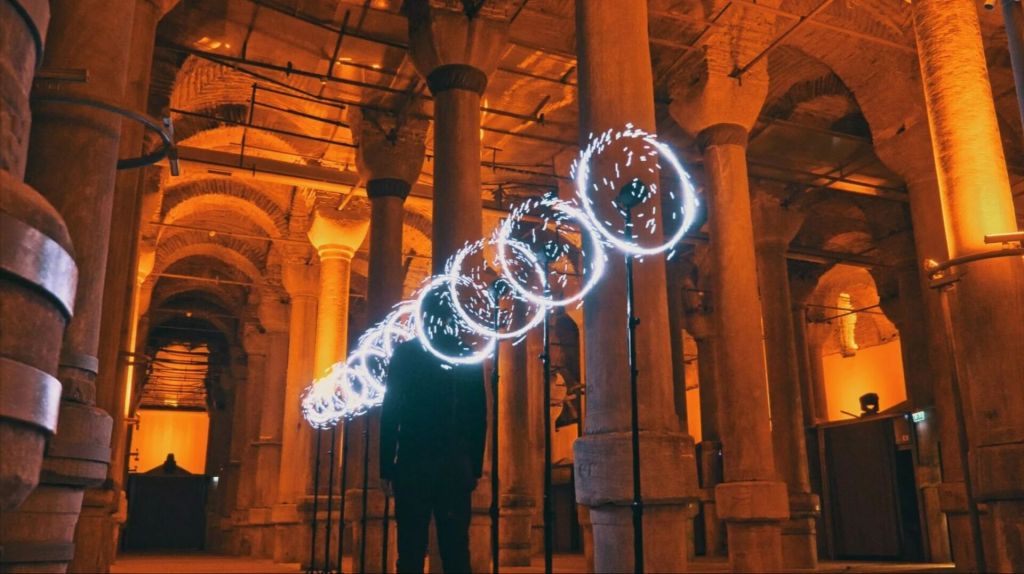
“ROW” is an audiovisual installation that masterfully integrates sound, holographic images, and spatial design. Utilizing ten LED holographic displays arranged in a linear formation, the installation creates a multi-dimensional effect, with rows of data floating and transforming into a symphony of sounds, voices, and visual patterns. The installation explores the concept of information as a medium for communication, where bits and pieces of data evolve into symbols, words, and sentences, offering new ways of perceiving and understanding the world around us. “ROW” has garnered significant recognition, earning awards at prestigious events like the Japan Media Arts Festival and the CITIC Press Lightening Selection in China.
TUNDRA’s use of TouchDesigner in “ROW” allows them to synchronize audio and visual components with precision. The software’s real-time processing capabilities enable the installation to react dynamically to the soundscapes it produces, creating an immersive experience where visual and auditory elements are in perfect harmony. This seamless integration of sensory inputs illustrates the collective’s exploration of audiovisual synesthesia, providing viewers with a profound experience that challenges their perception of reality.
WHITEvoid: Merging Reality with Digital Fantasy
Location: Berlin, Germany
Website: whitevoid.com
Instagram: @whitevoid_berlin
Christopher Bauder’s Berlin-based studio, WHITEvoid, is a fusion of design and art, focusing on the seamless integration of technology and physical space. Founded in 2004, WHITEvoid embodies Bauder’s vision of a future where digital experiences extend beyond screens into the physical world, creating immersive environments that engage the senses.
Highlighted Project: DARK MATTER
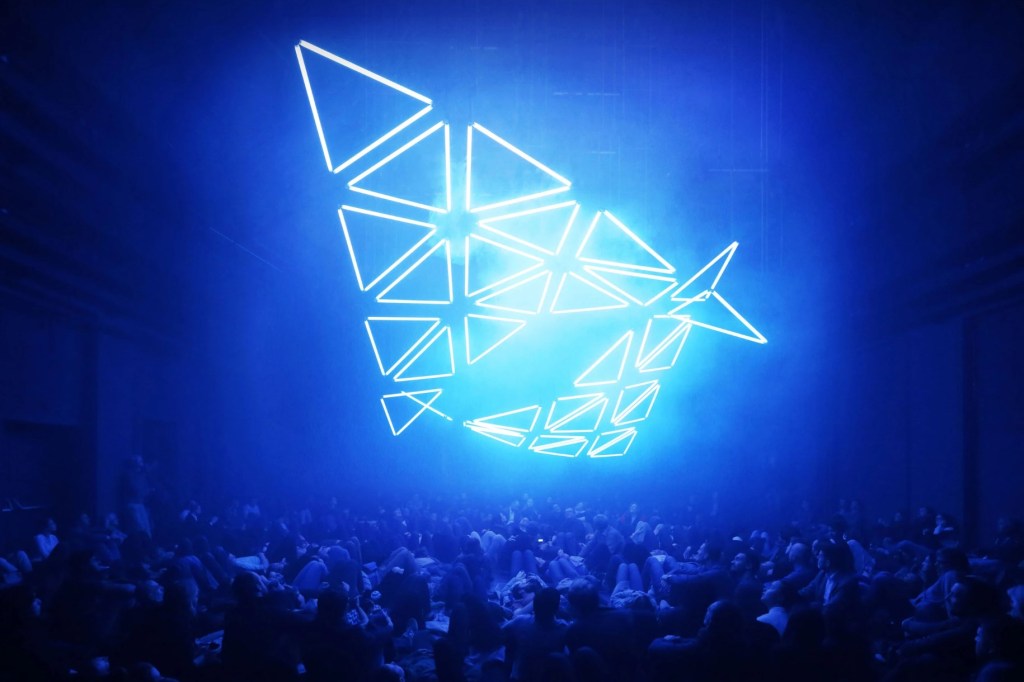
“DARK MATTER” is an ambitious project that occupies 1,000 square meters of exhibition space, showcasing a series of multimedia artworks ranging from intimate light compositions to large-scale interactive installations. The project features a unique 3D sound system, enhancing the sensory experience and providing visitors with a holistic and immersive encounter. Each installation within “DARK MATTER” has its own distinct atmosphere, inviting viewers to explore and interact with the artwork in a deeply personal and transformative way.
In “DARK MATTER,” TouchDesigner is used to manage complex visual effects and integrate them with sound and spatial design elements. The software’s ability to handle high-resolution visuals and its compatibility with various input devices make it ideal for creating the immersive environments that are characteristic of WHITEvoid’s installations. The project demonstrates how technology can be used to enhance the sensory experience, creating spaces that are not just seen but felt, providing an encounter that resonates on an emotional level.
Collectif Scale: From Geeky Obsessions to High Art
Location: France
Website: collectifscale.com
Instagram: @collectifscale
Hailing from Paris, Collectif Scale is a group of friends and creatives from diverse professional and artistic backgrounds. They draw inspiration from a wide spectrum of influences, ranging from the high-tech visuals of “Star Wars” to the abstract art of Victor Vasarely. This eclectic blend of interests fuels their work, which seamlessly merges elements of contemporary art and popular culture.
Highlighted Project: Hulahoop 2
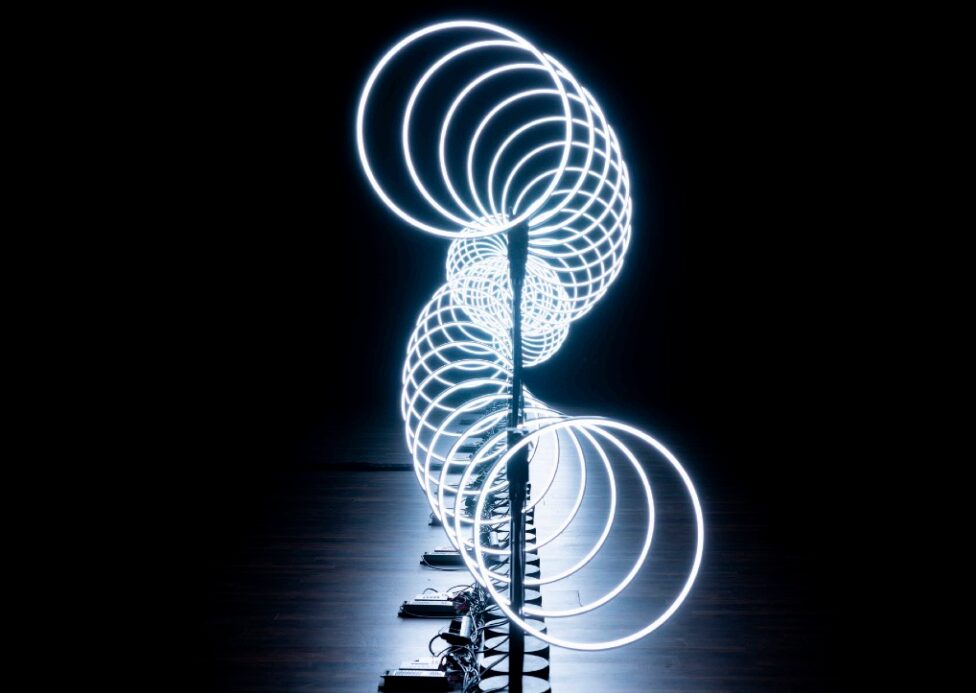
“Hulahoop 2” is an extension of their earlier project, “Flux,” and showcases a mesmerizing interplay of light and movement. The installation features a series of geometric patterns choreographed to a soft musical score, creating a harmonious dance of light and sound. The audience is drawn into the performance, experiencing the soothing, almost hypnotic flow of visuals that align perfectly with the musical composition. Through “Hulahoop 2,” Collectif Scale achieves its goal of making the technology behind the art almost invisible, focusing instead on delivering a raw and emotive visual experience.
TouchDesigner plays a pivotal role in “Hulahoop 2,” facilitating the synchronization of light and sound with precise timing. The software’s capabilities allow Collectif Scale to create complex visual patterns that respond dynamically to the music, enhancing the overall sensory impact of the installation. This integration of audio and visual elements exemplifies the collective’s approach to creating immersive experiences that engage viewers on multiple sensory levels.
404.zero: Crafting Digital Matter from the Abstract
Location: Russia
Website: 404zero.com
Instagram: @404.zero
The Russian duo Kristina Karpysheva and Alex Letsius are the driving force behind 404.zero. Known for their unique approach to generative art, they create immersive experiences that challenge the boundaries of traditional media. Using TouchDesigner, coding, and modular gear, they construct digital landscapes that resonate with themes of existentialism, the cosmos, and the unknown. Their work is characterized by its philosophical depth and the seamless fusion of sound and visual art.
Highlighted Project: 3.2 – Dark Mofo

At the Dark Mofo festival, 404.zero presented “3.2,” an audiovisual spectacle that captivated audiences. Prior to the event, the duo spent two weeks in a warehouse, meticulously fine-tuning their setup, which included an array of modular synthesizers and visualizers. The result was an immersive experience that combined sound and visuals to create a profound, sensory journey, demonstrating the power of TouchDesigner to bring complex, abstract concepts to life.
In “3.2,” TouchDesigner’s role is crucial in processing and generating the visuals that accompany the complex soundscapes created by the modular synthesizers. The software’s ability to handle real-time data inputs and produce high-quality visual outputs allows 404.zero to create installations that are both visually striking and intellectually stimulating. This project highlights the potential of TouchDesigner as a tool for exploring new forms of artistic expression and pushing the boundaries of what is possible in digital art.
NONOTAK: Where Light and Sound Meet Minimalism
Location: Japan
Website: nonotak.com
Instagram: @nanotakstudio
NONOTAK, formed by visual artist Noemi Schipfer and architect Takami Nakamoto, is renowned for their ethereal and immersive installations that blend light, sound, and space. Since its inception in 2011, the duo has focused on creating dreamlike environments that envelop viewers, challenging their perceptions and evoking deep emotional responses. NONOTAK’s minimalist aesthetic is inspired by architectural precision and kinetic visual art, resulting in installations that are both visually striking and conceptually rich.
Highlighted Project: SHIRO
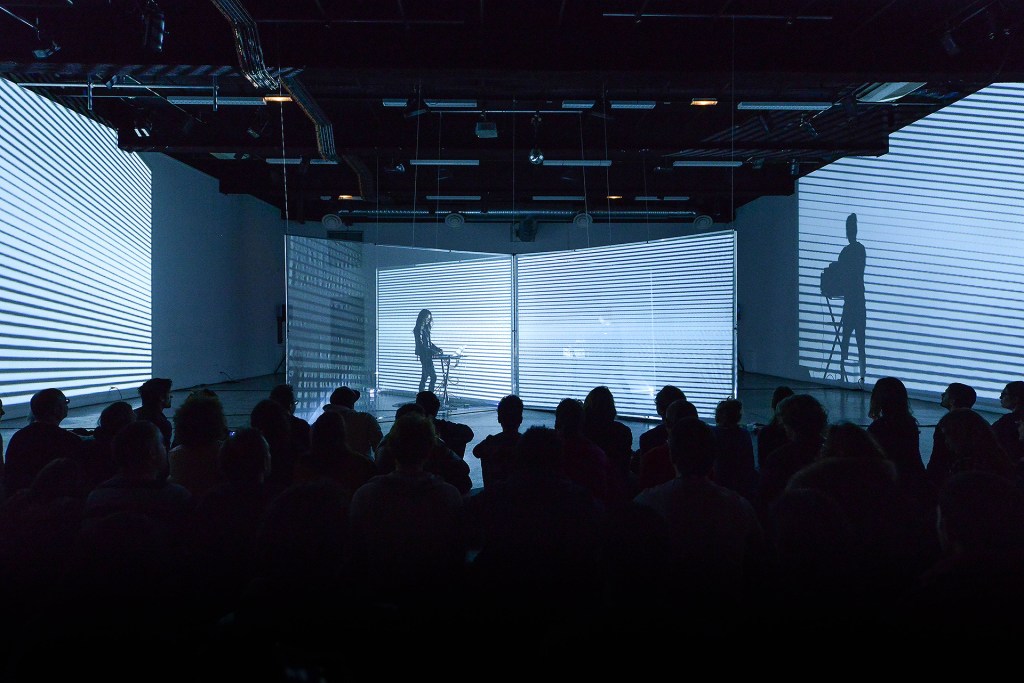
“SHIRO” is one of NONOTAK’s signature projects, showcasing their mastery of light and sound. The installation features an intricate interplay of light and shadows, set against a backdrop of soothing, ambient soundscapes. Visitors are invited to immerse themselves in the serene environment, where the boundaries between light and darkness blur, creating a meditative space that fosters introspection and tranquility. “SHIRO” exemplifies NONOTAK’s ability to create art that is not only visually compelling but also deeply transformative.
Using TouchDesigner, NONOTAK is able to synchronize the visual elements of “SHIRO” with the soundscapes in real-time, ensuring a cohesive experience where each light movement is matched with the corresponding sound. The software’s flexibility in handling complex visual data and its compatibility with various input devices allows the duo to experiment with different forms of light and sound interactions, pushing the limits of what is possible in immersive art installations.
Fin
TouchDesigner continues to be a revolutionary tool in the world of digital art, offering artists the means to explore new creative territories and redefine what is possible in visual and interactive experiences. By examining the works of these influential art collectives and studios, we gain insight into how TouchDesigner is being utilized to craft immersive environments, challenge conventional artistic boundaries, and engage audiences in meaningful ways.
The future of digital art is undoubtedly intertwined with the capabilities of software like TouchDesigner, which empowers artists to harness the power of technology to create impactful, thought-provoking, and innovative works. As the TouchDesigner community grows and evolves, we can anticipate even more groundbreaking projects that will continue to inspire and redefine the possibilities of art in the digital age.
For those new to TouchDesigner or seeking to expand their skills, exploring these projects can provide invaluable inspiration. The versatility and depth of TouchDesigner make it a crucial tool for any artist or designer looking to push the limits of their craft.
Further Reading on Visual Alchemist:
To explore more about the intersections of technology and art, and discover other innovative uses of tools like TouchDesigner, check out these articles on Visual Alchemist:
- The Art of Open Data: Transforming Government Information into Creative Expression
- Humans, Robots, and Generative AI: A Collaborative Artistic Journey
- Mastering Prompt Engineering: A Comprehensive Guide for AI-Assisted Art Creation
- The Creative Future of Generative AI: A New Frontier for Artists and Innovators
- Creating Complex Patterns: Advanced Fractals and Recursive Systems with Processing, p5.js, and TouchDesigner
These articles go deeper into how technology is reshaping the creative landscape, providing a wealth of knowledge for artists and technologists alike.
 Visual Alchemist
5 responses to “TouchDesigner: A Catalyst in the Evolution of Contemporary Digital Art”
[…] due and avoid perpetuating unfair use of copyrighted material. Artists, like those mentioned in “TouchDesigner: A Catalyst in the Evolution of Contemporary Digital Art”, use AI tools not only to enhance their creativity but also to respect the creative works of […]
LikeLike
[…] value system should they follow? As I delve deeper into the topic of generative AI in TouchDesigner: A Catalyst in the Evolution of Contemporary Digital Art, we explore how AI tools in creative fields are programmed with certain priorities in mind. To […]
LikeLike
[…] making it ideal for audiovisual experiences and immersive digital installations, as explained in my TouchDesigner guide. For those interested in pushing boundaries, exploring the advanced techniques in TouchDesigner […]
LikeLike
[…] bold, sharp sounds may work better for gaming platforms or high-energy apps. Platforms such as TouchDesigner explore this emotional synchronicity by combining sound and visual elements in real-time generative […]
LikeLike
[…] tools like TouchDesigner and Python for generative art continue to evolve, so does the scope of what artists can achieve. […]
LikeLike