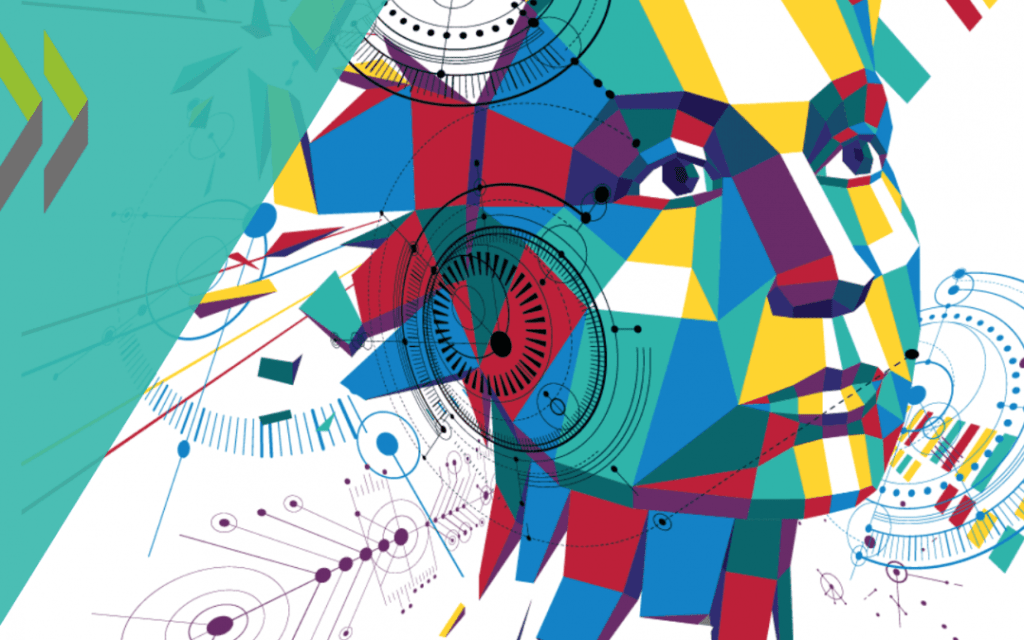
As artificial intelligence (AI) continues to advance, a fundamental question arises: can autonomous machines truly be creative? AI’s ability to produce art and collaborate with humans is challenging our traditional understanding of creativity. Researchers, artists, and technologists are exploring the boundaries between human ingenuity and machine-generated content, leading to new insights into both AI and human creativity.
This article delves into the creative potential of AI, exploring how studying human creativity can empower us to build better technology, and how AI systems, in turn, can help us understand what it means to be human.
The Creativity of Autonomous Machines
Autonomous machines powered by AI are already producing art across various disciplines. Whether it’s music, visual art, or dance, AI algorithms are showing that they can follow creative processes that mimic human artists. But are they truly creative?
Researchers such as Ahmed Elgammal, a pioneer in AI and art, are leading investigations into this question. His work focuses on whether machines can generate new artistic styles without direct human guidance. Creative AI systems, such as Generative Adversarial Networks (GANs), are being used to generate paintings, music, and even poems, challenging our conceptions of originality and inspiration.
Yet, one of the most significant aspects of AI creativity is how it reflects back on human creativity. AI’s capability to generate art forces us to ask deeper questions about what it means to be creative. What is creativity? Is it the act of producing something novel, or is it more deeply tied to human consciousness and emotion?
To gain more insights into how AI is reshaping art, you can explore The Rise of Generative AI: Evolution, Applications, and Future.
How AI Teaches Us About Human Creativity
Understanding AI’s creative process can reveal new insights into human creativity. Creativity in AI is often defined in terms of algorithmic patterns, rules, and learned behaviors, suggesting that human creativity could also follow similar systematic patterns. By studying how AI generates art, researchers can uncover the cognitive processes that underlie human creativity.
A key difference between AI and human creativity is intentionality. While AI generates art through mathematical formulas and data patterns, humans infuse their work with personal experiences, emotions, and cultural contexts. AI lacks emotional depth and self-awareness, which are integral parts of the human creative process.
Through collaboration with AI, humans can enhance their own creativity. This synergy between human imagination and machine precision opens new avenues for exploration in art, music, and design.
For a deeper dive into the human-AI relationship, check out Humans, Robots, and Generative AI: A Collaborative Artistic Journey.
Human-AI Collaborations: Pushing Boundaries of Innovation
One of the most exciting developments in this space is the collaboration between humans and AI in creating art. Many artists are already working alongside AI systems to push the boundaries of what is possible in creative fields.
- Taryn Southern, for example, co-produced her pop album “I AM AI” with the help of AI algorithms, showcasing how machines can assist in the creative process of music production.
- Sougwen Chung, a painter, collaborates with robotic counterparts that mimic her strokes, leading to a unique hybrid of human and machine-generated art.
- Wayne McGregor, a choreographer, uses neural networks to collaborate with dancers and create performances that blend human movement with AI-generated sequences.
- Reeps One, a beatboxer, engages in “battles” with AI systems, demonstrating how AI can be used in live performances to enhance human creativity.
These collaborations highlight the potential for human innovation when augmented by machines. Artists are no longer limited by their human capabilities; they can now leverage AI systems to create art that goes beyond their individual creative capacity.
Additionally, tools such as Deep Dream Generator and GANBreeder allow artists to explore new ways of manipulating images, enhancing them with machine-generated aesthetics. These tools enable users to input basic concepts or images and let the AI enhance or transform them into completely new artworks.
For an in-depth understanding of how AI tools are reshaping creativity, refer to Comparing Top Generative Art Tools: Processing, OpenFrameworks, P5.js, and More.
AI as a Tool for Human Creativity
What AI offers is not a replacement for human creativity but an enhancement. Creative AI systems are tools that extend the creative potential of individuals. They serve as a canvas on which human imagination can paint in new ways.
The educator Gene Kogan, for instance, has created courses such as “Machine Learning for Artists,” which introduce creatives to AI techniques that can be integrated into their workflows. These courses aim to democratize AI, making it accessible to more artists across the globe.
In the visual arts, Mario Klingemann and Helena Sarin are notable figures who use AI-generated visual aesthetics to create stunning pieces that combine human intuition with AI’s capabilities. These artists use tools such as neural networks and machine learning algorithms to generate unique, never-before-seen artworks. Scott Eaton and Ben Snell, both sculptors, are integrating machine learning into their craft, creating new forms that blend traditional techniques with algorithmic processes.
This integration of AI into the creative process raises essential questions about human innovation and its future. How far can we push the boundaries of creativity with machines by our side? What new art forms will emerge when human intuition and machine precision work together?
For further insights, explore The Role of Technology and Education in Shaping Generative Art’s Future.
Enhancing Human Creativity: The Future of AI Collaboration
As AI systems become more sophisticated, their role in augmenting human creativity will only grow. AI can analyze vast amounts of data, patterns, and structures that would be impossible for a single person to comprehend, providing new insights and perspectives that can inform creative projects.
In music, for instance, AI can generate entirely new sounds or assist in creating harmonies that would be difficult to conceive manually. In visual art, AI tools are capable of producing abstract designs or analyzing the emotional impact of a color palette. These machine-assisted insights enable artists to explore new creative directions.
The potential for human-machine collaboration extends beyond art. In fields such as architecture, design, and engineering, AI systems are being used to optimize the creative process, improving both efficiency and innovation.
For instance, AI-driven generative design tools can propose thousands of design iterations for a building or product, considering parameters that a human might overlook. This allows architects and engineers to push the boundaries of what is possible in design and construction.
To learn more about how AI is influencing creative industries, you can check out Exploring the Impact of Generative Art on Creativity.
What Can AI Teach Us About Being Human?
As we continue to develop creative AI systems, it becomes increasingly clear that these machines are teaching us more about ourselves. By observing how AI mimics human creativity, we can learn about the cognitive processes that drive our imagination and artistic expression.
One of the most profound lessons AI teaches us is that creativity is not confined to human consciousness. It is a process that can be modeled and replicated, at least to some extent, by machines. This raises philosophical questions about the nature of creativity and whether it is a uniquely human trait.
Through human-AI collaborations, we also gain insight into the essence of human creativity. Machines can assist in the creation of art, but they lack the emotional depth and subjective experiences that give human art its soul. In this way, AI serves as a mirror, reflecting back on our own creative processes and helping us understand what it means to be human.
For more on the philosophical implications of AI in creativity, read Theoretical Foundations of Generative Art: Algorithms, Randomness, and Design.
Conclusion: The Future of Human-AI Creativity
As AI technology advances, the relationship between human creativity and autonomous machines will continue to evolve. Far from replacing human artists, AI offers a new set of tools that can enhance and augment the creative process. From music and visual art to design and architecture, the synergy between humans and machines has the potential to unlock entirely new forms of artistic expression.
By studying how AI systems generate art, we not only learn more about the nature of creativity but also gain valuable insights into what it means to be human. The future of human-AI collaboration promises to be a rich and exciting frontier, where machines assist us in reaching new creative heights.
To see some of the current applications of AI in art, you can explore the potential of AI-generated art and how it is transforming the creative landscape.
 Visual Alchemist
2 responses to “Can Autonomous Machines Truly Be Creative? Insights from AI and Human Creativity”
[…] For a deeper understanding of how AI can shape creativity and interaction, consider reading Can Autonomous Machines Truly Be Creative? Insights from AI and Human Creativity. […]
LikeLike
[…] In this context, AI-generated pieces often raise concerns about authorship and originality. Is the artist the one who writes the algorithm, or is it the AI itself? This blurring of lines has been debated heavily, particularly in pieces such as “The Role of AI in Shaping Contemporary Art” and “Can Autonomous Machines Truly Be Creative?”. […]
LikeLike