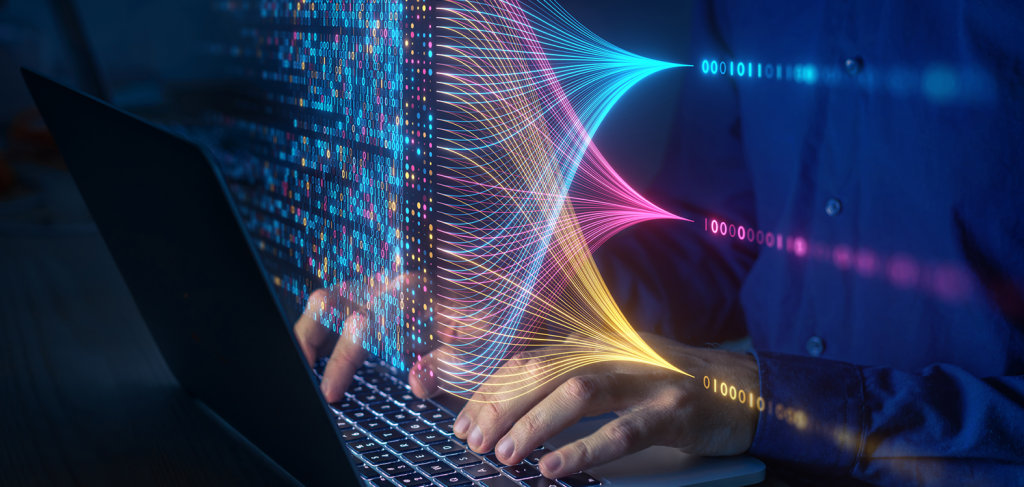
Artificial Intelligence (AI) has deeply permeated the art world, opening up unprecedented avenues for creativity, yet also sparking complex ethical debates. This duality of opportunity and responsibility is what makes AI so intriguing. I’ve seen this debate unfold not just in theory but across the body of work I engage with regularly. While AI-assisted tools offer unbounded creative potential, they also introduce a labyrinth of ethical considerations that we, as artists and technologists, cannot afford to ignore.
The Origins of Generative Art
Generative art has historical roots that trace back to early computer-generated art forms, where randomness, algorithms, and systems were employed to create art. From the pioneering work of early digital artists like Harold Cohen and his “AARON” project to the transformative use of fractals in visual representations, generative art has consistently bridged the gap between technology and creativity.
In the context of early generative art pioneers and innovations, the journey began with foundational figures who applied mathematical principles to their artistic visions. Harold Cohen’s “AARON” served as a precursor to what we now see in the flourishing generative art movement, where artists can blend algorithms and code to produce aesthetically pleasing outcomes. I explore this in-depth in an article titled Generative Art Movements: Tracing Algorithms to AI Innovations, where I examine how modern algorithms, combined with advancements in AI, have propelled this art form into the spotlight.
The Core Principles of Generative Art
At its core, generative art is governed by a few essential principles: randomness, autonomy, and algorithmic control. Unlike traditional art forms where every detail is meticulously planned, generative art allows artists to set parameters and let the algorithm take over, generating unique outcomes with each iteration.
Algorithms play a pivotal role in controlling the output of generative art, whether through fractals and self-similarity, the application of random noise functions, or through the blending of various mathematical models to produce striking visual compositions. For artists, it provides a powerful means of blending intentionality with unpredictability.
Moreover, as noted in the article Creating Complex Artworks: Combining Algorithms for Generative Art, it’s essential to balance complexity and simplicity when working with generative systems. Complex algorithms can yield stunning results, but too much intricacy can overwhelm the viewer or detract from the overall aesthetic appeal.
Tools and Software in Generative Art
Generative art has benefited tremendously from a suite of powerful tools designed to enable artists to bring their visions to life. Tools like TouchDesigner, Processing, and p5.js have established themselves as go-to platforms for artists seeking to experiment with dynamic and interactive visual forms. I cover this in detail in Top Generative Art Tools, where I compare various software and libraries that make this type of art possible.
Each of these tools comes with its strengths. Processing and p5.js, for example, are widely used for interactive installations and browser-based art. TouchDesigner stands out for its real-time generative capabilities, making it ideal for audiovisual experiences and immersive digital installations, as explained in my TouchDesigner guide. For those interested in pushing boundaries, exploring the advanced techniques in TouchDesigner opens up a new world of possibilities.
In addition to these tools, there are numerous open-source frameworks available for artists looking to create with minimal financial investment. These tools democratize the world of generative art, allowing emerging creators to explore new methodologies without facing the barrier of high costs.
Artistic Techniques: Blending Algorithms and Human Input
One of the defining characteristics of generative art is its use of both algorithms and human input. While the computer may handle the bulk of the creation, the artist’s role in setting parameters, tweaking code, and influencing the overall composition remains critical.
Generative art offers numerous avenues for customization. For instance, random selection within color palettes can dramatically change the mood and impact of a piece. Artists can also blend real-world data, creating compositions that reflect patterns found in nature, sound waves, or other measurable phenomena.
A prime example of this intersection between nature and technology is found in bio-art, where organic systems serve as both inspiration and input for artistic creations. Here, artists can simulate biological patterns such as cellular growth or ecosystem behaviors, resulting in works that mimic nature’s inherent complexity.
Generative Art in Practice: Case Studies and Examples
The impact of generative art extends beyond digital screens, influencing fields like architecture, fashion, and urban planning. An article titled Generative Design in Architecture explores how architects are leveraging these tools to design sustainable, efficient buildings that adapt to their environments.
In fashion, generative art has been utilized to create intricate patterns and designs that would be nearly impossible to produce by hand. Fashions Data Runway to the Metaverse examines how AI and generative algorithms are playing a pivotal role in the creation of digital fashion assets, an emerging trend in the intersection of technology and haute couture.
Additionally, the film and music industries are increasingly embracing generative art for interactive and real-time visuals during live performances. Artists such as Nonotak and Daito Manabe have pioneered installations that blend generative visuals with real-time soundscapes, creating truly immersive experiences. More on this can be found in Generative Art: Impact on Music, Film, and Interactive Media.
Ethical Considerations in Generative Art
As with any emerging technology, generative art raises important ethical questions. The balance between human creativity and machine input often leads to debates about authorship. Who truly “owns” a piece of generative art—the artist, the programmer, or the machine?
Moreover, concerns over AI-generated art, which may mimic or replicate the styles of traditional artists without proper attribution, have sparked discussions about intellectual property. In Navigating Ethical Challenges in Generative Art, I explore how the art world is grappling with these new dilemmas as AI continues to play an ever-expanding role in creative processes.
There’s also the question of accessibility. While generative art tools are democratizing creative expression, the digital divide means that not everyone has equal access to these resources. Artists in developing regions, for instance, may face challenges in accessing the necessary software and hardware, further exacerbating global inequalities in art production.
The Future of Generative Art
Looking ahead, the future of generative art is promising. As AI and machine learning algorithms evolve, the possibilities for creating increasingly complex and emotionally resonant pieces expand. AI in Art: Redefining Creativity and Ethics discusses how advancements in deep learning and neural networks are empowering artists to push the boundaries of what’s possible in digital art.
Moreover, the rise of immersive technologies such as virtual reality (VR) and augmented reality (AR) will allow for even more interactive and participatory forms of generative art. VR Art Tools and Techniques offers insight into how artists are beginning to experiment with these mediums, creating 3D environments that react in real time to viewer input.
In the realm of education, generative art is already becoming a valuable tool for teaching programming, data visualization, and creative problem-solving. As seen in Generative Art in Education, it has the potential to inspire students and professionals alike, bridging the gap between STEM and the arts.
Generative art stands at the crossroads of creativity and technology, offering boundless potential for those willing to explore its depths. From its early days as a mathematical curiosity to its current status as a celebrated art form, generative art continues to evolve and inspire. By harnessing the power of algorithms, randomness, and human intuition, I foresee this medium driving forward the next wave of digital creativity.
For further insights and explorations into the world of generative art, don’t miss the collection of articles that delve into specific tools, techniques, and movements shaping this exciting frontier.
 Visual Alchemist
3 responses to “Exploring Ethical Boundaries in AI-Generated Art, Duality, Balancing and Controlling”
[…] better understand the ethical implications, check out this post on AI’s role in creative ethics and how artists are balancing human input with machine-generated […]
LikeLike
[…] of AI’s role in art are increasingly debated. For example, in the context of generative art, AI ethics has become a crucial topic. Should AI be allowed to create without human oversight, or does that […]
LikeLike
[…] Understanding the complexities of generative art is not just about creating but also about embracing the ethics and future trajectories, as discussed in Exploring Ethical Boundaries. […]
LikeLike