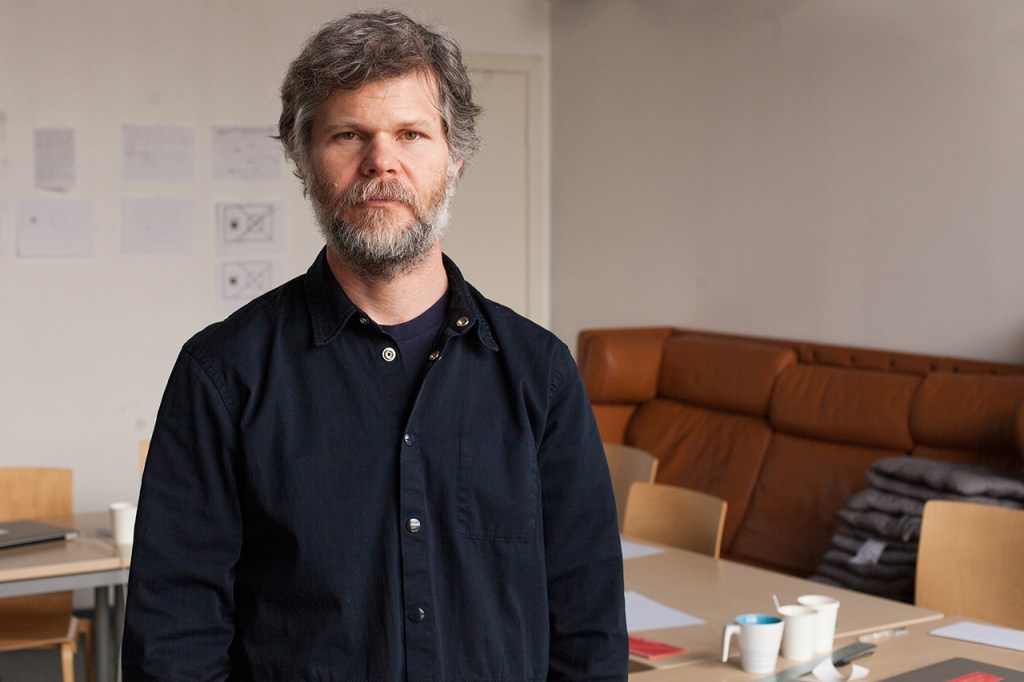
“Code is not just a tool for creating art, but a medium of expression in its own right.” These words embody the philosophy of Casey Reas, a pioneering figure in the field of generative art and a co-creator of Processing, a widely used programming language for artists. For Reas, coding is not a means to an end—it is the artistic process itself, one that allows for new forms of expression and infinite possibilities.
This article explores the life, work, and influence of Casey Reas, an American artist and educator whose work at the intersection of software, art, and design has shaped the field of digital art. We will delve into Reas’ journey from traditional design to programming-based art, focusing on his contributions to generative art and the impact of his creation, Processing, on the wider artistic and design community.
Overview of Featured Artist:
Casey Reas (b. 1972) is a Los Angeles-based artist known for his groundbreaking work in generative art and software-based art practices. As one of the co-creators of Processing, a programming language designed for visual artists, Reas has had an outsized influence on the way digital art is created, taught, and understood. His own artistic practice involves writing code to generate complex visual systems, often exploring the relationship between randomness and structure.
Background:
Born in Troy, Ohio, in 1972, Casey Reas’ early career trajectory followed a more traditional path in the arts. He received his Bachelor of Science from the College of Design, Architecture, Art, and Planning at the University of Cincinnati and later earned his Master of Fine Arts from the prestigious MIT Media Lab. His time at MIT was pivotal, as it was here that he began to explore the fusion of art and technology, studying under notable figures like John Maeda, a pioneer in the integration of digital media into the creative process.
During his time at MIT, Reas began to focus on programming as a medium for creative expression. His work at the intersection of design and technology led to the development of Processing, a programming language he co-created with Ben Fry in 2001. Initially intended as a tool for students, Processing quickly gained traction among artists and designers for its simplicity and flexibility, becoming a foundational tool for creative coding and interactive media.
Artistic Style and Medium:
Casey Reas’ artistic style is characterized by the use of code to generate intricate, dynamic visual systems. His work often straddles the line between abstraction and recognizable form, with visuals that range from organic, fluid shapes to geometric, architectural compositions. At the heart of his practice is the belief that writing code is not just a technical skill, but an act of artistic creation itself.
Reas typically uses generative algorithms to create his works, relying on systems of rules and instructions that lead to emergent visual outcomes. His compositions often evolve over time, driven by parameters that introduce elements of randomness or unpredictability. By employing software as his medium, Reas allows for variations and iterations, making each work a part of an ongoing process rather than a fixed, static object.
One of Reas’ most influential contributions to the art world is Processing, which has empowered countless artists, designers, and educators to experiment with code and create their own digital artworks. Processing enables artists to create visualizations, interactive media, and data-driven art with relative ease, expanding the possibilities for visual art in the digital age.
Themes and Messages:
Central to Casey Reas’ work is the exploration of the generative process—the way systems, randomness, and constraints interact to create complex forms. His work is deeply connected to the idea of emergence, where simple rules or algorithms lead to intricate, often unexpected outcomes. In this way, his art often mirrors natural processes, such as the growth patterns found in biological organisms or the behavior of complex systems.
Reas’ interest in the tension between randomness and control is another key theme in his work. By setting up systems of rules and letting the computer execute them, Reas creates a balance between human intention and machine autonomy. The results are dynamic visual forms that evolve in ways neither fully predicted nor fully random.
His art also raises important questions about the role of the artist in the digital age. If code can generate art, where does the artist’s contribution end and the machine’s work begin? Reas’ work challenges traditional notions of authorship and creativity, suggesting that the process of writing code and designing systems is itself an act of creation, even if the artist does not control every visual outcome.
Notable Works:
Casey Reas has produced a body of work that spans gallery installations, digital prints, and interactive pieces, all of which showcase his mastery of generative art. Below are a few notable examples:
- “Software Structures” (2004): One of Reas’ most important early works, “Software Structures” was a homage to Sol LeWitt’s conceptual art practice. In this piece, Reas wrote a set of instructions for software that would generate visual forms based on simple geometric rules. The work is notable for its exploration of systems-based art, where the artist provides the conceptual framework, and the machine executes the visual outcome.
- “TIFFANY” (2009): A more immersive installation, “TIFFANY” is an interactive piece that responds to the movement of viewers within a space. Using custom software and projection, Reas created an environment where geometric forms change and evolve in response to the presence of participants. The piece highlights Reas’ interest in interaction and how generative systems can respond to the physical world.
- “Ultraconcentrated” (2017): This series of digital prints explores the intersection of abstraction and organic form. Using custom algorithms, Reas created intricate, densely layered compositions that evoke both natural and architectural structures. The works in this series reflect Reas’ continued interest in the relationship between randomness and structure, as well as his ability to produce complex visual systems from relatively simple code.
- “Path” (2015): This generative artwork examines how digital systems can emulate biological movement patterns. “Path” features abstract lines and shapes that follow dynamic, flowing patterns, evoking the movements of water, wind, or even human gesture. The piece reflects Reas’ ongoing fascination with how natural processes can be simulated through code.
Personal Insights:
Casey Reas has often spoken about his belief that programming is an inherently creative act. “Writing software is like painting,” he once explained. “It’s a form of expression where the code becomes the brush and the canvas.” This philosophy is central to his approach, where code is not just a tool for generating visuals, but the foundation of the artistic process itself.
In addition to his work as an artist, Reas has been a passionate advocate for open-source software and education. Through his work with Processing, he has empowered thousands of artists and designers to explore the possibilities of generative art, making coding more accessible to the creative community.
Common Threads:
Casey Reas’ work is often compared to that of other pioneers in generative and algorithmic art, such as Vera Molnar, John Maeda, and Harold Cohen. Like Molnar, Reas embraces systematic processes and algorithmic rules in his artistic practice, using simple mathematical systems to create complex visual forms. However, while Molnar’s work often reflects a minimalist aesthetic, Reas’ visual language is more fluid and dynamic, often blurring the line between abstraction and organic forms.
In comparison to John Maeda, one of Reas’ mentors, their work shares a common ground in the integration of technology and art. However, where Maeda focuses on the intersection of design and technology, Reas has leaned more heavily into the generative art movement, focusing on code as the central element of his practice.
Reas’ use of software to generate art also resonates with the work of Harold Cohen, who created AARON, a pioneering algorithmic system for producing art. While Cohen’s AARON was designed to mimic human drawing processes, Reas takes a broader approach, allowing his algorithms to explore abstract forms and interactive behaviors without attempting to replicate human actions.
Diverse Perspectives:
What sets Casey Reas apart from other generative artists is his commitment to creating tools that empower others. Processing, the programming language Reas co-created, has revolutionized the way artists and designers approach coding, making it more accessible to people without formal programming backgrounds. This democratization of code has allowed for a wide range of creative voices to experiment with generative systems, expanding the scope of digital art as a whole.
Additionally, Reas’ work often focuses on the idea of interactivity and the relationship between viewers and generative systems. Pieces like “TIFFANY” push the boundaries of digital art by creating environments that change in response to human presence, making the audience an integral part of the work.
Impact on the Art World
Cultural Significance:
Casey Reas’ contributions to the art world go beyond his own artistic practice. As the co-creator of Processing, Reas has had a transformative impact on the field of digital art and design education. Processing has become one of the most widely used programming languages for visual artists, providing an accessible platform for artists to explore coding without needing advanced technical knowledge.
His work has also helped to normalize the idea of code as a medium for artistic expression, positioning software alongside more traditional art forms like painting and sculpture. By embracing code as both process and product, Reas has expanded the possibilities for what art can be in the digital age.
Moreover, Reas’ emphasis on open-source tools and education has had a lasting influence on the creative community. Processing has been integrated into art and
design curriculums around the world, empowering the next generation of artists to incorporate technology into their creative processes.
Reception and Recognition:
Casey Reas’ work has been widely exhibited in major galleries and museums, including the San Francisco Museum of Modern Art (SFMOMA), the Centre Pompidou in Paris, and the Whitney Museum of American Art. His contributions to both art and design have been recognized with numerous awards, and his influence extends beyond the art world into fields like data visualization and interactive media.
Processing, the language he co-created, is now a standard tool in digital art education, and its influence can be seen in everything from generative art installations to commercial design projects.
Future Directions:
As technology continues to evolve, Casey Reas’ work remains at the forefront of generative and interactive art. With advancements in artificial intelligence, machine learning, and virtual reality, Reas’ approach to creative coding has the potential to evolve in exciting new directions. His focus on the interplay between randomness and control, as well as his interest in human-computer interaction, suggests that his work will continue to explore the boundaries of digital art and design.
Reas’ ongoing commitment to open-source software and education also positions him as a key figure in shaping the future of digital creativity. Processing continues to evolve, and as more artists and designers experiment with new technologies, Reas’ influence is likely to extend even further into the digital and creative arts.
Recap Key Points:
Casey Reas is a pioneering figure in generative art, whose work explores the creative potential of code. Through his use of algorithms and software, Reas has produced intricate, dynamic visual systems that challenge traditional notions of art and creativity. As the co-creator of Processing, Reas has also had a profound impact on the broader art and design community, making code more accessible to artists and empowering a new generation of digital creators.
To explore Casey Reas’ work further, visit his website, attend exhibitions of his digital art, or experiment with Processing yourself. By engaging with his art and tools, you can better understand the possibilities of generative systems and how code can serve as a powerful medium for creative expression.
Casey Reas’ work invites us to reconsider the role of the artist in the digital age. By embracing the creative potential of code, Reas challenges traditional notions of authorship and control, showing that art can emerge from systems, processes, and interaction. As technology continues to shape our world, Reas’ contributions to art, design, and education will remain critical in defining the future of digital creativity.
 Visual Alchemist