
In today’s digital era, where consumers are inundated with information and options, brands face the challenge of standing out and remaining relevant. The traditional approach to branding—static logos, fixed color schemes, and unchanging messaging—is no longer sufficient in a landscape that demands adaptability and personalization. Enter generative brand identity systems, a transformative approach that leverages algorithms and creative coding to create dynamic, evolving brand identities.
Generative brand identity systems enable brands to adapt and personalize their visual representations in real-time, responding to user interactions, preferences, and external data inputs. This innovation is particularly impactful in our fast-paced digital environment, where consumer preferences and market conditions can shift rapidly. By utilizing generative design principles, brands can maintain relevance and engagement with their target audience, ensuring that their identity resonates on a personal level.
The significance of generative brand identity systems lies in their ability to foster a deeper connection between brands and consumers. Traditional branding often relies on static elements that may not reflect the evolving nature of consumer preferences. In contrast, generative systems analyze user behavior and environmental factors to produce unique branding experiences tailored to individual users. This capability not only enhances brand loyalty but also positions brands as forward-thinking entities that embrace innovation and creativity in their marketing strategies.
This article explores the concept of generative design in branding, its impact on personalization and engagement, the technologies that make it possible, and the future trends that will shape the next generation of brand identities. By delving into case studies and analyzing the benefits and challenges, we aim to provide a comprehensive understanding of how creative coding is revolutionizing the branding industry.
The Concept of Generative Design
Explanation of Generative Design Principles
Generative design is a process that employs algorithms and computational techniques to autonomously create designs based on predefined rules and parameters. It mimics natural evolutionary processes, such as growth and adaptation, to generate complex and innovative solutions. The designer sets the initial conditions and constraints, and the system explores a vast space of possibilities to produce multiple design variations.
At its core, generative design leverages computational power to:
- Explore Design Possibilities: By iterating through countless variations, the system can identify optimal designs that may not be immediately apparent to human designers.
- Adapt to Inputs: Generative systems can incorporate real-time data inputs, allowing designs to evolve based on user interactions, environmental conditions, or other variables.
- Optimize for Performance: In engineering contexts, generative design can optimize structures for weight, strength, and material usage.

Generative design finds its roots in the intersection of art, science, and technology. It is influenced by concepts from computational creativity, a field that explores how computers can enhance or simulate human creativity. According to McCormack and d’Inverno (2012), computers can be partners in the creative process, enabling designers to push the boundaries of traditional design.
For those interested in the intersection of creativity and technology, exploring the evolution of art and technology provides valuable insights into how generative design fits into the broader context of artistic innovation.
Difference Between Traditional Design and Generative Design
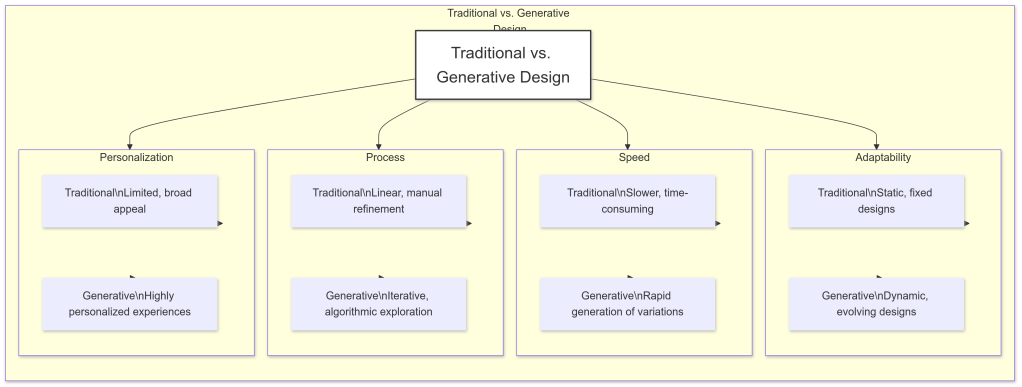
Traditional design methods rely heavily on the designer’s intuition, creativity, and manual efforts. The process is often linear, with a focus on refining a single concept to meet the project’s objectives. While this approach allows for control and precision, it can be time-consuming and may limit the exploration of alternative solutions.
Generative design introduces a paradigm shift:
- Automation: It automates the exploration of design variations, enabling the rapid generation of numerous options.
- Complexity: It can handle complex parameters and constraints, producing designs that might be too intricate for manual creation.
- Adaptability: Generative designs can evolve over time or in response to specific inputs, offering a dynamic quality that static designs lack.
This shift from a deterministic process to one that embraces exploration and adaptability opens new avenues for creativity and innovation in design. As Galanter (2003) notes, generative art and design leverage complexity theory as a context for creating new forms and aesthetics.
An excellent example of pushing the boundaries of traditional design can be seen in the impact of bold minimalism in contemporary design, where simplicity and complexity merge to create striking visual identities.
Role of Algorithms in Creating Dynamic Brand Identities
Algorithms are the backbone of generative design, enabling the creation of dynamic and responsive brand identities. They function by processing input data and applying mathematical and logical operations to produce visual outputs. Key roles of algorithms in generative branding include:
- Pattern Generation: Algorithms can generate patterns, shapes, and forms based on mathematical functions or procedural rules. For instance, fractal algorithms can create intricate, self-similar patterns that are visually captivating.
- Data Visualization: They can translate data inputs into visual elements, allowing brands to reflect real-time information in their identity. This could include visualizing live social media feeds, weather data, or user interactions.
- Interactivity: Algorithms enable responsiveness to user interactions, such as mouse movements or touch gestures, making the brand experience interactive. Interactive logos or website elements that respond to user input can enhance engagement.
- Adaptation and Evolution: Through machine learning and artificial intelligence, algorithms can learn from user behavior and adapt over time. AI algorithms can analyze patterns in user data to make predictive adjustments to branding elements.
By integrating these capabilities, brands can create identities that are not only visually compelling but also engaging and relevant to individual users. This dynamic approach allows for a more personal and immersive brand experience.
To delve deeper into how algorithms shape creative outputs, consider reading about theoretical foundations of generative art, which explores the mathematical and philosophical underpinnings of generative processes.
Impact of Generative Brand Identity Systems

Personalization: How Real-Time Data Influences Brand Identity
Personalization has become a cornerstone of modern marketing, with consumers expecting experiences tailored to their preferences. Generative brand identity systems excel in this area by:
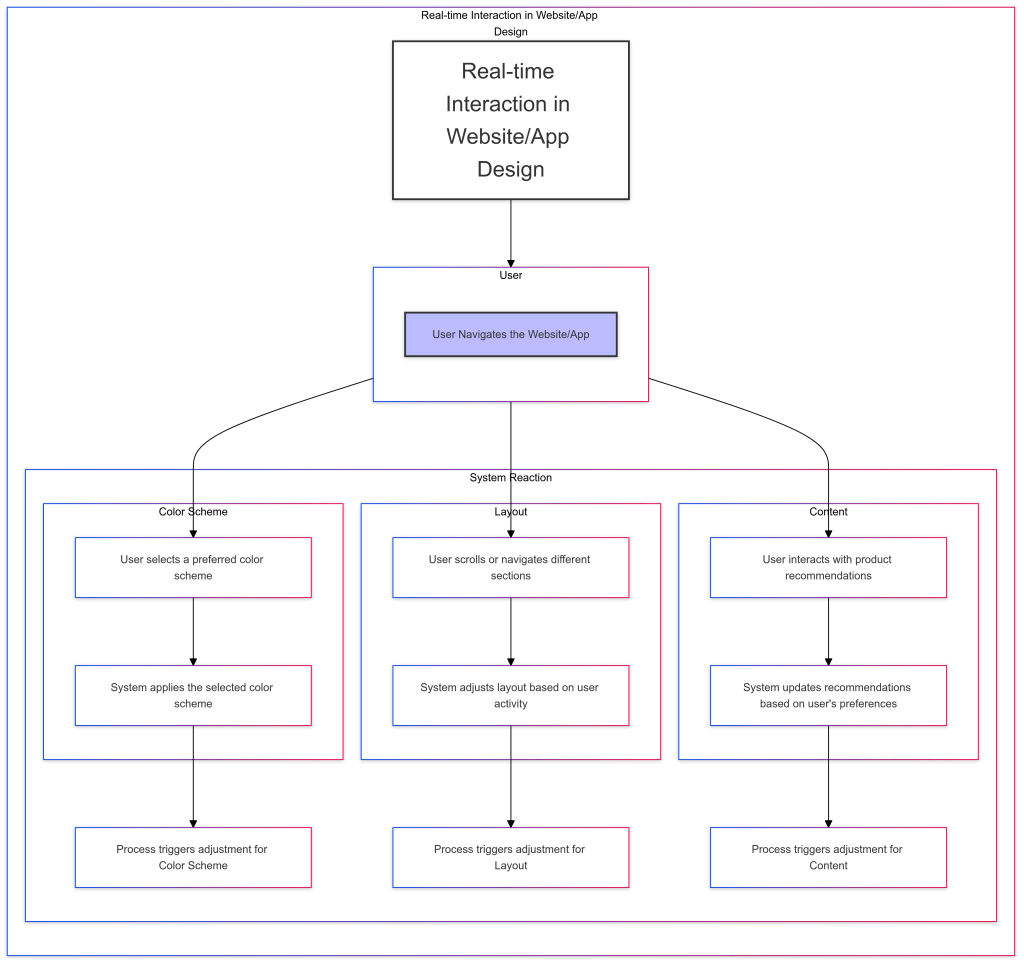
- Utilizing User Data: Collecting data on user behavior, preferences, and demographics to inform design variations. For example, a brand’s website might adjust its color scheme based on the user’s browsing history or location.
- Dynamic Content Delivery: Adjusting visual elements in real-time based on interactions or contextual factors. A music streaming service might alter its branding visuals based on the genre of music a user is currently listening to.
- Enhancing Relevance: Ensuring that each user encounters a brand identity that resonates with them personally. This level of personalization can increase engagement and foster a stronger emotional connection.
A study by Accenture (2018) found that 91% of consumers are more likely to shop with brands that recognize, remember, and provide relevant offers and recommendations. Generative branding leverages this preference by delivering tailored brand experiences.
For a deeper understanding of how data influences creativity, the article The Art of Data: Understand the World of Data-Driven Creativity offers valuable insights into data-driven art and its applications in branding.
Adaptability: The Ability to Evolve Based on User Interaction and External Factors
In a rapidly changing market, adaptability is crucial. Generative brand identity systems provide:
- Real-Time Evolution: Adapting to trends, news, or social media sentiments almost instantly. Brands can adjust their messaging and visuals in response to current events, aligning themselves with cultural moments.
- User-Driven Changes: Allowing users to influence the brand identity through their interactions, creating a sense of ownership. Interactive campaigns where users contribute content or design elements can deepen engagement.
- Contextual Relevance: Adjusting designs based on external factors such as weather, events, or cultural moments. A sports brand might change its logo colors to support a team during a major tournament.
This adaptability ensures that the brand remains relevant and engaging, regardless of external changes. It also demonstrates a brand’s responsiveness and alignment with its audience’s interests.
To explore how adaptability plays a role in modern art, consider reading about generative art: from historical roots to modern expression, which traces the evolution of generative art and its contemporary applications.
Engagement: Enhancing User Experience Through Interactive Branding
Interactive branding goes beyond visual appeal to engage users actively. Generative systems contribute by:
- Creating Interactive Elements: Incorporating animations, responsive graphics, and interactive features into the brand identity. Users might interact with a logo that changes shape or color based on their actions.
- Encouraging Exploration: Inviting users to interact with the brand, discover hidden features, or customize their experience. Gamification elements can make the brand experience more enjoyable and memorable.
- Building Community: Facilitating shared experiences or collaborative interactions among users. Social media campaigns that encourage user-generated content can amplify brand reach.
Such engagement strategies deepen the relationship between the brand and its audience, leading to increased loyalty and advocacy. According to a report by Deloitte (2019), brands that create personalized and engaging experiences can increase customer loyalty by up to 15%.
For practical examples of engaging audiences, the article Engaging Audiences with Interactive Installations: Art, Education, Marketing, and Entertainment provides insights into how interactive elements can enhance user experience.
Technologies Behind Generative Branding
Overview of Algorithms Used in Generative Design
Genetic Algorithms
Genetic algorithms are optimization techniques inspired by natural selection and genetics. They work by:
- Creating a Population of Designs: Generating multiple design variations.
- Evaluating Fitness: Assessing each design based on predefined criteria.
- Selection and Reproduction: Selecting the best designs and combining them to produce new generations.
- Mutation: Introducing random changes to explore new possibilities.
In branding, genetic algorithms can optimize visual elements to meet specific goals, such as maximizing user engagement or aligning with brand values. For instance, a genetic algorithm might evolve logo designs over time, selecting for those that perform best in terms of click-through rates or user preference.
To learn more about algorithms and randomness in art, consider reading Theoretical Foundations of Generative Art: Algorithms, Randomness, and Design.
L-Systems (Lindenmayer Systems)
L-Systems are mathematical models used to describe the growth processes of plants and fractals. They:
- Use Recursive Rules: Applying simple rules repeatedly to generate complex patterns.
- Model Natural Forms: Creating organic shapes and structures.
These systems are useful in generative branding for creating intricate patterns and designs that mimic natural aesthetics. Brands looking to convey themes of growth, sustainability, or nature might utilize L-Systems in their visual identity.
For an exploration of fractals and their applications, the article Understanding Fractals: Self-Similar Patterns, Famous Examples, and Generative Art provides valuable insights.
Machine Learning and AI
Machine learning and artificial intelligence enable generative systems to learn and adapt. They:
- Analyze Data: Processing large datasets to identify patterns and trends.
- Predict Preferences: Anticipating user reactions and adjusting designs accordingly.
- Automate Creativity: Generating new designs based on learned concepts.
AI-driven generative branding can create highly personalized experiences that evolve with the user over time. For example, an AI might analyze a user’s interactions with a website to tailor the site’s branding elements to their preferences.
For a comprehensive understanding of AI’s role in creativity, consider reading Machine Learning Applications in Generative Art: Unleashing Creative Potential.
Tools and Platforms for Implementing Generative Design in Branding
Software and Applications
- Processing: An open-source programming language and environment for visual arts. It’s widely used for creating generative art and interactive graphics. Processing provides a simple syntax and powerful graphics capabilities, making it accessible for designers and artists.
- OpenFrameworks: A C++ toolkit designed for creative coding, offering tools for graphics, sound, and interaction. OpenFrameworks is suitable for more performance-intensive applications and allows for integration with hardware and other software.
- TouchDesigner: A visual programming environment for real-time interactive multimedia content. It’s particularly popular for installations, performances, and interactive experiences.
- Adobe After Effects with Expressions: Allows for scripting animations and generative visuals within the familiar Adobe environment. Designers can use expressions to create dynamic animations that respond to variables.
- NodeBox: A platform for generative design and data visualization. NodeBox allows for the creation of 2D visuals with an emphasis on simplicity and ease of use.
- p5.js: A JavaScript library that makes coding accessible for artists and designers. It brings the capabilities of Processing to web browsers, enabling interactive web-based generative designs.
These tools empower designers to implement complex algorithms without extensive programming expertise, bridging the gap between creativity and technology. They often come with extensive communities and resources, facilitating learning and collaboration.
For those interested in exploring these tools, the article Exploring the Best Generative Art Tools: OpenFrameworks, Processing, p5.js, and More provides a detailed comparison.
Case Studies of Generative Brand Identity Systems
L-Atur: Customizable Generative Designs for Consumers
L-Atur is a pioneering project that exemplifies the potential of generative branding. It allows consumers to customize products through generative design, offering:
- Human-Machine Collaboration: Users input preferences, and the system generates unique designs based on those inputs.
- Accessibility: Non-designers can create professional-quality designs without specialized skills.
- Personalization: Each product becomes a one-of-a-kind item, enhancing the value to the consumer.
The L-Atur project demonstrates how generative design can democratize creativity. By involving consumers in the design process, brands can foster a deeper connection and increase customer satisfaction.
For insights into democratizing artistic creation, consider reading Democratizing Artistic Creation with Generative Art Tools and Platforms.
Adaptive Chatbots: Real-Time Sentiment Analysis in Branding
Adaptive chatbots utilize real-time sentiment analysis to enhance branding efforts:
- Personalized Interactions: Adjusting responses based on the user’s emotional state. If a user expresses frustration, the chatbot can respond with empathy and provide appropriate solutions.
- Brand Consistency: Ensuring that interactions align with the brand’s tone and values. The chatbot’s language and demeanor reflect the brand’s identity, whether it’s formal, casual, friendly, or professional.
- Data Collection: Gathering insights into customer preferences and concerns. This data can inform future branding strategies and product developments.
By providing empathetic and tailored interactions, brands can improve customer satisfaction and loyalty. A study by Oracle (2016) found that 80% of businesses plan to use chatbots for customer interactions by 2020, highlighting the importance of this technology.
For a deeper understanding of how AI can shape creativity and interaction, consider reading Can Autonomous Machines Truly Be Creative? Insights from AI and Human Creativity.
Other Notable Examples in Various Industries
IBM Watson and The Drum’s AI-Powered Magazine Cover
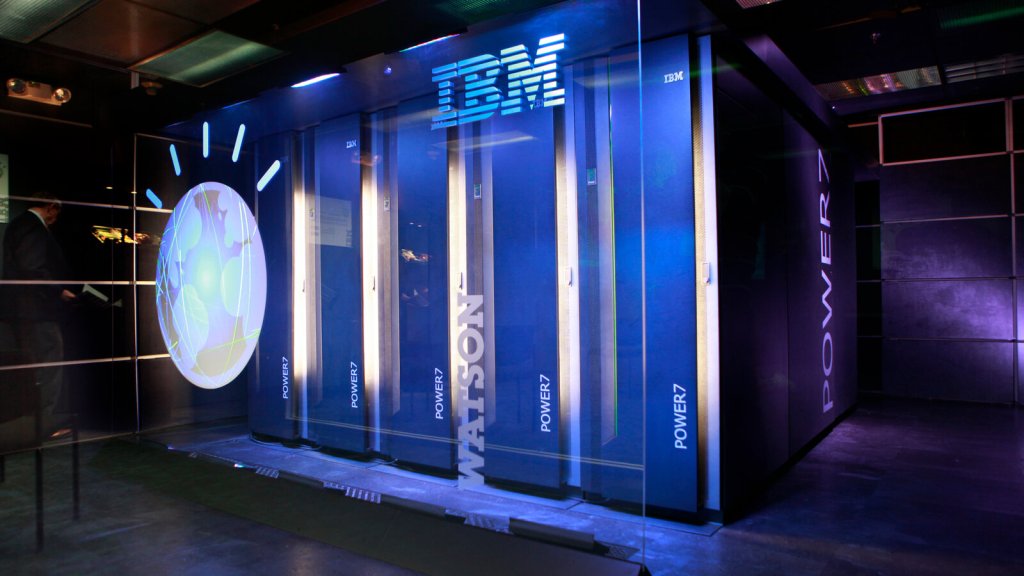
IBM’s Watson collaborated with The Drum magazine to create an AI-generated cover:
- Data-Driven Design: Watson analyzed thousands of images and layouts to produce the final design.
- Innovation Showcase: Demonstrated the potential of AI in creative fields.
- Industry Impact: Highlighted how generative design can be applied in publishing and media.
This collaboration showcased how AI can augment human creativity, leading to unique and impactful designs.
Coca-Cola’s Generative Bottle Designs
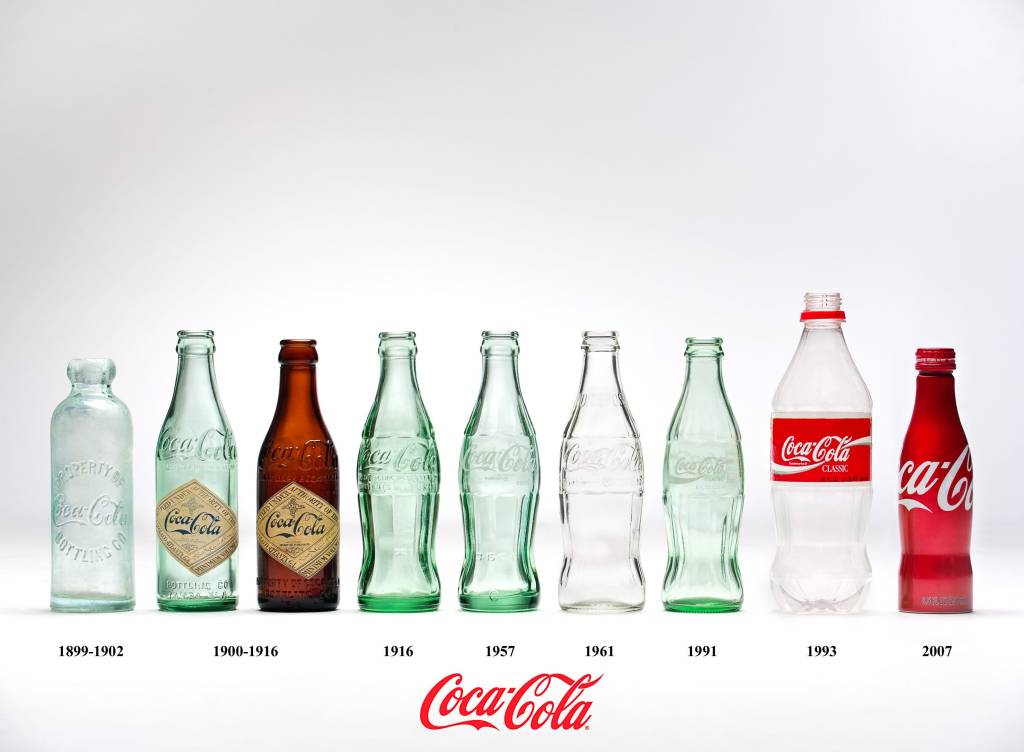
Coca-Cola implemented a campaign featuring millions of unique bottle designs:
- Algorithmic Patterns: Used algorithms to create distinct patterns for each bottle.
- Mass Personalization: Leveraged generative design to personalize products at scale.
- Consumer Engagement: Encouraged collectors and sharing on social media.
The “Share a Coke” campaign’s success demonstrated the power of personalization and how generative design can facilitate large-scale customization.
MIT Media Lab’s Rebranding

The MIT Media Lab developed a generative logo system:
- Dynamic Identity: The logo changes based on different parameters, reflecting the lab’s innovative spirit.
- Collaborative Design: Involved students and faculty in the creation process.
- Brand Representation: Captured the diversity and creativity of the institution.
This rebranding effort exemplified how generative design can create a flexible yet cohesive brand identity.
Spotify’s Year in Music Campaign
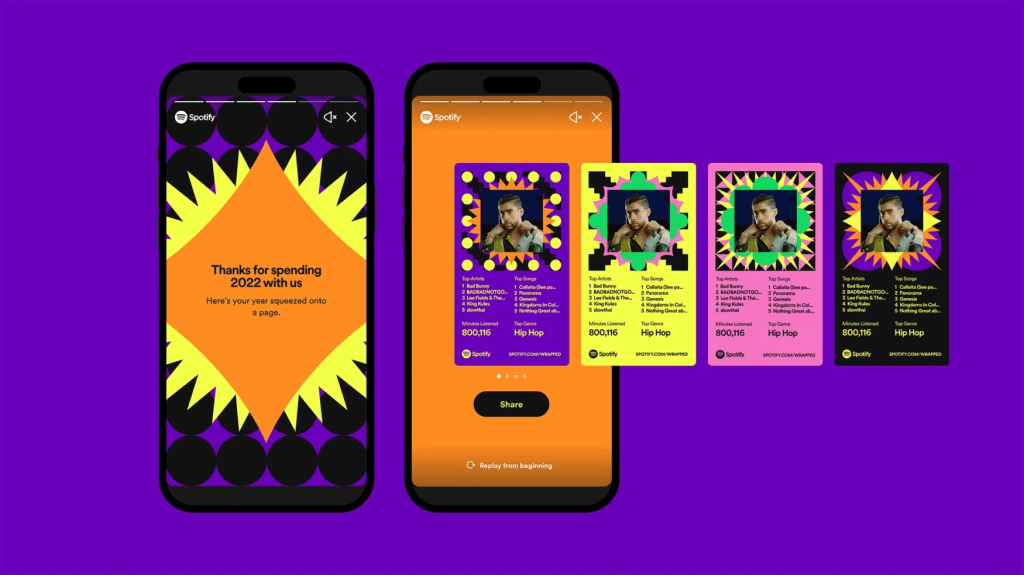
Spotify’s “Year in Music” campaign used generative design to create personalized visuals for users:
- Data Visualization: Translated users’ listening habits into unique graphics.
- User Engagement: Encouraged sharing on social media, increasing brand visibility.
- Personal Connection: Reinforced the user’s relationship with the brand through personalized content.
This campaign highlighted the effectiveness of combining user data with generative design to enhance engagement.
For more on data-driven creativity, explore Data-Driven Art: Principles, Techniques, and Examples.
Benefits of Creative Coding in Branding
Innovation: Pushing the Boundaries of Traditional Branding
Creative coding introduces new possibilities:
- Exploration of New Aesthetics: Generating visuals that are impossible with traditional methods. Complex patterns, interactive elements, and dynamic animations can set a brand apart.
- Experimentation: Allowing designers to test ideas rapidly and iteratively. Generative design can quickly produce multiple variations, facilitating exploration.
- Competitive Edge: Differentiating brands through unique and cutting-edge identities. Brands that adopt innovative approaches can position themselves as leaders in their industry.
As Manovich (2013) discusses in “Software Takes Command,” the integration of software into creative practices transforms how designers work and what they can produce.
For an exploration of how technology influences art, consider reading Creative Coding: A Blend of Art and Technology—Applications & Fundamentals.
Cost-Effectiveness: Reducing Design Costs Through Automation
Generative design can lead to cost savings by:
- Automating Repetitive Tasks: Reducing manual labor in creating variations. This efficiency allows designers to focus on higher-level creative decisions.
- Scaling Design Efforts: Producing multiple assets quickly without proportional increases in resources. For large campaigns requiring numerous visuals, generative design is invaluable.
- Optimizing Resources: Focusing human creativity on high-value tasks. Automation handles the heavy lifting, while designers refine and guide the process.
A report by McKinsey (2018) highlights that automation in creative industries can lead to significant efficiency gains without sacrificing quality.
Scalability: Ability to Generate Multiple Design Variations Quickly
Scalability is a significant advantage:
- Mass Customization: Creating personalized experiences for a large audience. This approach caters to individual preferences without the need for bespoke designs for each user.
- Rapid Deployment: Adjusting branding elements in response to market changes. Brands can react swiftly to trends or events.
- Consistent Quality: Ensuring all variations meet brand standards through algorithmic controls. Parameters and constraints maintain brand coherence across variations.
This capability supports large campaigns and global branding efforts, allowing for consistent yet adaptable brand identities.
To explore tools that enable scalability, consider reading Master Generative Art: Exploring Key Libraries Like Processing, OpenFrameworks, p5.js, and Three.js.
Challenges and Considerations
Technical Limitations: Understanding the Constraints of Algorithms
While powerful, algorithms have limitations:
- Complexity Management: Ensuring that designs remain understandable and usable. Overly complex generative designs might confuse users or detract from usability.
- Computational Resources: Managing the processing power required for real-time generative systems. High-performance requirements might limit accessibility on certain devices.
- Algorithmic Bias: Avoiding unintended biases in machine learning models. Careful data selection and algorithm design are necessary to prevent skewed outcomes.
Brands must work closely with technical experts to navigate these challenges. As Mitchell (1998) discusses in “An Introduction to Genetic Algorithms,” understanding the limitations and proper application of algorithms is crucial for successful implementation.
User Experience: Balancing Automation with Human Touch
Automated systems risk losing the human element:
- Over-Automation: Excessive reliance on algorithms can lead to impersonal experiences. Users may crave authentic, human connections with brands.
- User Confusion: Rapidly changing designs might disorient users. Consistency is important for brand recognition and trust.
- Emotional Connection: Maintaining authenticity and empathy in interactions. Human touchpoints can enhance emotional resonance.
Striking the right balance is essential for successful generative branding. Human oversight and input ensure that the brand’s voice and values remain central.
For insights into maintaining authenticity, consider reading Ethical Implications of AI Art in a Creative Future.
Brand Consistency: Maintaining a Cohesive Brand Identity While Allowing for Variability
Variability must be managed carefully:
- Defining Parameters: Setting clear guidelines for what can change and what must remain consistent. Core elements like logos, typography, or color palettes might have fixed aspects.
- Quality Control: Monitoring outputs to ensure they align with brand values. Regular reviews and adjustments keep the generative system on track.
- Stakeholder Alignment: Ensuring all parts of the organization understand and support the generative approach. Internal communication and training can facilitate this alignment.
Effective governance and design systems are required to maintain coherence. As Cope (2005) notes in “Computer Models of Musical Creativity,” balancing structure and freedom is key to successful generative processes.
Legal and Ethical Considerations
Generative branding also raises legal and ethical issues:
- Intellectual Property Rights: Determining ownership of algorithm-generated designs. Clear agreements and policies are necessary.
- Privacy Concerns: Handling user data responsibly, especially when personalization involves sensitive information. Compliance with regulations like GDPR is essential.
- Cultural Sensitivity: Ensuring designs do not inadvertently offend or misrepresent cultural elements. Diverse input and testing can mitigate risks.
Addressing these considerations proactively protects the brand and fosters trust with consumers.
For a discussion on ethical challenges, the article Navigating Ethical Challenges in Generative Art provides valuable perspectives.
Future Trends in Generative Brand Identity
Predictions for the Evolution of Generative Design in Branding
The future holds exciting developments:
- Increased Personalization: Deeper integration of personal data to create hyper-personalized experiences. Wearable technology and biometric data might inform branding elements.
- Integration with Other Technologies: Combining generative design with blockchain for unique digital assets. Non-fungible tokens (NFTs) could enable ownership of personalized brand experiences.
- Mainstream Adoption: Wider acceptance as tools become more accessible. User-friendly platforms will lower barriers to entry.
Brands that embrace these trends will likely lead in innovation and customer engagement. As Adobe (2020) suggests, the future of creativity lies in the synergy between human ingenuity and computational power.
For an exploration of emerging trends, consider reading Emerging Trends in Generative Art: AI, Data, and Immersive Experiences.
The Role of Emerging Technologies (e.g., AR/VR, IoT) in Shaping Brand Identities
Emerging technologies will expand possibilities:
- Augmented Reality (AR): Generative designs that adapt in real-world contexts through AR. Users might experience interactive brand elements overlaid onto their environment.
- Virtual Reality (VR): Immersive brand experiences with dynamic environments. Brands can create virtual spaces that users explore and interact with.
- Internet of Things (IoT): Devices that respond to generative branding cues, creating cohesive ecosystems. Smart homes or wearable devices could display personalized brand content.
These technologies will enable brands to create seamless and interactive experiences across multiple touchpoints. A report by PwC (2019) predicts that AR and VR could boost the global economy by $1.5 trillion by 2030, indicating significant opportunities for brands.
For insights into how AR and VR are transforming art, consider reading VR Art Tools and Techniques: Hardware, Software, 3D Modeling, Interactivity, and Sound Design.
Potential for Further Personalization and User Engagement
Personalization will reach new heights:
- Emotional AI: Systems that respond to emotional cues for deeper connections. Emotion recognition technology can adjust branding elements based on user feelings.
- Collaborative Design: Users co-creating brand elements, fostering community. Brands might host platforms where users contribute to the brand’s visual identity.
- Adaptive Storytelling: Narratives that evolve based on user choices and behaviors. Interactive stories can create more engaging and memorable experiences.
This evolution will redefine how brands and consumers interact, moving towards a more participatory and dynamic relationship.
For a glimpse into the future of creativity, consider reading The Creative Future of Generative AI: A New Frontier for Artists and Innovators.
Concluding thoughts
Generative brand identity systems represent a significant evolution in branding, offering innovative solutions for creating dynamic and personalized identities. By leveraging algorithms and real-time data, brands can foster deeper connections with consumers, enhancing engagement and loyalty. The ability to adapt and evolve in response to user interactions and external factors positions brands at the forefront of innovation.
As the digital landscape continues to evolve, the importance of adaptability and innovation in branding will only grow. Brands that embrace creative coding and generative design will be better positioned to navigate the complexities of modern marketing. By prioritizing personalization, adaptability, and user experience, they can develop identities that resonate with their audience and stand out in a competitive marketplace.
The future of branding lies in the ability to evolve continuously, and generative brand identity systems are at the forefront of this transformation. Brands are encouraged to explore these technologies and methodologies to stay ahead and connect meaningfully with their consumers.
In embracing generative design, brands not only enhance their current offerings but also pave the way for future innovations. The fusion of creativity and technology opens doors to endless possibilities, making now an exciting time for both brands and consumers.
For those interested in exploring how to get started with creative coding, the article Get Started with Processing and p5.js: A Guide for Visual Artists and Web Developers provides practical steps.
References
- McCormack, J., & d’Inverno, M. (2012). Computers and Creativity. Springer Science & Business Media.
- Mitchell, M. (1998). An Introduction to Genetic Algorithms. MIT Press.
- Galanter, P. (2003). What is Generative Art? Complexity Theory as a Context for Art Theory. International Conference on Generative Art.
- Manovich, L. (2013). Software Takes Command. Bloomsbury Academic.
- Reas, C., & Fry, B. (2007). Processing: A Programming Handbook for Visual Designers and Artists. MIT Press.
- Cope, D. (2005). Computer Models of Musical Creativity. MIT Press.
- MIT Media Lab. (2011). MIT Media Lab Identity. Link
- IBM Watson and The Drum. (2016). The Drum’s AI-Generated Magazine Cover. Link
- Coca-Cola. (2017). Share a Coke Campaign with Unique Bottle Designs. Link
- Adobe. (2020). The Future of Creativity: Generative Design and Artificial Intelligence. Link
- Accenture. (2018). Personalization Pulse Check. Link
- Deloitte. (2019). The Deloitte Consumer Review: CX marks the spot. Link
- Oracle. (2016). Can Virtual Experiences Replace Reality? Link
- McKinsey & Company. (2018). The Automation Imperative. Link
- PwC. (2019). Seeing is believing: How virtual reality and augmented reality are transforming business and the economy. Link
 Visual Alchemist