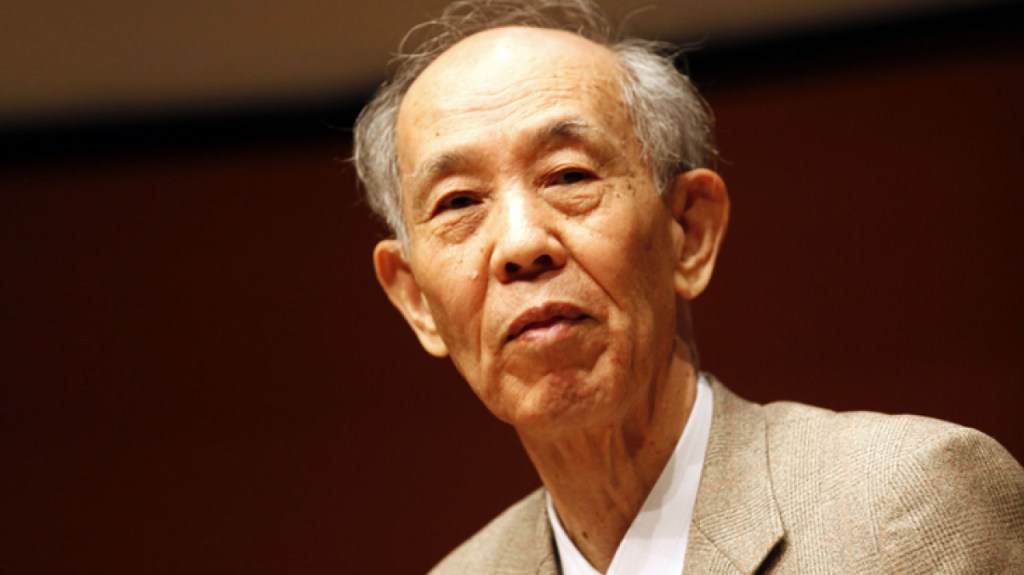
Hiroshi Kawano (1925–2012) is a pioneering figure in the field of computer art, known for his groundbreaking work in using algorithmic processes to generate art. Born in Tokyo, Japan, Kawano was one of the first artists to apply digital computers to the creation of visual art. His background in philosophy gave him a unique perspective on the relationship between art, logic, and technology, and his work often explored the deeper philosophical implications of machines creating art.
Kawano’s artistic journey began with a strong interest in semiotics, linguistics, and cybernetics. He studied philosophy at the University of Tokyo, where he became interested in the ideas of Claude Shannon and Norbert Wiener, pioneers in information theory and cybernetics. In the early 1960s, Kawano began experimenting with IBM computers, using them to explore how algorithms could produce visual compositions. His exploration of rule-based systems in art marked the beginning of his work as a generative artist, leading him to become one of the first practitioners of computer-generated art in Japan.
Artistic Style and Medium:
Hiroshi Kawano’s artistic style is deeply rooted in the use of mathematical algorithms and computer programming. He is best known for using FORTRAN, an early programming language, to create abstract visual compositions based on geometric forms and mathematical relationships. Kawano’s work is characterized by its systematic approach to art-making, where the artist designs the algorithmic rules but the computer executes the actual artwork.
His works often feature geometric shapes, grids, and repetitive patterns. These visual elements are generated through computational processes that follow specific mathematical instructions, resulting in images that reflect a perfect balance between order and variation. While Kawano’s work was often highly structured, it also contained an element of randomness and unpredictability, depending on the algorithm’s parameters.
Kawano’s medium of choice was the digital computer. In his early career, he worked with large mainframe computers like the IBM 7090, which allowed him to create his earliest computer-generated works. Kawano wrote custom algorithms to produce his abstract visual designs, focusing on the ability of the machine to follow logical instructions and generate aesthetically pleasing results. He produced his artwork by translating the computer’s output onto punch cards, which were then used to create plotter drawings and digital prints.
Kawano’s aesthetic often revolved around the idea of minimalism and formalism, where the beauty of the artwork lies in its adherence to mathematical precision and logic. He was particularly interested in the role of the artist in the digital age, questioning how much control an artist retains when the creative process is mediated through an algorithm.
Themes and Messages:
One of the central themes in Hiroshi Kawano’s work is the exploration of artificial creativity. He was deeply interested in the philosophical implications of machines creating art. By using computers to generate images, Kawano posed important questions about the nature of authorship and originality in art. He explored whether a machine could be considered an artist, and if so, what role the human plays in the creative process when the machine is responsible for the final output.
Kawano was also fascinated by the relationship between logic and aesthetics. His work reflects the idea that beauty can arise from mathematical systems and formal rules. Kawano’s use of computers was not just a means of automating the art-making process but a way to investigate the fundamental principles of artistic creation. He believed that computers, as logical machines, could reveal new insights into the nature of visual composition and design.
Another important theme in Kawano’s work is interdisciplinary collaboration. As a philosopher and artist, Kawano sought to bridge the gap between art and science, seeing both disciplines as systems of knowledge that could inform each other. His work often embodied a cybernetic approach to art, where the feedback loop between artist, machine, and output was central to the creative process. By integrating information theory, semiotics, and cybernetics into his work, Kawano pushed the boundaries of what art could be in the context of the digital age.
Notable Works:
- Composition I (1964): This early work is one of Kawano’s first experiments with computer-generated art. Using an IBM mainframe, Kawano wrote an algorithm that generated abstract geometric forms based on specific mathematical rules. The result was a black-and-white plotter drawing featuring a series of interconnected shapes arranged in a grid-like pattern. Composition I is significant because it represents one of the earliest examples of a fully algorithmic artwork produced using a digital computer.
- Hommage to Mondrian (1965): In this piece, Kawano paid tribute to the famous Dutch abstract painter Piet Mondrian, whose work emphasized geometric shapes and primary colors. Kawano used a computer algorithm to recreate Mondrian’s characteristic style, but with slight variations generated by the machine. This piece is a prime example of how Kawano used computers to explore the idea of variation within formal constraints, raising questions about the role of the machine as a creative tool.
- Randomness and Order (1967): In this work, Kawano experimented with the balance between randomness and structure. He wrote an algorithm that introduced random variables into a structured geometric composition, allowing the computer to generate patterns that were both orderly and unpredictable. The piece demonstrates Kawano’s interest in the tension between control and chaos, and how machines can be programmed to explore this dynamic.
- Geometric Landscape Series (1970s): This series of works explored the use of computers to generate abstract landscapes composed of geometric shapes. Kawano used algorithms to create grids of squares, rectangles, and triangles arranged in visually striking patterns that resembled architectural forms or landscapes. The Geometric Landscape Series reflects Kawano’s belief that computers could be used to create visual environments that were aesthetically meaningful and mathematically precise.
- Cybernetic Aesthetic (1971): In this theoretical work, Kawano explored the idea of cybernetic aesthetics, where art is created through the interaction between humans and machines. He outlined his vision for a future in which computers play an integral role in the creation of art, not as mere tools but as collaborators that contribute to the creative process. This work helped establish Kawano as a key thinker in the field of computer art and cybernetic theory.
Personal Insights:
Hiroshi Kawano often spoke about his work in philosophical terms, emphasizing the role of the artist as a designer of systems rather than a creator of objects. He believed that the algorithm was the true work of art, while the output produced by the machine was a reflection of the artist’s vision. Kawano once said, “The computer is not the artist, but it can follow the artist’s instructions to create something beyond what the human mind could imagine.” This sentiment reflects his belief in the collaborative nature of human-machine interaction.
Kawano also viewed computers as tools for expanding creativity. He was fascinated by the potential for machines to generate visual forms that were unimaginable to the human eye, believing that computers could reveal new aesthetic possibilities that had yet to be explored by traditional artists.
Comparative Analysis
Common Threads:
Hiroshi Kawano’s work shares conceptual elements with other early pioneers of computer art, such as Frieder Nake and Georg Nees, both of whom also used algorithms and computers to generate abstract visual art. Like Nake and Nees, Kawano was interested in the role of rules and systems in art-making, seeing the algorithm as the driving force behind the creative process. All three artists were concerned with the philosophical implications of machines creating art, and their work helped lay the foundation for the algorithmic art movement.
Kawano’s focus on cybernetics and feedback loops connects his work to that of Roy Ascott, another artist who explored the idea of interactive art and the role of systems in creativity. Both Kawano and Ascott saw the potential for computers to mediate the relationship between artist and audience, creating new forms of interaction and dialogue.
Diverse Perspectives:
What sets Hiroshi Kawano apart from his contemporaries is his background in philosophy and his deep engagement with cybernetic theory. While many early computer artists were primarily concerned with the visual output of their algorithms, Kawano was equally interested in the theoretical implications of using machines to create art. His work was deeply rooted in semiotics, information theory, and philosophical inquiry, making his approach more intellectually rigorous than that of some of his peers.
Kawano’s work is also notable for its focus on Japanese aesthetics. While his use of computers placed him within the broader context of the Western computer art movement, Kawano’s work often reflected the minimalist, contemplative qualities of traditional Japanese art forms, such as Zen gardens and calligraphy. This blend of Eastern philosophy with Western technology gave his work a unique cultural perspective.
Impact on the Art World
Cultural Significance:
Hiroshi Kawano’s contributions to the field of computer art have had a profound impact on both digital art and philosophical aesthetics. As one of the earliest artists to use digital computers to
create art, Kawano helped establish the legitimacy of algorithmic art as a form of artistic expression. His work laid the groundwork for future generations of artists who would use computers, algorithms, and AI to generate art.
Kawano’s influence extends beyond the art world into the realm of philosophy and cybernetics, where his writings on artificial creativity continue to inspire discussions about the role of technology in artistic creation. His exploration of the relationship between logic and aesthetics has also had a lasting impact on the field of generative art.
Reception and Recognition:
Although Hiroshi Kawano’s work was initially more well-known within academic and experimental circles, his contributions have since gained broader recognition. His work has been featured in major exhibitions on digital art and computer graphics, and his theoretical writings continue to be studied by scholars interested in the intersection of art and technology.
Kawano’s legacy is particularly strong in Japan, where he is regarded as one of the country’s most important figures in the history of digital art. His influence can be seen in the work of contemporary Japanese artists who continue to explore the potential of technology and algorithms in creative processes.
Future Directions:
As artificial intelligence and machine learning continue to evolve, Hiroshi Kawano’s work remains highly relevant. His exploration of the relationship between humans and machines in the creative process foreshadowed many of the current debates about the role of AI in art. Kawano’s belief that computers could be used to expand human creativity will continue to inspire future generations of artists working with generative processes and algorithmic systems.
Recap Key Points:
Hiroshi Kawano was a pioneering figure in computer-generated art, whose work explored the relationship between art, mathematics, and technology. His use of algorithms to generate abstract visual compositions laid the foundation for the field of algorithmic art, and his philosophical writings on artificial creativity continue to influence discussions about the role of machines in artistic creation. By combining philosophy, cybernetics, and art, Kawano created a unique body of work that remains influential today.
To explore Kawano’s work further, his writings on cybernetic aesthetics and algorithmic art are available in various publications, and his artwork can be found in digital art collections around the world. Kawano’s ideas offer a fascinating look at the philosophical underpinnings of digital art and serve as an inspiration for anyone interested in the relationship between technology and creativity.
Hiroshi Kawano’s work reminds us that the boundaries between art, science, and philosophy are not fixed but fluid, and that the future of art lies in exploring these intersections. As technology continues to shape the way we create and experience art, Kawano’s pioneering vision will remain a cornerstone in the history of computer-generated art and artificial creativity.
 Visual Alchemist