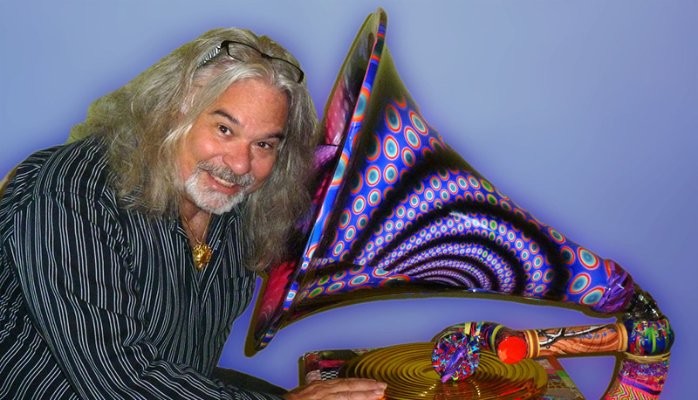
Laurence Gartel, born in 1956 in New York City, is often hailed as the “Father of Digital Art.” A pioneering figure in the digital art movement, Gartel’s career spans over four decades, during which he has pushed the boundaries of technology and creativity. His work is characterized by a vivid, avant-garde style that combines elements of pop culture, psychedelia, and abstract expressionism through the lens of digital technology.
Gartel studied at the School of Visual Arts (SVA) in New York, where his early exposure to the works of Nam June Paik, the renowned video artist, influenced his interest in merging technology with art. During the mid-1970s, while others were still working with traditional media, Gartel began experimenting with early analog computers at the New York Institute of Technology (NYIT). This set him on a groundbreaking path that would lead to the creation of some of the first-ever digital art pieces, establishing him as a pioneer at the intersection of art and technology.
Artistic Style and Medium:
Laurence Gartel’s artistic style is unmistakable: a fusion of vibrant psychedelic colors, kaleidoscopic patterns, and surreal imagery that push the boundaries of traditional fine art. His work has been heavily influenced by the cultural movements of the 1960s and 1970s, including Pop Art and Psychedelia, and it often feels like a digital reinterpretation of these artistic styles, but with an entirely futuristic edge.
Gartel’s medium of choice is the computer, and his use of digital tools to create art started at a time when the concept of digital art was still largely unexplored. In his early works, Gartel used analog computers, Moog synthesizers, and painterly software to manipulate electronic signals and generate abstract images. Over time, as digital technology advanced, Gartel began incorporating graphic software and other digital tools into his practice, allowing him to experiment with more complex imagery and visual effects.
One of Gartel’s defining innovations is his use of digital paint. Using Photoshop, CorelDRAW, and other software, Gartel creates highly detailed compositions that blur the line between traditional painting and digital manipulation. He layers patterns, textures, and digital brushstrokes to create complex, immersive pieces. Unlike traditional artists, Gartel’s “brush” is a stylus, and his “canvas” is a digital screen, resulting in an entirely new form of artistic expression.
Themes and Messages:
Central to Laurence Gartel’s work is the exploration of technology’s role in modern society. His art often reflects on the digital transformation of the world, using the computer as both a medium and a subject. Gartel’s works challenge viewers to think critically about the digital age, blurring the lines between reality and the virtual world, and asking questions about the nature of art in a technology-driven society.
A key theme in his work is the fusion of art and technology, where digital processes become part of the artistic narrative itself. Gartel’s early experiments with analog computers were groundbreaking, but his continued use of digital tools serves as a metaphor for how technology shapes creativity. His pieces often exude a sense of futurism, reflecting the optimism and fear that come with technological advancements.
Another central theme in Gartel’s work is the influence of popular culture. Many of his digital compositions incorporate elements of consumerism, branding, and modern media, reflecting the overwhelming presence of these forces in contemporary life. His vibrant, chaotic compositions often mirror the sensory overload of the digital world, where information, imagery, and advertising constantly bombard the viewer.
Gartel’s work also delves into psychedelic exploration. His use of vibrant colors and flowing, organic forms evokes a hallucinatory experience, often seen as an extension of the 1960s counterculture movement. By incorporating digital manipulation, Gartel modernizes these visual aesthetics, making them relevant to the digital era.
Notable Works:
- Bowie Art (1985): Gartel was commissioned to create digital art for David Bowie during the release of Bowie’s album Tonight. This collaboration between Bowie, a cultural icon, and Gartel, a digital art pioneer, marked an important moment in the convergence of music and digital art, reflecting how the digital medium was being embraced by mainstream artists.
- Poster for the 57th Annual Grammy Awards (2015): In a high-profile commission, Gartel designed the official poster for the Grammy Awards, showcasing his signature digital style. The poster, which featured swirling colors and musical motifs, highlighted the connection between music and visual art in the digital age. This project not only solidified his place as a digital art pioneer but also brought his style to a global audience.
- Digital Ferrari Art Car (2015): Gartel made headlines by creating the first-ever digitally painted Ferrari, using a Ferrari 458 Italia as his canvas. This project, which transformed the luxury sports car into a moving piece of digital art, demonstrated the fusion of art, technology, and design. The collaboration brought Gartel’s work into the automotive industry, pushing the boundaries of where digital art could exist.
- Art Cars for Art Basel Miami (2015): In a collaboration with Mercedes-Benz, Gartel created a series of digitally designed Art Cars for the prestigious Art Basel Miami. These cars, which featured Gartel’s signature vibrant patterns, were driven through the city, turning the streets into a gallery and merging high art with everyday life.
- Absolut Gartel (1990s): Gartel’s collaboration with Absolut Vodka was a notable project where he created a series of digital advertisements for the brand, following in the footsteps of Andy Warhol and other Pop Art icons. The Absolut Gartel campaign helped bring digital art into the advertising world, blending commercialism with creative innovation.
Personal Insights:
Laurence Gartel is a strong advocate for embracing technology in art. He has often spoken about the role of the computer as a tool for creative empowerment, stating, “The computer is the brush of the 21st century.” For Gartel, digital tools do not detract from the artist’s creativity; rather, they offer new possibilities for experimentation and artistic expression.
Gartel has also been vocal about the need to challenge traditional art norms. He frequently argues that digital art is a valid and important part of the contemporary art world, despite its struggles for mainstream acceptance. In his view, technology is not just a tool, but a medium through which artists can address the cultural and social shifts brought on by the digital age.
Comparative Analysis
Common Threads:
Laurence Gartel’s work shares thematic similarities with Andy Warhol, particularly in their shared interest in consumerism, popular culture, and mass media. Like Warhol, Gartel’s work reflects on the pervasive influence of brands and advertising in modern society. Both artists have blurred the boundaries between fine art and commercial art, though Gartel’s use of digital technology places him in a more contemporary context.
Gartel can also be compared to Nam June Paik, with whom he shares a deep interest in technology as a medium. While Paik worked in video art, Gartel has pushed the use of digital tools further into the realm of fine art, manipulating the computer to create paintings and installations that challenge the traditional understanding of what constitutes “art.” Both artists revolutionized their fields by merging art with the latest technologies.
Diverse Perspectives:
What sets Gartel apart from his contemporaries is his relentless commitment to digital-only mediums. While other artists have incorporated digital tools into their practice, Gartel has embraced the computer as the core of his creative process, not just as a tool but as the canvas itself. His commitment to digital art from its inception, and his advocacy for its recognition as a valid art form, makes him a unique figure in the art world.
Moreover, Gartel’s interest in collaborative commercial projects, such as his work with Ferrari, Mercedes-Benz, and Absolut Vodka, sets him apart from many traditional fine artists. His ability to blend commercial design with high art, and to integrate his digital aesthetic into everyday objects like cars, reflects his belief that art should be accessible and integrated into modern life.
Impact on the Art World
Cultural Significance:
Laurence Gartel’s contributions to digital art are profound. He was one of the first artists to explore the use of computers as a creative tool, and his early experiments helped define what digital art could be. By championing digital painting and digital manipulation as legitimate forms of artistic expression, Gartel helped pave the way for the widespread acceptance of digital media in the art world.
His influence extends beyond the fine art community. Gartel has worked across a variety of fields, from advertising and music to fashion and automotive design, demonstrating how digital art can be applied to a wide range of industries. His collaborations with major brands have brought digital art to mainstream audiences, making him one of the most recognized digital artists of his time.
Reception and Recognition:
Gartel’s work has been exhibited in major galleries and museums around the world, including the Museum of Modern Art (MoMA) in New York, the Long Beach Museum of Art, and Art Basel Miami. He has received widespread recognition as a pioneer of digital art, and his influence on the contemporary art scene continues to
grow as digital media becomes more prevalent.
In addition to his exhibitions, Gartel has also been a vocal advocate for digital art education, often lecturing at universities and art schools to inspire the next generation of artists to embrace technology. His contributions to both the art world and digital technology have earned him a reputation as a visionary artist who continues to innovate and push boundaries.
Future Directions:
As digital tools continue to evolve, Gartel’s legacy remains relevant, particularly in the context of artificial intelligence, virtual reality, and NFTs (non-fungible tokens). His work with digital media foreshadowed many of the current discussions surrounding digital ownership and virtual art, and as these technologies develop, Gartel’s influence will likely continue to shape the future of digital creativity.
Recap Key Points:
Laurence Gartel is a pioneering figure in digital art, known for his bold use of technology to create vibrant, psychedelic works that merge art, popular culture, and technology. From his early experiments with analog computers to his contemporary digital masterpieces, Gartel’s work has consistently challenged the boundaries of what art can be. His collaborations with major brands and commercial ventures have further solidified his influence in bringing digital art into mainstream culture.
To explore Laurence Gartel’s work, you can visit his website or find his pieces in galleries and exhibitions worldwide. As one of the early advocates for digital creativity, his work offers a fascinating look at the possibilities of art in the digital age, encouraging viewers to think critically about the intersection of technology and art.
Laurence Gartel’s work reminds us that art and technology are not mutually exclusive but can, in fact, enhance each other in powerful ways. His career is a testament to the evolving nature of creativity in the digital world, and as new technologies continue to emerge, Gartel’s pioneering contributions will remain a cornerstone of the digital art movement.
 Visual Alchemist