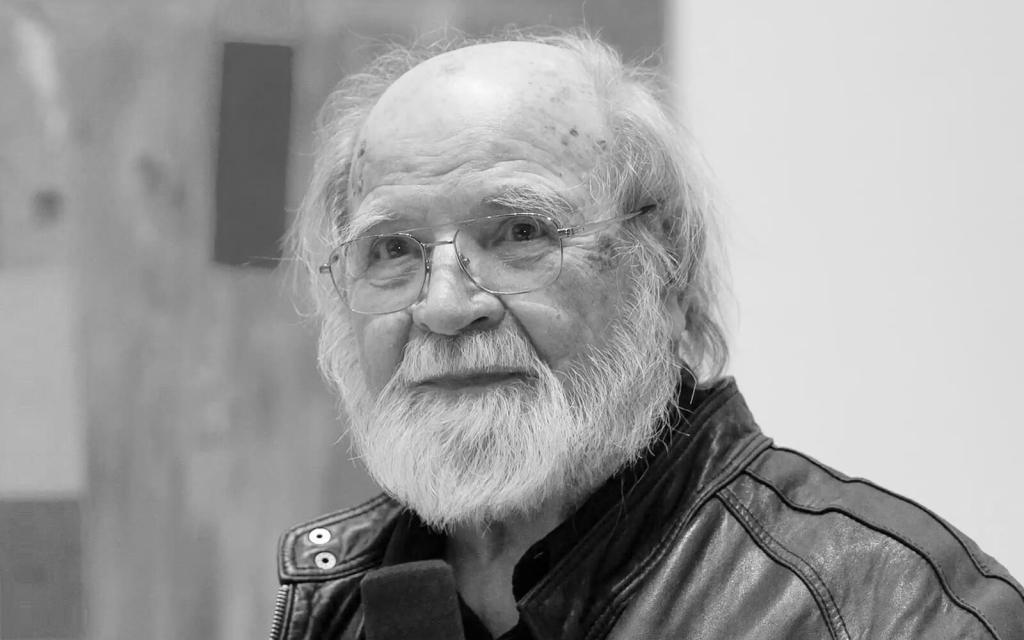
Roman Verostko, a pioneering figure in the field of algorithmic art, was born on September 12, 1929, in Tarrs, Pennsylvania. His artistic journey began in a traditional setting, studying painting and art history. After earning degrees from the Art Institute of Pittsburgh and the University of Pittsburgh, Verostko’s early career was rooted in modernist painting. However, his artistic trajectory took a transformative turn when he discovered the potential of computers as creative tools in the late 1960s. This discovery led him to shift from traditional media to exploring art in the digital realm.
Verostko’s interest in art and technology deepened during his time at MIT’s Center for Advanced Visual Studies and his tenure as a professor at the Minneapolis College of Art and Design, where he began experimenting with computer algorithms. He became one of the leading artists in the Algorists movement, a group of artists who wrote their own algorithms to create art. His blend of religious philosophy, traditional art training, and digital technology created a body of work that has left a lasting impact on both contemporary art and computer science.
Artistic Style and Medium:
Roman Verostko is renowned for his algorithmic art, a style in which artworks are generated by algorithms written by the artist. His signature style blends the logic of computer programming with the fluidity of traditional brushwork, resulting in strikingly intricate and often organic-looking forms. Verostko’s works are characterized by an emphasis on geometric shapes, repetition, and symmetry, all generated through carefully constructed codes that guide the creation process.
While most of his works are computer-generated, Verostko has also incorporated physical mediums such as ink and pen plotters, machines that translate digital instructions into physical drawings. His “machine-assisted” artworks, often described as “code-generated brushstrokes,” highlight a synthesis of human creativity and machine precision. He uses plotters to execute algorithms, drawing elaborate, often symmetrical, patterns that feel both natural and highly structured.
Verostko’s work often includes ornamentation inspired by illuminated manuscripts, giving his algorithmic art a spiritual and philosophical dimension. This combination of modern technology with traditional, humanistic art forms creates a juxtaposition of past and future, exploring the boundaries of what art can be in the digital age.
Themes and Messages:
Central to Verostko’s work is the theme of the intersection between art and technology. He was one of the first artists to explore how algorithms could be used to express artistic ideas, and much of his work examines how mathematical systems can produce art that is both rational and emotive. For Verostko, computers are not just tools for efficiency, but creative partners capable of expanding the boundaries of human expression.
A key theme in Verostko’s art is spirituality, which stems from his time as a Benedictine monk in the 1950s and his deep interest in religious philosophy. His work often reflects a search for harmony, order, and meaning in the universe, themes that echo the contemplative traditions of illuminated manuscripts and religious art. His algorithmic compositions can be seen as meditative explorations of cosmic order, inviting viewers to contemplate the underlying patterns that govern both the natural world and human experience.
Verostko also explores the theme of human-machine collaboration. By using machines to execute his creative vision, he challenges traditional notions of authorship, asking profound questions about the role of the artist in the age of technology. Can a machine be an artist? Can code replace the brush? These are questions that Verostko addresses through his art, which exists at the intersection of human thought and machine logic.
Notable Works:
- The Manchester Illuminated Universal Turing Machine (1998): This project is one of Verostko’s most famous works and was created to celebrate the 50th anniversary of the invention of the Universal Turing Machine. Combining Verostko’s interest in technology with his fascination for illuminated manuscripts, this series of digital prints features algorithmically generated designs inspired by medieval illumination. The work pays homage to Alan Turing while illustrating the potential for computers to create beauty through logic.
- Epigenesis Series (1984–1987): This body of work represents Verostko’s first experiments with algorithmic art, where he used hand-written code to instruct a plotter to draw intricate forms. The series explores the concept of epigenesis, or the process by which complex structures evolve from simple rules. Each artwork is unique, but all share a common language of algorithmic precision and organic growth, reflecting the artist’s interest in the fusion of nature and technology.
- Algorithmic Brushstrokes (1990s): Verostko’s “algorithmic brushstrokes” series is an ongoing exploration of how machines can create art that mimics the fluidity of human brushstrokes. Using pen plotters, Verostko developed algorithms that instructed machines to generate sweeping, calligraphic forms on paper. These pieces blur the line between human and machine-made art, offering a striking visual language that combines traditional aesthetics with cutting-edge technology.
- Emergent Patterns Series (1990s–2000s): This series features highly detailed, algorithmically generated patterns that explore the idea of emergence, where complex forms arise from simple rules. These works often resemble intricate mandalas or cosmic patterns, evoking a sense of order and harmony that reflects Verostko’s spiritual worldview. Each piece in the series is unique, even though they are all generated by the same underlying algorithm, demonstrating the unpredictability and organic quality of generative art.
- Monumental Algorithmic Murals (2000s): In later years, Verostko created large-scale murals based on algorithmic designs, often displayed in public spaces and galleries. These monumental works highlight the potential for algorithmic art to be scaled up to architectural dimensions, turning walls and buildings into canvases for digitally generated patterns.
Personal Insights:
Roman Verostko often reflects on the profound relationship between art, technology, and spirituality. In interviews, he has emphasized that computers are not just tools for creating art but are deeply connected to the human creative process. He has said, “The code is my brush,” underscoring his belief that algorithms can be an extension of the artist’s vision.
Verostko views his work as an ongoing dialogue between rationality and intuition, where machines assist in realizing creative ideas but do not replace the human element. His art is not a rejection of tradition but rather an evolution of it, where the ancient practice of art-making finds new expression through digital systems.
Comparative Analysis
Common Threads:
Roman Verostko shares several key concepts with other pioneers of algorithmic art, such as Frieder Nake and Vera Molnár. Like Verostko, these artists use mathematical systems and computer algorithms to generate art, questioning the role of the artist in the creative process. All three artists are deeply engaged with the idea of generative systems, where simple rules can produce complex and often unpredictable results.
Where Verostko’s work stands apart is in its spiritual dimension. While artists like Nake and Molnár focus more on the aesthetic and technical aspects of algorithmic art, Verostko brings a philosophical and spiritual perspective to his creations. His background as a Benedictine monk and his fascination with illuminated manuscripts give his work a contemplative quality that is less pronounced in the work of his peers.
Diverse Perspectives:
While Verostko’s art is deeply influenced by his religious background, it also resonates with the technological optimism of the mid-20th century. His work speaks to the potential for technology to be a force for creativity and meaning, offering a more humanistic view of machines compared to the cold, utilitarian approach often associated with early digital art.
Verostko’s pen plotter work also sets him apart from other algorithmic artists who primarily worked with digital screens. His use of machines to create physical drawings echoes traditional art forms like calligraphy and brush painting, linking the digital with the tactile in a way that many of his contemporaries did not explore.
Impact on the Art World
Cultural Significance:
Roman Verostko is widely regarded as a pioneer of algorithmic art and has made significant contributions to the development of generative art. His work bridges the gap between art history and contemporary digital practices, offering a new way to think about the role of the artist in the digital age. By writing his own algorithms, Verostko has expanded the boundaries of what art can be, using technology to create works that are both mathematically precise and emotionally resonant.
His influence extends beyond the art world, reaching into fields like computer science, design, and architecture. Verostko’s approach to using code as a creative tool has inspired a new generation of artists and technologists who continue to explore the potential of algorithmic processes in both artistic and practical applications.
Verostko’s work has been widely exhibited in galleries and museums around the world, including the Victoria and Albert Museum, the Walker Art Center, and the Spencer Museum of Art. He has received numerous awards for his contributions to the field of digital art, including the SIGGRAPH Distinguished Artist Award and the Golden Plotter Award.
Critics have praised Verostko’s work for its sophistication, elegance, and conceptual depth. His ability to blend traditional art forms with cutting-edge technology has made him a key figure in the history of algorithmic and generative art.
As technology continues to evolve, Verostko’s work remains highly relevant. His exploration of human-machine collaboration foreshadows current debates about the role of artificial intelligence in creative fields. As more artists experiment with machine learning and AI-driven art, Verostko’s legacy as an artist who embraced the potential of technology while maintaining a deep respect for human creativity will continue to inspire future generations.
Recap Key Points:
Roman Verostko has been a pioneering force in the world of algorithmic art, using computer-generated algorithms to create intricate, beautiful works that blend the logic of machines with the spirituality of traditional art forms. His exploration of mathematics, technology, and human creativity has left a lasting mark on the art world, bridging the gap between digital and physical mediums and pushing the boundaries of what art can be in the 21st century.
To explore Verostko’s unique body of work, viewers are encouraged to visit his online exhibitions, attend museum shows featuring his work, or read his writings on the relationship between art, technology, and spirituality. His art offers a window into the possibilities of algorithmic creation, where human and machine work together to produce something truly new.
In a world where technology is often seen as impersonal, Roman Verostko’s work reminds us that machines, when guided by human creativity and philosophical reflection, can be powerful tools for artistic expression. His journey from traditional painting to digital algorithms shows that the future of art is not a rejection of the past but an expansion of it, where ancient ideas and modern technology coexist to create new forms of beauty and meaning.
 Visual Alchemist
One response to “Artist Profile: Roman Verostko”
[…] and AI is expected to lead to even more complex generative pieces. Artists like John Whitney and Roman Verostko laid the foundation for this evolution by experimenting with the concept of merging technology with […]
LikeLike