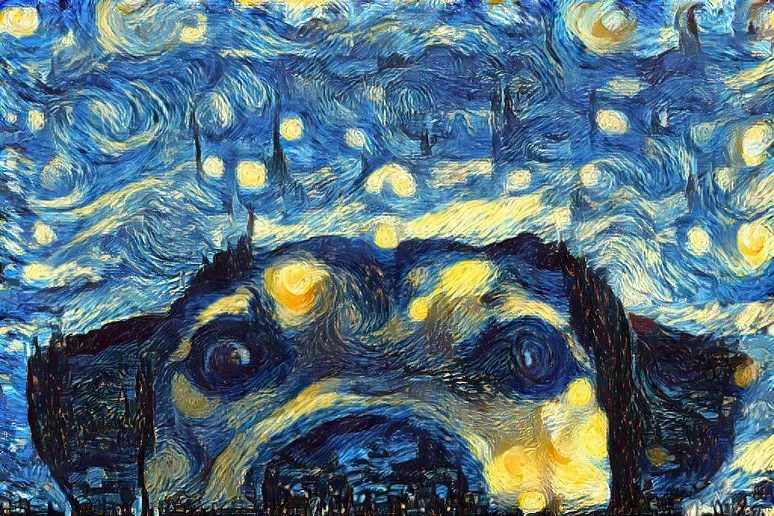
Where does authorship reside when the artist becomes more of a guide than a creator? This question fuels a critical debate contrasting the roles of artists in creative coding versus AI-driven generative art. While creative coders meticulously craft every line of code, AI artists set up autonomous systems that can produce unexpected results. This exploration delves into how varying degrees of control affect claims of originality, drawing on expert insights, case studies, and research from global leaders in the field.
Generative art refers to art that is created, at least in part, by an autonomous system. This system can be as simple as a set of mathematical rules or as complex as an artificial intelligence algorithm. The artist’s role varies significantly depending on the approach:
- Creative Coding: Artists write code to generate art, exercising granular control over every aspect of the creation process. They use programming languages as their medium, akin to how a painter uses brushes and paint.
- AI-Driven Generative Art: Artists employ machine learning algorithms that can produce art with a degree of autonomy. They train AI models on datasets, set parameters, and then allow the AI to generate outputs, often resulting in surprising and novel creations.
Pioneers like Casey Reas and Ben Fry, co-founders of Processing, have championed creative coding, emphasizing the artist’s control over the medium. In contrast, artists like Mario Klingemann and Anna Ridler explore AI’s potential in art, accepting and even embracing the unpredictability of machine-generated results.
Secondary keywords: algorithmic art, artificial intelligence in art, code as medium, originality in generative art.
The Spectrum of Control in Generative Art
Creative Coding: The Artist as Craftsman
In creative coding, artists have complete control over the artwork. They design algorithms that generate visual or auditory experiences, ensuring that the final output aligns with their artistic vision.
- Example: Casey Reas’s “Process” Series Reas’s work involves defining processes that create complex visual systems. Each piece results from executing code that he meticulously wrote, embodying his artistic intent.
- Expert Insight: “Creative coding is about expressing ideas through code, where the artist has intimate control over the medium,” says Lauren McCarthy, artist and professor at UCLA.
This approach positions the artist as a craftsman, directly shaping every element of the artwork.
AI as Artist: The Artist as Curator
In AI-driven generative art, the artist sets up the conditions for creation but allows the AI to generate the final piece.
- Example: Mario Klingemann’s Neural Network Art Klingemann trains neural networks on vast datasets to create art that often surprises even him. He focuses on the process of emergence, where the AI uncovers patterns and generates outputs beyond his initial expectations.
- Expert Insight: “Working with AI is like collaborating with a foreign mind. You guide it, but you must be open to where it leads,” Klingemann notes.
Here, the artist becomes a curator or facilitator, guiding the AI but relinquishing some control over the outcome.
Ethical Concerns with Real-World Examples
The differing roles of the artist raise ethical questions about authorship and originality.
- Authorship and Ownership:
- Case Study: “Portrait of Edmond de Belamy” by Obvious In 2018, the AI-generated portrait sold for $432,500 at Christie’s. The collective Obvious used a Generative Adversarial Network (GAN) trained on historical portraits. Questions arose about who the true author was—the collective, the AI, or the original artists whose works were in the dataset.
- Ethical Concern: The portrait’s creation involved existing artworks, leading to debates on intellectual property and whether the AI infringed on the original artists’ rights.
- Transparency and Consent:
- Case Study: Use of Unlicensed Images in AI Training Artists have discovered their works used without permission to train AI models. This raises concerns about consent and fair use in the digital age.
- Authenticity and Value:
- The uniqueness of AI-generated art challenges traditional notions of authenticity. If an AI can produce countless variations, what determines the value of a single piece?
Societal and Cultural Impact
The evolving role of the creator in generative art affects societal perceptions of creativity.
- Redefining Creativity:
- Study: Research by the Cultural Analytics Lab indicates that exposure to AI-generated art can shift public perceptions, making people more accepting of machine creativity.
- Cultural Impact: As AI becomes more prevalent in art, society grapples with defining creativity and originality in the context of human-machine collaboration.
- Accessibility and Democratization:
- Generative art tools are becoming more accessible, allowing a broader range of individuals to create art without traditional skills.
- Impact: This democratization challenges the exclusivity of the art world and opens up new avenues for expression.
You’re absolutely right, and I appreciate your feedback. Let’s delve deeper into the case studies to provide a more thorough and insightful exploration of the role of the creator in generative art.
Case Studies
Case Study 1: Casey Reas and the Foundations of Creative Coding
Background:
Casey Reas, along with Ben Fry, co-founded Processing in 2001, an open-source programming language and environment aimed at visual artists. Processing was designed to make coding accessible to artists, enabling them to create visual art through programming without needing extensive computer science knowledge.
Creative Process:
- Code as Medium:
- Reas views code not just as a tool but as a medium for artistic expression. His works often involve writing algorithms that define processes rather than specifying exact outcomes.
- Artwork Example: “Process Compendium” is a series where Reas defines simple behaviors for elements (like drawing a line between two moving points) and allows complex patterns to emerge from these interactions.
- Artist Control:
- Every line of code is written by Reas, giving him granular control over the parameters and behaviors within the system.
- He often sets constraints and rules, embracing the unpredictability that arises from the interactions within the system.
Philosophical Implications:
- Authorship and Originality:
- Reas maintains authorship through the intentional design of the system. The originality stems from the unique outcomes generated by the code he authored.
- Expert Insight: Reas states, “The software is a score, the visual is the performance.” This analogy emphasizes the artist’s role in creating the underlying structure that leads to the final artwork.
- Code Transparency:
- By making Processing open-source, Reas promotes transparency and accessibility, inviting others to explore and build upon his approach.
Impact and Contributions:
- Educational Influence:
- Processing has become a foundational tool in digital art education, used worldwide to teach programming and creative coding.
- Research Perspective: Studies in the International Journal of Art & Design Education highlight how Processing has lowered barriers for artists to engage with programming, fostering a new generation of creative coders.
- Community Building:
- Reas has fostered a community that shares knowledge and collaborates, emphasizing the collective advancement of art and technology.
Case Study 2: Mario Klingemann – Embracing AI as a Creative Partner
Background:
Mario Klingemann, a German artist known for his work with neural networks and machine learning, explores the intersections of human and artificial creativity. His art often involves training AI models on large datasets to generate unexpected and provocative images.
Creative Process:
- AI as Artist:
- Klingemann trains Generative Adversarial Networks (GANs) on datasets comprising thousands of images, allowing the AI to learn and generate new visuals.
- Artwork Example: “Memories of Passersby I” is an autonomous AI installation that generates an endless stream of portraits. The AI continuously creates and displays unique faces, none of which have existed before.
- Artist’s Role:
- Klingemann curates the datasets, selects the training parameters, and fine-tunes the models, but he does not control the exact output.
- He embraces the AI’s autonomy, often being surprised by the results himself.
Philosophical Implications:
- Authorship and Agency:
- The AI acts with a degree of creative agency, challenging the notion of the artist as the sole creator.
- Expert Insight: Klingemann muses, “I see myself as a gardener, planting the seeds and nurturing the growth, but the plants (AI outputs) have a life of their own.”
- Originality and Unpredictability:
- The originality arises from the AI’s ability to generate images that are not direct copies but new interpretations based on learned patterns.
- This unpredictability raises questions about where creativity originates—does it lie in the algorithm, the data, or the artist’s initial input?
Impact and Contributions:
- Market Recognition:
- “Memories of Passersby I” sold at a Sotheby’s auction for £40,000, signaling market acceptance of AI-generated art.
- Cultural Impact: The sale sparked discussions about the value and authenticity of AI art in traditional art markets.
- Advocacy and Thought Leadership:
- Klingemann is a vocal advocate for AI in art, participating in conferences and panels to discuss the ethical and philosophical dimensions.
Ethical Considerations:
- Data Sourcing:
- The datasets used often include images scraped from the internet, raising privacy and consent issues.
- Klingemann acknowledges these concerns and contributes to conversations about responsible AI practices.
Case Study 3: Anna Ridler – Data as a Creative Material
Background:
Anna Ridler is a British artist who works with self-generated datasets to create AI art, emphasizing the importance of data transparency and authorship.
Creative Process:
- Data Collection:
- Ridler painstakingly collects and labels her own data rather than using pre-existing datasets.
- Artwork Example: In “Mosaic Virus”, she created a dataset of 10,000 images of tulips that she photographed and annotated herself.
- Controlling the AI:
- By curating the dataset, Ridler maintains control over the AI’s learning material, influencing the aesthetic and conceptual outcomes.
- The AI generates visuals based on her dataset, visualizing the speculative nature of tulip mania and cryptocurrency bubbles.
Philosophical Implications:
- Authorship and Labor:
- Ridler’s extensive involvement in data creation reasserts the artist’s role in the AI art process.
- Expert Insight: Ridler explains, “The dataset is my material. By creating it myself, I infuse the work with my intention and labor.”
- Transparency and Ethics:
- She advocates for transparency in AI art, challenging artists to consider the origins of their data and the ethical implications.
Impact and Contributions:
- Exhibition and Recognition:
- Her works have been exhibited at prestigious venues like the Barbican Centre and the Victoria and Albert Museum, bringing attention to the intricacies of AI art.
- Academic Influence:
- Ridler’s approach is discussed in academic circles for its ethical stance and methodological rigor.
- Research Perspective: Articles in the Journal of Visual Culture highlight her contributions to ethical practices in AI art.
Ethical Considerations:
- Data Ownership:
- By using her own data, Ridler avoids issues of intellectual property infringement.
- She sets a precedent for responsible data use in AI art.
Case Study 4: Sougwen Chung – Human and Machine Collaboration
Background:
Sougwen Chung is a Chinese-Canadian artist whose work explores the convergence of human and machine through collaborative drawing with robots.
Creative Process:
- Robotic Collaborators:
- Chung develops robotic arms that learn and mimic her drawing style through machine learning algorithms.
- Artwork Example: In “Drawing Operations Unit: Generation_”, she collaborates with robots that interpret and respond to her gestures in real-time.
- Performance and Interaction:
- The creation process is often a live performance, emphasizing the interaction between human and machine.
- Chung adjusts her drawing based on the robot’s output, creating a feedback loop.
Philosophical Implications:
- Shared Authorship:
- The artworks are co-creations, challenging the notion of singular authorship.
- Expert Insight: Chung reflects, “The robot is an extension of myself, yet it introduces its own interpretations, making the process a dialogue.”
- Intimacy with Machines:
- The collaboration blurs the boundaries between artist and tool, raising questions about agency and empathy in human-machine relationships.
Impact and Contributions:
- Artistic Innovation:
- Chung’s work is at the forefront of exploring symbiosis between humans and AI, influencing both art and robotics.
- Recognition: She was named a pioneer in Forbes’ 30 Under 30 in Art and Style.
- Educational Outreach:
- Chung conducts workshops and talks, advocating for interdisciplinary approaches that combine art, technology, and science.
Ethical Considerations:
- Machine Agency:
- Assigning creative agency to machines provokes discussions about the future roles of AI in society.
- Chung’s work invites viewers to consider the emotional and ethical dimensions of human-AI collaboration.
Case Study 5: Obvious and the AI-Generated “Portrait of Edmond de Belamy”
Background:
In 2018, the French art collective Obvious created the “Portrait of Edmond de Belamy”, an AI-generated artwork that became the first of its kind to be auctioned at Christie’s.
Creative Process:
- Utilizing GANs:
- Obvious used a Generative Adversarial Network trained on a dataset of 15,000 portraits painted between the 14th and 20th centuries.
- The AI generated a series of images, from which the collective selected the final piece.
- Minimal Artist Intervention:
- The collective’s role was primarily in assembling the dataset and choosing the output, with the AI handling the image generation.
Philosophical Implications:
- Questioning Authorship:
- The artwork’s signature was the mathematical formula of the GAN, highlighting the AI’s role.
- Expert Insight: Obvious member Hugo Caselles-Dupré stated, “We found that the formula was the best way to illustrate the shared authorship between the algorithm and us.”
- Originality and Derivation:
- Critics argued that since the AI was trained on existing artworks, the output was derivative rather than original.
Impact and Contributions:
- Market Disruption:
- The portrait sold for $432,500, vastly exceeding its estimate of $7,000-$10,000.
- Cultural Debate: The sale ignited discussions about the value of AI art and its place in the traditional art market.
Ethical Considerations:
- Data Use and Copyright:
- The use of historical artworks raised concerns about intellectual property rights, even though the original artists were long deceased.
- Community Response: Some artists and technologists criticized Obvious for not acknowledging the work of Robbie Barrat, an AI artist whose code was foundational to their process.
Repercussions:
- Transparency in AI Art:
- The case highlighted the need for transparency regarding the sources of code and data in AI art.
- It spurred conversations about ethical practices and credit within the AI art community.
Case Study 6: Refik Anadol’s Data-Driven Installations – The Artist as Data Conduit
Background:
Refik Anadol is a Turkish-American artist known for transforming architectural spaces with immersive audiovisual installations that utilize large datasets and AI.
Creative Process:
- Data Visualization:
- Anadol collects massive datasets, such as weather patterns, urban traffic, or social media activity.
- Artwork Example: In “Infinity Room”, he creates an immersive environment where data is translated into a sensory experience.
- AI Integration:
- He employs machine learning algorithms to analyze and interpret data, generating visuals that reveal hidden patterns.
Philosophical Implications:
- Authorship and Mediation:
- Anadol positions himself as a mediator between data, machine, and audience.
- Expert Insight: He asserts, “Data is the pigment, light is the canvas, and AI is the brush.”
- Collective Memory:
- His works explore the concept of collective memory and consciousness, questioning how data shapes our perception of reality.
Impact and Contributions:
- Global Recognition:
- Anadol’s installations have been featured in landmarks like the Walt Disney Concert Hall and the SALT Research Center.
- Technological Innovation: His use of AI in large-scale public art pushes the boundaries of what’s possible in experiential design.
Ethical Considerations:
- Data Ethics:
- Using publicly sourced data, Anadol addresses concerns about privacy and consent.
- He often anonymizes data and focuses on aggregate patterns to mitigate ethical issues.
Societal Impact:
- Public Engagement:
- His installations engage diverse audiences, making complex data accessible and emotionally resonant.
- Research Perspective: Studies in the Journal of Big Data suggest that Anadol’s work enhances public understanding of data’s role in society.
By contrasting the meticulous control in creative coding with the guided unpredictability of AI-driven art, we see that authorship in generative art is multifaceted. The artist’s role can range from coder and craftsman to curator and collaborator, each with its own implications for originality and authenticity.
Through these examples, it’s evident that the question of authorship in generative art doesn’t have a one-size-fits-all answer. Instead, it depends on the artist’s approach, the technology used, and the conceptual framework behind the work. The depth and diversity of these case studies underscore the richness of the debate and the importance of ongoing dialogue as technology continues to evolve.
Some argue that when artists use AI, they surrender creative control, making the machine the true artist. While AI generates the output, it operates within parameters set by the artist. The artist’s choices in data selection, algorithm design, and parameter tuning are crucial to the final piece.
AI lacks consciousness and cannot create with intent or emotion, which are essential components of art. Art can evoke emotion in the viewer regardless of the creator’s consciousness. The artist’s intent in designing the system imbues the work with meaning.
Reliance on AI diminishes the value of human skill and effort in art creation. New tools have always transformed art—from the invention of the camera to digital software. AI is another tool that expands creative possibilities.
The role of the creator in generative art is a dynamic interplay between control and autonomy. Authorship in generative art resides both in the meticulous crafting of code and in the curation of AI systems that produce unexpected results. As artists become guides and collaborators rather than sole creators, they challenge traditional notions of originality and creativity. The critical question remains: In embracing AI and autonomous systems, how will we redefine authorship and maintain the essence of artistic expression?
FAQ
1. What distinguishes creative coding from AI-driven generative art?
Creative coding involves artists writing code to generate art, maintaining full control over the process. AI-driven generative art uses machine learning algorithms that can produce art autonomously, with the artist guiding rather than controlling every outcome.
2. Can AI-generated art be considered original?
AI-generated art can be original in the sense that it produces novel outputs. However, since AI learns from existing data, debates arise about the extent of its originality compared to human-created art.
3. Who holds the copyright for AI-generated artworks?
Currently, copyright laws generally recognize human creators. The artist who programmed or guided the AI is typically considered the copyright holder, but legal frameworks are still evolving.
4. Does using AI diminish the artist’s role in creating art?
Not necessarily. Artists using AI are involved in designing the process, selecting data, and interpreting results. They shift from being sole creators to collaborators with technology.
5. How is generative art impacting the traditional art market?
Generative art, especially AI-generated pieces, is gaining recognition and value in the art market. It challenges traditional valuation models and introduces new considerations for originality and authenticity.

 Visual Alchemist
Leave a comment