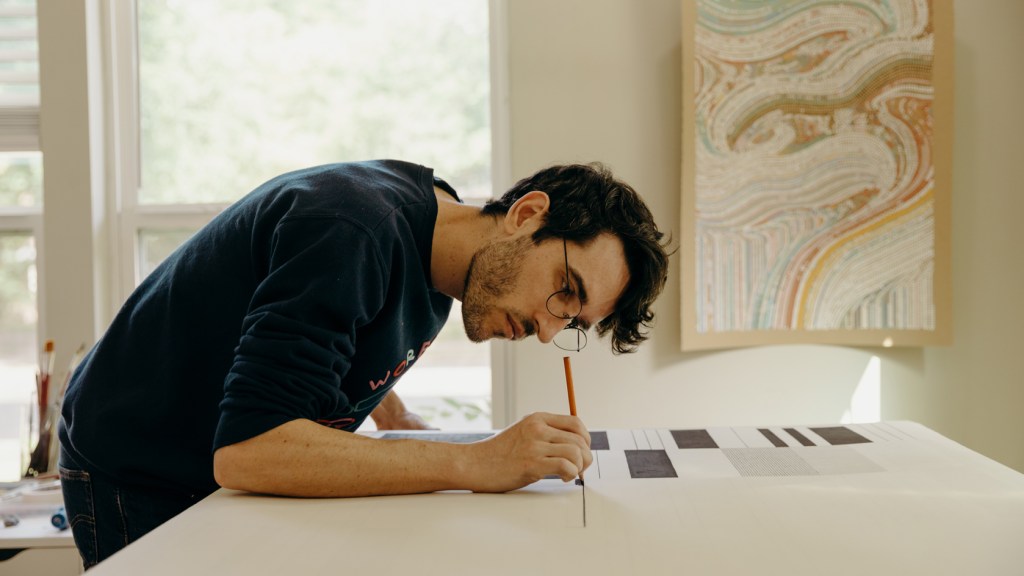
In the ever-evolving world of generative art, where algorithms and aesthetics intersect, Tyler Hobbs stands out as a leading figure who bridges the gap between technology and traditional art forms. Based in Austin, Texas, Hobbs creates works that are as visually captivating as they are intellectually stimulating. His art explores the harmonious relationship between code and creativity, resulting in pieces that resonate with both art enthusiasts and tech aficionados. By writing custom algorithms that generate intricate patterns and forms, Hobbs has carved a niche for himself, pushing the boundaries of what is possible in contemporary art.
Biography
Tyler Hobbs was born and raised in Austin, Texas, a city known for its rich cultural heritage and vibrant arts scene. From an early age, he exhibited a keen interest in both art and technology. Drawing and painting were his initial forays into the creative world, but he was equally fascinated by computers and programming. This dual interest led him to pursue a degree in Computer Science at the University of Texas at Austin.
During his university years, Hobbs delved deep into algorithms, data structures, and software development. However, he never lost touch with his artistic roots. He began to see parallels between coding and art, recognizing that both fields require a blend of creativity and logical thinking. Influenced by generative artists like Casey Reas and Manolo Gamboa Naon, Hobbs started experimenting with code as a medium for artistic expression.
After graduating, he worked as a software engineer for several years. While the job honed his technical skills, he felt a growing urge to focus on his artistic passions. In 2017, Hobbs made the pivotal decision to leave his full-time job and dedicate himself entirely to generative art. This bold move allowed him to fully explore the intersection of art and technology, leading to the development of his unique artistic style.
Artistic Practice
At the heart of Tyler Hobbs’s work is the exploration of how algorithms can produce aesthetically pleasing and emotionally resonant art. He believes that code is not just a tool but a medium through which artists can express complex ideas and evoke profound feelings. His approach involves writing custom software that generates images, focusing on the interplay between randomness and control.
Philosophy and Approach:
- Embracing Imperfection: Hobbs is fascinated by the imperfections found in natural systems. He aims to replicate these organic flaws within his computational work, creating pieces that feel both human and machine-made.
- Generative Systems: He designs algorithms that are capable of producing a vast array of outputs. By adjusting parameters and introducing stochastic elements, he ensures that each piece generated is unique.
- Aesthetic Consistency: Despite the randomness inherent in his processes, Hobbs maintains a consistent aesthetic across his work. This consistency is achieved through careful calibration of his algorithms and a deep understanding of visual composition.
Process of Creating the Artwork:
- Conceptualization: Hobbs begins with a conceptual idea or a visual motif he wishes to explore. This could be inspired by natural phenomena, mathematical concepts, or artistic movements.
- Algorithm Development: Using programming languages like JavaScript and frameworks such as Processing or p5.js, he writes custom code that embodies the rules and parameters of his concept.
- Iteration: He runs the algorithm multiple times, tweaking variables and observing the outcomes. This iterative process is crucial for refining the visual output and ensuring that the algorithm behaves as intended.
- Selection: From hundreds or even thousands of generated images, Hobbs selects pieces that resonate most with his artistic vision. This curation is guided by principles of balance, harmony, and emotional impact.
- Physical Rendering: To bring his digital creations into the physical realm, Hobbs often uses a pen plotter, a machine that draws the images onto paper using pens or other marking tools. This adds a tactile dimension to his work and introduces subtle variations that enhance its organic feel.
- Finishing Touches: Finally, he may add hand-drawn elements or employ traditional artistic techniques to augment the plotted pieces, merging digital precision with human expressiveness.
Technologies and Tools Used:
- Programming Languages: Proficient in JavaScript, Python, and Processing.
- Frameworks: Utilizes p5.js and Processing for visual coding.
- Hardware: Employs pen plotters like the AxiDraw V3 to render his digital designs onto physical media.
- Software Tools: Uses graphic design software for post-processing and refinement.
Notable Works
“Fidenza” Series
Released in 2021, the “Fidenza” series is perhaps Hobbs’s most renowned work to date. Named after a small town in Italy, the series consists of 999 unique, algorithmically generated artworks released on the Art Blocks platform, which specializes in generative NFT art.
Themes and Concepts:
- Flow Fields and Curves: The series is based on flow fields, mathematical constructs that simulate fluid motion. This results in images characterized by graceful curves and meandering paths.
- Complexity and Variation: Each piece in the series is generated using the same algorithm but with different seed values and parameters, leading to a diverse array of compositions.
- Organic Aesthetics: Despite being generated by code, the artworks possess an organic quality, resembling natural patterns like wood grain, marbling, or cellular structures.
Impact and Reception:
- The “Fidenza” series was met with critical acclaim and became highly sought after in the NFT art market.
- The pieces have been praised for their beauty, originality, and the way they push the boundaries of generative art.
- The success of “Fidenza” has solidified Hobbs’s reputation as a leading figure in the digital art space.
“Incomplete Control”
“Incomplete Control” is a body of work that delves into the themes of randomness, order, and the limitations of algorithmic art.
Themes and Concepts:
- Embracing Uncertainty: The series reflects on the idea that complete control over the creative process is unattainable and that randomness can lead to unexpected beauty.
- Algorithmic Limitations: Hobbs explores the boundaries of what algorithms can achieve and how unintended outcomes can enhance the artistic value of a piece.
- Visual Complexity: The artworks feature dense, intricate patterns that invite viewers to explore the details and contemplate the interplay between chaos and order.
Exhibition:
- The series was showcased in a solo exhibition at Bright Moments Gallery in Venice Beach, California.
- The exhibition provided an immersive experience, allowing visitors to engage with the artworks both visually and conceptually.
“Color Studies”
In “Color Studies,” Hobbs experiments with color theory and its application within generative systems.
Themes and Concepts:
- Exploration of Palettes: The series investigates how different color combinations can affect the mood and perception of generative artworks.
- Algorithmic Color Selection: He develops algorithms that not only generate forms but also intelligently select and apply colors based on predefined rules or random selection.
- Emotional Resonance: By manipulating hue, saturation, and brightness, Hobbs aims to evoke specific emotional responses from the viewer.
Significance:
- This series highlights Hobbs’s versatility and his ability to integrate complex color dynamics into generative art.
- It demonstrates the potential of algorithms to handle not just form but also the nuanced aspects of color composition.
Exhibitions and Recognition
Major Exhibitions:
- Art Blocks Curated Collections: Hobbs’s work, particularly the “Fidenza” series, has been prominently featured on Art Blocks, gaining international attention.
- Bright Moments Gallery, Venice Beach: Hosted his solo exhibition “Incomplete Control,” which was well-received by both critics and the public.
- Digital Art Fair Asia: Participated in this event showcasing leading digital artists from around the world.
Awards and Honors:
- NFTy Awards Nominee: Recognized for his contributions to the NFT art space.
- Featured Artist on Artsy and Artnet: Highlighted as a significant contemporary artist pushing the boundaries of generative art.
- Press Coverage: His work has been featured in The New York Times, Forbes, The Wall Street Journal, and ArtForum, among others.
Speaking Engagements and Workshops:
- SXSW Interactive Festival: Invited to speak about the intersection of art and technology.
- Processing Community Day: Presented his methodologies and philosophies on generative art.
- Guest Lectures: Has given talks at universities and art institutions, sharing his insights with students and aspiring artists.
Impact on the Art Community
Tyler Hobbs’s influence extends beyond his own creations, impacting the broader art community in several significant ways.
Advancement of Generative Art:
- Innovation in Techniques: His work pushes the technical boundaries of what can be achieved with code, inspiring other artists to explore new methods.
- Accessibility: By sharing aspects of his process and encouraging open dialogue, Hobbs helps demystify generative art for newcomers.
Bridging Traditional and Digital Art Worlds:
- Physical Rendering of Digital Art: Through the use of pen plotters, he brings digital art into the physical realm, making it more tangible and relatable to traditional art audiences.
- NFTs and Digital Ownership: His success in the NFT space has highlighted new possibilities for artists to monetize and distribute their work.
Community Engagement:
- Mentorship: Actively mentors emerging artists, offering guidance on both technical and creative aspects of generative art.
- Collaboration: Engages in collaborative projects that bring together artists from different disciplines.
Thought Leadership:
- Discussions on Art and Technology: Hobbs frequently writes and speaks about the philosophical implications of generative art, contributing to academic and artistic discourse.
- Ethical Considerations: Addresses topics such as the environmental impact of blockchain technologies and advocates for sustainable practices.
Tyler Hobbs represents a fusion of artistic vision and technical expertise, embodying the potential that lies at the intersection of art and technology. His work challenges preconceived notions about creativity, authorship, and the role of the artist in the age of algorithms. By harnessing the power of code, he creates art that is not only visually stunning but also rich with conceptual depth.
Hobbs’s journey from a software engineer to a celebrated generative artist serves as an inspiration to those who seek to bridge disparate fields. His contributions have significantly advanced the field of generative art, opening up new avenues for expression and exploration. As technology continues to evolve, artists like Hobbs will undoubtedly play a crucial role in shaping the future of art.
In celebrating Tyler Hobbs’s achievements, we acknowledge the transformative power of embracing interdisciplinary approaches. His work not only enriches the art world but also invites us to reconsider the possibilities that emerge when creativity and technology converge. As he continues to innovate and inspire, Hobbs stands as a testament to the boundless potential of human imagination enhanced by computational tools.

 Visual Alchemist
Leave a comment