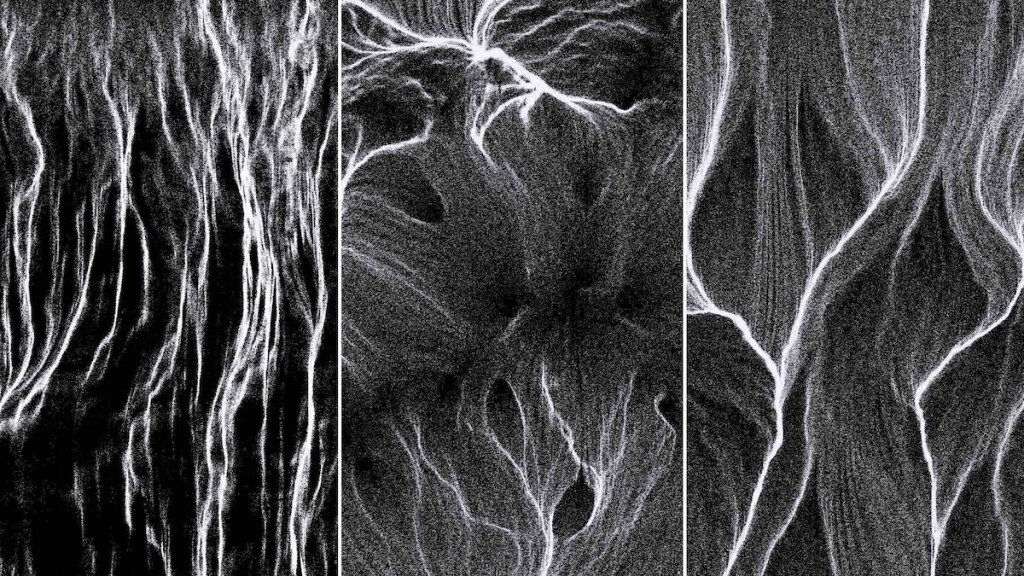
Generative art has emerged as a vital and intriguing field in the contemporary artistic landscape. It encapsulates any art practice where the artist employs a system—often using algorithms or defined rules—to contribute autonomously to the outcome. This form of art blurs the line between human creativity and machine involvement, prompting questions about intention, authorship, and process. Despite its recent popularity due to technological advancements, the roots of generative art reach back to ancient practices. This article aims to provide a simplified yet robust framework for understanding generative art, allowing for effective analysis and comparison across various forms and mediums.
The Need for a Framework
In traditional art, categorizing and critiquing works often involve examining the medium used, the stylistic conventions, and the historical or cultural context. However, generative art’s reliance on dynamic processes makes conventional analysis challenging. To better understand and evaluate generative art, a framework is required—one that goes beyond mere surface-level observation to delve into the entities, processes, and interactions that define it.
The proposed framework aims to simplify the complexities inherent in generative art by breaking it into four core components: entities, processes, environmental interactions, and sensory outcomes. Each of these components allows us to describe and critically evaluate generative artworks in a structured manner.
1. Entities: The Building Blocks
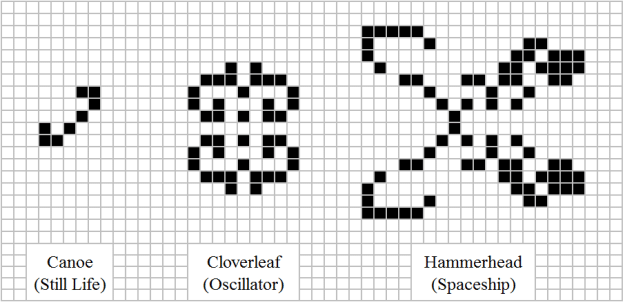
Entities are the fundamental elements upon which generative processes act. These can be physical objects, computational models, or conceptual components. For example, in Conway’s Game of Life, each cell acts as an entity that can change its state based on its neighbors. In the context of generative art, entities can vary from digital pixels to tree branches swaying in the wind.
The classification of entities is crucial because it shapes the artwork’s essence. In computational systems, entities often form homogeneous or heterogeneous populations. These entities possess various properties, such as size, shape, or state, which influence how the generative processes act upon them. Understanding the unique characteristics of these entities is vital for grasping the generative system as a whole.
Entities can also be hierarchical, consisting of smaller sub-entities that interact to create complex outcomes. In generative sculptures, for example, the entities may include individual building blocks that, when combined, form an intricate structure. This hierarchical nature allows for emergent behaviors, where the whole becomes greater than the sum of its parts. Understanding entities at different levels of abstraction helps in appreciating how complexity arises in generative artworks.
2. Processes: The Dynamics of Change

Processes are mechanisms of change that act on entities within the generative system. These processes may be computational algorithms, natural forces, or even the interaction of human participants. For instance, in C.E.B. Reas’s Process 18, lines move across a plane, interacting to form new shapes. Processes can be deterministic—leading to predictable outcomes—or stochastic, resulting in random variations.
These processes can operate at multiple levels, often with a macro-process composed of numerous micro-events. A well-known example is the glider pattern in Conway’s Game of Life, which emerges from smaller, interacting micro-events. Understanding the underlying processes helps us appreciate the evolving nature of generative artworks, as these dynamics are often at the core of the artistic expression.
Generative processes can be influenced by rules defined by the artist. These rules may include mathematical functions, iterative loops, or probabilistic decision-making. In music, for instance, generative processes can be used to create compositions that evolve over time, based on a set of predefined musical rules. The complexity of the process often determines the richness of the outcome, making it essential to understand how these rules interact and influence each other.
3. Environmental Interactions: The Influence of External Factors
Generative systems rarely exist in isolation. They interact with their environment, drawing information or inputs that influence their evolution. Environmental interaction can be continuous or occur at specific moments, significantly impacting the generative process.
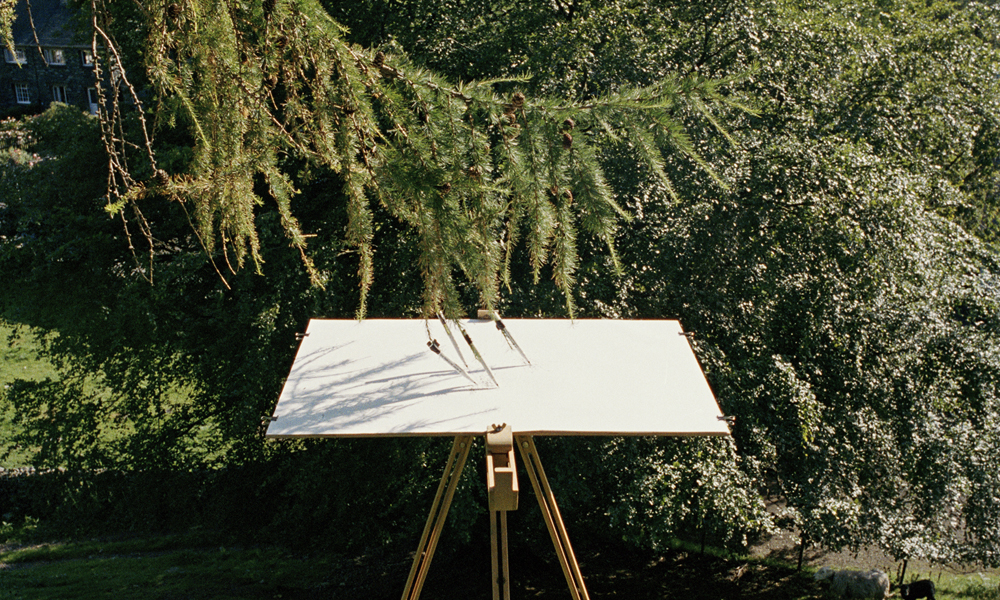
Take Tree Drawings by Tim Knowles, for instance. In this work, wind acts as an environmental force that influences how the tree branches move and mark the paper. This interaction creates unique outcomes, as the environmental conditions are inherently variable and unpredictable. In some generative art forms, interactions with viewers—such as touch or sound—also play a significant role in shaping the final outcome.
Environmental interactions can also include digital inputs, such as data feeds or sensors. For example, an artwork might use real-time weather data to influence its visual or auditory output, creating a dynamic relationship between the artwork and its environment. This type of interaction makes the artwork responsive, allowing it to change based on external conditions. Such responsiveness adds a layer of complexity, as the environment becomes an active participant in the generative process.
4. Sensory Outcomes: The Result of the Generative Process

The sensory outcome refers to what the audience perceives—be it visual, auditory, or tactile. This outcome may be the final static artwork or an ongoing dynamic display. In many generative systems, the entities and processes are not directly perceptible but are mapped to outcomes that can be experienced by an audience.
Consider Kristoffer Myskja’s Rule 30, a mechanical machine that physically punches holes in paper to visualize a cellular automaton rule. The tactile nature of this outcome adds a layer of sensory experience that differentiates it from purely digital representations. The mapping between entities, processes, and the outcome is often a critical artistic decision, as it can profoundly affect how the artwork is perceived and interpreted.
Sensory outcomes can vary widely depending on the medium used. In digital generative art, the outcome might be a continuously evolving visual display on a screen, while in physical generative art, it could be a sculpture that changes shape over time. The outcome may also involve multiple senses, such as sound and touch, creating an immersive experience for the audience. By carefully designing the sensory outcome, artists can guide the audience’s perception and emotional response to the generative process.
Examples of Generative Artworks Using the Framework
To illustrate how this framework can be applied, let’s look at a diverse set of generative artworks:
- Islamic Star Patterns (ca. 9th Century CE): These intricate patterns involve points, lines, and geometric shapes as entities. The process includes precise geometric construction without external input, leading to a static sensory outcome. Despite being centuries old, these works embody a generative process based on rules that produce aesthetically consistent results.
- Paragraph 7 by Cornelius Cardew (1971): This choral work involves human singers as entities, each making independent decisions while interacting with the sounds of others. The outcome is a self-organizing musical composition that evolves dynamically, reflecting both human creativity and system autonomy.
- Process 18 by C.E.B. Reas (2008): In this work, lines act as entities that move and interact based on pre-defined rules, creating complex visual forms. The artist provides a high-level description, leaving room for interpretation in implementation. The final sensory outcome is an accretive image that reveals the ongoing interaction of entities over time.
- Tree Drawings by Tim Knowles (2005): Here, the tree, pen, and paper are entities. The process involves natural movement driven by wind, with environmental conditions playing a crucial role. The sensory outcome is an abstract drawing, capturing the essence of environmental forces in visual form.
- Rule 30 by Kristoffer Myskja (2008): The entities include mechanical components and paper, with the process being the mechanical execution of a cellular automaton rule. The outcome—a pattern of holes in the paper—highlights the tangible aspect of computational processes, making the abstract visible and physical.
- Pretty Little Flocker by Alice Eldridge (2009): This artwork uses a flocking algorithm to simulate bird-like behavior. The entities are digital agents that move based on simple rules, such as cohesion, alignment, and separation. The process is influenced by user input, allowing the audience to interact with the digital flock. The sensory outcome is a dynamic visual representation of the flock’s movement, creating an immersive experience that evolves based on both the algorithm and audience interaction.
Implications and Future Applications
The framework presented here offers a structured approach to understanding generative art, regardless of the medium or time period. By focusing on entities, processes, environmental interactions, and sensory outcomes, we can better understand the underlying mechanics of generative artworks and draw meaningful comparisons between them.
This framework also has implications for artists and theorists. For artists, it provides a way to conceptualize their work, breaking down complex systems into manageable components that can be creatively manipulated. For theorists, it offers a tool for analyzing generative art, highlighting both the similarities and differences between works from different genres or eras.
The flexibility of this framework allows it to be applied to new generative methods as they emerge. With the rise of artificial intelligence and machine learning in art, understanding the roles of algorithms, datasets, and training processes becomes increasingly important. The proposed framework provides a foundation for such an analysis, accommodating technological advances while maintaining a focus on the core components of generative art.
AI-based generative art, for example, often involves entities such as neural networks and training datasets. The processes involve learning algorithms that evolve based on the data provided. Environmental interactions might include user input or real-time data feeds, while the sensory outcomes can range from visual art to music. By applying the framework to AI-based generative art, we can better understand the relationship between human input, machine learning, and the resulting artistic output.
The Role of Generative Art in Society
Generative art has the potential to impact society in various ways. It challenges traditional notions of creativity, as the artist’s role shifts from direct creator to facilitator of systems that generate art. This raises questions about authorship and ownership—who truly owns a piece of art generated by an autonomous system? Furthermore, generative art can serve as a reflection of the systems that shape our lives, from natural processes to digital algorithms. By making these systems visible, generative art can foster a deeper understanding of the complex forces at play in our world.
Generative art also has educational value. By engaging with generative processes, students can learn about algorithms, systems thinking, and the interplay between order and chaos. This interdisciplinary approach can inspire new ways of thinking, bridging the gap between art and science. The framework presented here can serve as a valuable educational tool, helping students and educators break down complex generative systems into understandable components.
Generative Art and the Future
As technology continues to evolve, the boundaries of generative art will expand. The integration of virtual reality (VR) and augmented reality (AR) into generative practices will create new sensory experiences, allowing audiences to immerse themselves in evolving artworks. Imagine a VR environment where users can interact with generative entities, influencing the processes and outcomes in real-time. Such experiences will blur the line between creator and participant, making the audience an integral part of the generative system.
Machine learning and AI will also play a significant role in the future of generative art. By training algorithms on vast datasets, artists can create systems that generate highly complex and nuanced artworks. These systems can learn from their own outputs, evolving over time to produce increasingly sophisticated results. The framework outlined in this article provides a foundation for understanding these developments, ensuring that we can continue to analyze and appreciate generative art as it grows more complex.
Generative art also has the potential to address pressing social and environmental issues. By simulating complex systems, generative art can help visualize the impact of climate change, urbanization, and other global challenges. Artists can use generative processes to create works that provoke thought and inspire action, making abstract issues more tangible and accessible to a wider audience.
Generative art challenges traditional notions of authorship, creativity, and artistic intent. By involving systems that act autonomously or semi-autonomously, it creates a dynamic interplay between human intention and machine execution. The framework outlined in this article—focusing on entities, processes, environmental interactions, and sensory outcomes—offers a clear, structured approach to understanding and evaluating generative art.
This approach not only aids in the analysis of existing works but also serves as a guide for artists seeking to explore generative methods in their practice. As technology continues to evolve, generative art will likely become even more prominent, making frameworks like this essential for navigating the complex relationships between human creativity and machine capability.
By understanding the components of generative art, we can appreciate the intricate balance between control and unpredictability, between the artist’s vision and the system’s autonomy. Generative art is not just a product of technology; it is a testament to the ever-evolving nature of creativity itself—a bridge between the known and the unknown, the planned and the unexpected.
The use of data in generative art has opened a world of possibilities, enabling artists to draw inspiration directly from the complexities of the real world.
In contrast, ethical questions arise when Art Invades Privacy, leading us to reflect on how generative art employs sensitive information. How do artists ensure that personal data isn’t exploited?
The Role of the Creator in generative art is also evolving, moving from a direct craftsperson to an orchestrator of algorithms, where artists manipulate and train models to achieve creative outputs.
Another philosophical consideration is whether generative art can Truly Be Original. As algorithms remix and reinterpret existing works, the boundary between original creation and derivative work becomes blurred.
The modern art scene is changing fast, especially with Motion-Based Interactive Art leading new ways of expressing creativity. The dynamic relationship between the audience and the artwork adds a new layer of engagement.
Additionally, we see how mathematical concepts such as Delaunay Triangulation play a significant role in defining structures and forms within generative art. Artists utilize these principles to develop abstract and compelling visuals.
The application of Markov Chains in Generative Art showcases how stochastic processes can guide the randomness involved in the creation of patterns and textures.
To understand the people behind these creations, one can explore profiles such as Mario Klingemann, a pioneer of AI art, and Tyler Hobbs, known for using algorithmically generated imagery.
Artists like Sofia Crespo and Mark J. Stock are pushing the boundaries by integrating biological aesthetics and computational physics into their generative pieces.
Generative art does not only concern artists; its application in brand engagement is seen in Emotional Branding, where data-driven insights enhance emotional connection.
The convergence between gaming and e-commerce, as explored in The Convergence of Industries, showcases how generative art is becoming more integrated into everyday digital experiences.
The incorporation of Neuroscience in Brand Perception indicates the growing interdisciplinary nature of generative art, blending psychological understanding with creative design.
For those starting in generative art, tools like P5.js and Processing Language offer an accessible platform to explore creative coding.
The exploration of generative art through OpenFrameworks and Python highlights the versatility of programming languages in producing diverse visual outputs.
The philosophical underpinning of the Role of Technology and Education further explores how our educational approaches must adapt to nurture the next generation of generative artists.
For a historical perspective, Generative Art: From Historical Roots to Modern Expression gives insight into how far the genre has evolved, from rudimentary algorithms to sophisticated AI models.
Theoretical Foundations of Generative Art underline the core mathematical and algorithmic principles that shape creative outputs today.
If you’re interested in hands-on experience, TouchDesigner for Generative Art offers a powerful visual programming environment that has revolutionized live performance and installations.
Understanding the complexities of generative art is not just about creating but also about embracing the ethics and future trajectories, as discussed in Exploring Ethical Boundaries.
A glimpse into the future is painted in The Creative Future of Generative AI, showing the potential for artists and technologists alike.
To delve deeper into the fundamentals, Introduction to Coding in Generative Art serves as a foundation for aspiring generative artists.
Lastly, examining the impact of AI-Powered Creativity and Productivity Tools helps us understand how software and tools shape the output and processes in generative art today.
 Visual Alchemist