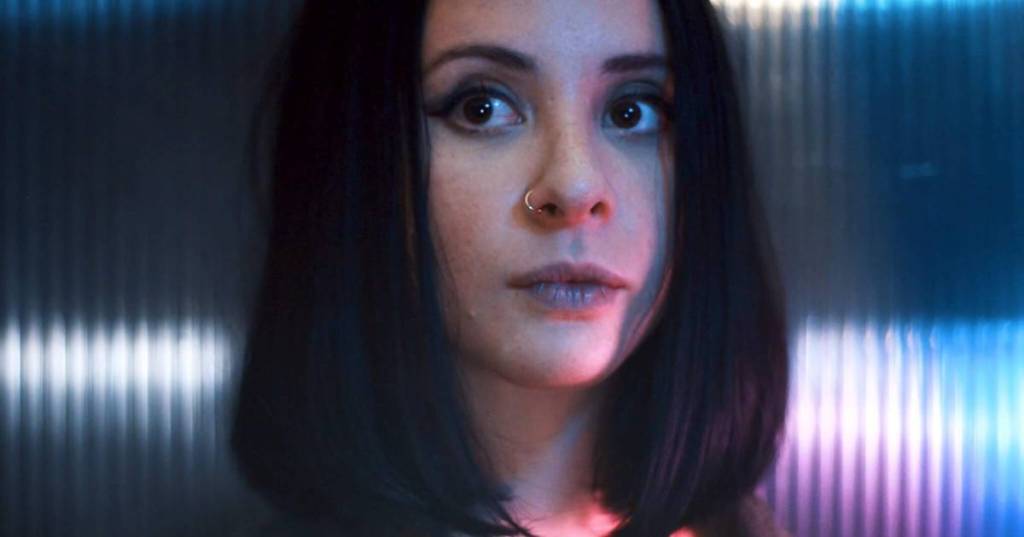
Chelley Sherman is an innovative creative technologist and liminal researcher whose artistic practice bridges the realms of computation, consciousness, and metaphysical exploration. Through her immersive installations, data-driven biosimulations, and digital recreations of complex self-organizing systems, Sherman delves into the deepest layers of human perception, meditative states, and perceptual illusions. Her work invites viewers to explore non-ordinary states of consciousness and gain insights into the nature of reality itself. Often described as meditative psychocosmograms, her installations invite audiences to experience an emergent sense of noetic perception that connects to a higher dimensional understanding of reality.
By leveraging advanced computational concepts such as annealing, optics, fluid dynamics, and agent-based simulations, Sherman pushes the boundaries of generative art, crafting immersive worlds where viewers are guided through multi-sensory experiences. These practices evoke the ineffable essence of consciousness, highlighting its fluid, ever-changing nature as expressed through art and technology. Chelley Sherman’s contributions to generative art, immersive installations, and real-time computational systems have garnered her international acclaim, as her work has been featured in leading festivals like SXSW, Mutek, and Nuit Blanche.
Biography
Chelley Sherman’s life and educational journey form the backbone of her deep, interdisciplinary approach to art. Her fascination with perception and consciousness can be traced back to her academic background, where she studied creative technology, computational modeling, and metaphysical practices. This combination of formal education in technology and deep interest in contemplative studies paved the way for her exploration of generative art, algorithmic simulations, and immersive environments.
Sherman was born during a period when digital technologies were beginning to merge with artistic disciplines. From a young age, she was captivated by the intersection of science and creativity. This led her to pursue formal studies in computer science and metaphysics, which would later fuel her artistic practice. Early on, she was influenced by the works of pioneers such as John Conway, whose “Game of Life” explored the beauty of emergent systems, and Craig Reynolds, whose agent-based simulations modeled complex, lifelike behaviors.
Her fascination with complex systems took root during her formative years, as she began experimenting with computational models that mimicked natural and cognitive processes. Over time, these experiments evolved into highly immersive, interactive installations that merged biosimulation with contemplative practice. This approach allowed her to create art that responded dynamically to the presence of viewers, enabling them to explore altered states of consciousness through sensory and perceptual experiences.
Sherman’s career has been marked by a series of groundbreaking projects that have expanded the definition of immersive art. From VR-based installations to algorithmic soundscapes, her body of work has garnered widespread attention for its ability to blend cutting-edge technology with deeply contemplative, metaphysical themes.
Artistic Practice
Chelley Sherman’s artistic practice can be understood as an exploration of the intersection between generative art and consciousness studies. At the core of her work lies the desire to simulate non-ordinary states of perception through the use of complex computational models. These models, which form the basis of her immersive installations, are designed to mimic the behavior of natural and self-organizing systems, evoking lifelike patterns that evolve dynamically over time.
Sherman’s approach to generative art is deeply rooted in the idea of emergence—where simple rules give rise to complex, unpredictable behaviors. Her use of agent-based models, in particular, allows her to create environments that respond to the presence and movement of viewers, creating a sense of collaboration between the art and its audience. This interactivity is central to her practice, as it allows participants to engage with the work on a sensory, emotional, and cognitive level.
One of the hallmarks of Sherman’s practice is her use of biosimulations—computational systems that mimic biological processes such as fluid dynamics, neural networks, and cellular automata. These simulations, when applied to immersive environments, create a sense of life and movement that draws viewers into a meditative state. In works like Dispersion, Sherman uses fluid dynamics to simulate the flow of consciousness, inviting viewers to experience the ebb and flow of thought and perception in real-time.
Sherman’s creative philosophy is deeply informed by contemplative practices such as meditation, mindfulness, and sensory awareness. By integrating these practices into her installations, she creates environments that invite viewers to slow down and engage with their own perceptions in a more deliberate, reflective way. Her work often operates at the threshold of perception, where subtle shifts in sound, light, and movement can lead to profound experiences of self-awareness and introspection.
Another defining feature of Sherman’s work is her use of generative algorithms to simulate complex, self-organizing systems. These systems, which draw from principles in chaos theory, fluid dynamics, and agent-based modeling, allow her to create dynamic environments that evolve continuously based on input from the surrounding environment. This approach reflects her interest in the fluid, ever-changing nature of consciousness and perception.
By integrating these complex systems into her work, Sherman has created a new form of generative art—one that transcends traditional boundaries and invites viewers to explore the deeper layers of their own awareness. Her installations serve as both visual and auditory experiences, engaging multiple senses to create a fully immersive environment where perception itself becomes the medium of exploration.
Notable Works
Among Chelley Sherman’s most acclaimed works is Dispersion, a series of immersive installations that use biosimulations to explore the nature of consciousness. The central theme of Dispersion revolves around the concept of flow—whether it be the flow of thought, time, or perception itself. In this installation, viewers are invited to engage with a continuously evolving environment where lifelike patterns and behaviors emerge in real-time, reflecting the fluid nature of consciousness.
Dispersion has been exhibited at prominent festivals such as SXSW and the United Nations Women’s Global Voices Film Festival, where it was celebrated for its innovative use of generative algorithms and its ability to evoke deep meditative states. The work stands as a testament to Sherman’s ability to blend cutting-edge technology with metaphysical inquiry, creating an experience that is both intellectually stimulating and emotionally transformative.
Another notable work is Alkahest, a collaboration with Bleie that was featured at the Mutek Festival in San Francisco. This installation explores the concept of transformation, using fluid dynamics to simulate the process of alchemical change. The piece draws from ancient philosophical traditions that view transformation as a fundamental aspect of existence, inviting viewers to contemplate the ways in which their own consciousness evolves over time. The visuals in Alkahest are generated through complex algorithms that simulate the behavior of liquids in motion, creating a dynamic, ever-changing environment that evokes a sense of awe and wonder.
Sherman’s Semniotic, which debuted at the Algorithmic Art Assembly, further explores the relationship between computation and consciousness. In this piece, Sherman uses agent-based modeling to create a system that responds to the viewer’s presence, evolving in real-time based on their movements. The result is a continuously shifting environment that reflects the complexity and fluidity of consciousness itself. Semniotic was praised for its innovative use of real-time systems and its ability to evoke deep meditative states in viewers.
Beyond her immersive installations, Sherman has also contributed to the development of real-time systems for large-scale projects like Sphere Las Vegas, where her expertise in generative art and computational modeling was used to create dynamic, responsive environments for large audiences. Her work in this field has earned her recognition in prominent publications like Time Magazine, Forbes, Wired, and BBC Radio.
Exhibitions and Recognition
Chelley Sherman’s work has been widely exhibited at major multimedia festivals, art galleries, and design summits around the world. Her immersive installations have been featured at prestigious events such as the United Nations Women’s Global Voices Film Festival, Mutek, and SXSW. In addition to these prominent exhibitions, Sherman’s work has also been showcased at the Immersive Design Reality Summit and the Algorithmic Art Assembly, where she was a featured artist.
Her contributions to the development of real-time systems and immersive technologies have garnered her critical acclaim. Notably, Sherman’s work in virtual reality has been featured in high-profile events such as Mozilla’s XR Studio, where she was named a fellow in 2018. Her VR-based installations have also been recognized as pioneering contributions to the field, particularly in the development of real-time generative systems that respond to audience interaction.
Sherman’s work has been featured in leading media outlets, including Time Magazine, Forbes, TechCrunch, Wired, and the Creators Project. Her collaborations with NASA’s Jet Propulsion Laboratory have further expanded the reach of her work, as she continues to explore the intersection of art, technology, and space exploration. Additionally, her involvement in Emmy Award-nominated immersive films has solidified her reputation as a leading figure in the world of immersive art and generative systems.
Impact on the Art Community
Chelley Sherman’s impact on the contemporary art community has been profound. As a creative technologist and researcher, she has pushed the boundaries of what is possible in the field of immersive art, blending complex computational models with contemplative practices to create experiences that engage the viewer on multiple levels. Her work has inspired countless artists to explore the creative potential of generative systems and real-time simulations, particularly in the realm of consciousness exploration.
In addition to her artistic contributions, Sherman has also played a key role in advancing the dialogue around the use of technology in art. Through her lectures, workshops, and collaborations, she has helped to shape the future of digital art, encouraging new generations of artists to experiment with computational systems and immersive environments. Her focus on the integration of technology and metaphysical inquiry has opened up new possibilities for artists working at the intersection of science, art, and spirituality.
Sherman’s work has also had a significant influence on the development of immersive technologies, particularly in the fields of virtual reality and biosimulation. By using real-time systems to create dynamic, responsive environments, she has helped to redefine the role of the artist in the digital age, emphasizing the importance of collaboration between the artist, the technology, and the viewer.
Chelley Sherman is a visionary artist whose work transcends the traditional boundaries of generative art and immersive installations. Through her use of complex computational models, real-time systems, and biosimulations, she has created a body of work that invites viewers to explore the fundamental nature of consciousness and reality. Her innovative approach to art has earned her international recognition and critical acclaim, as she continues to push the boundaries of what is possible in the intersection of art, technology, and metaphysics.
As new technologies emerge and the field of digital art continues to evolve, Chelley Sherman’s contributions will remain at the forefront of these developments. Her work will undoubtedly continue to inspire future generations of artists, researchers, and technologists as they explore the ever-changing nature of consciousness and perception in the digital age.
 Visual Alchemist
Leave a comment