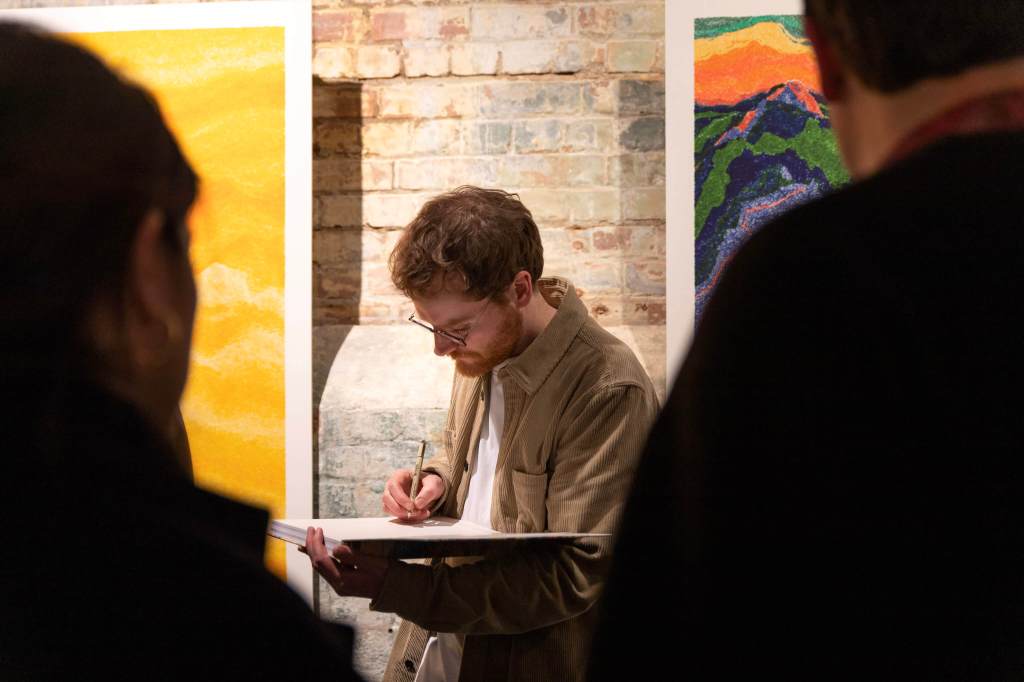
Matt DesLauriers is a creative coder, artist, and developer known for his pioneering work in generative art and creative technology. His practice blends art, programming, and immersive experiences, creating digital worlds that merge human creativity with algorithmic processes. DesLauriers uses generative algorithms, 3D environments, real-time data, and simulations to explore the interplay between randomness, structure, and natural patterns. With a focus on bridging artistic expression and coding, his work has been featured in a variety of mediums, from interactive art installations to digital publications and creative coding tools.
DesLauriers has become a prominent figure in the world of creative coding, and his work exemplifies the growing overlap between technology and the arts. Through his generative art, he transforms abstract mathematical principles into breathtaking visual pieces, combining beauty and complexity in a way that invites contemplation. His ability to harness the power of algorithms to generate both structured and organic visuals makes him a highly regarded innovator in the digital arts space.
Biography
Matt DesLauriers has always had a passion for technology and creativity, but his journey into the world of generative art and creative coding evolved naturally over time. He initially developed his coding skills through self-driven experimentation and professional development in web technologies, using platforms like JavaScript, WebGL, and other creative coding tools to push the boundaries of what could be achieved through code.
DesLauriers honed his skills as a developer and worked on projects that involved interactive web-based experiences and dynamic visualizations. However, it was his natural curiosity about the artistic potential of algorithms and simulations that led him to delve deeper into the field of generative art. His work draws heavily on mathematical principles, physics simulations, and a fascination with nature’s inherent patterns and chaotic beauty.
Throughout his career, Matt DesLauriers has maintained a balance between creating visually stunning works of generative art and contributing to the open-source community by developing creative coding tools. His project Canvas Sketch, a JavaScript-based tool, helps artists and developers create generative art and has become widely used within the creative coding community. This initiative speaks to DesLauriers’ commitment to making creative technology accessible to a broader audience, allowing others to experiment with art and code in a seamless manner.
His career trajectory includes collaborations with creative studios, tech giants, and cultural institutions. He has been involved in high-profile creative projects such as the interactive experiences for National Film Board of Canada’s (NFB) Wayfinder, and his work has been showcased at prominent events like MIT Media Lab’s Future Sketches. Additionally, DesLauriers regularly publishes technical tutorials, writes essays, and shares his process in public forums such as GitHub and his Substack blog, contributing to both the generative art community and the broader tech ecosystem.
Artistic Practice
Matt DesLauriers’ artistic practice is deeply rooted in the concept of generative art, where code, algorithms, and randomness are used as tools for artistic expression. At the core of his work lies a fascination with the patterns and behaviors that emerge when simple rules are applied through algorithms, resulting in dynamic, evolving visuals that reflect both natural order and chaos.
His work often explores the relationships between nature, technology, and human perception. DesLauriers frequently draws inspiration from the natural world—topography, weather systems, landscapes, and biological structures—using coding languages such as JavaScript, WebGL, and GLSL to create digital landscapes and algorithmically generated forms. In projects such as Sierra, a creative exploration of algorithmically generated mountain landscapes, DesLauriers uses real-time rendering and procedural generation to simulate organic, surreal terrain that evokes the beauty of nature.
The creative process for DesLauriers often begins with an idea or a curiosity about a particular pattern or system, which he then explores by developing a custom algorithm. His tools of choice—Canvas Sketch and other open-source frameworks—allow him to iterate rapidly, tweaking variables and parameters to create an infinite variety of outputs. This iterative and experimental approach is a hallmark of DesLauriers’ work, as it enables him to uncover new artistic possibilities within the constraints of the code.
In projects like Sferics, an audio-visual installation created in collaboration with musician Tatu Rönkkö, DesLauriers combined real-time data and generative visuals to explore the electrical storms occurring in the Earth’s atmosphere. The project demonstrates how DesLauriers uses real-world data to inspire his work, blending scientific inquiry with artistic expression to create immersive, multi-sensory experiences.
Interactivity and user engagement are also central to DesLauriers’ approach to art. Many of his projects allow viewers to interact with the artwork, altering the visuals based on their movements or choices. This interactivity highlights the dialog between the machine and the human, where the generative systems respond to user inputs to produce unique, personalized experiences. His interactive work in projects like Wayfinder for the National Film Board of Canada offers audiences a chance to explore algorithmic landscapes and narratives, furthering his exploration of how technology can shape and enhance storytelling.
Notable Works
One of DesLauriers’ most acclaimed projects is Sierra, an algorithmic artwork that explores generative terrain systems. Sierra is a series of procedurally generated mountain ranges, each one unique due to the underlying algorithmic processes that simulate natural forces such as erosion, wind, and gravity. The project highlights DesLauriers’ ability to transform abstract mathematical concepts into visually striking landscapes that resonate with audiences due to their lifelike appearance and their commentary on the beauty and unpredictability of nature.
Another standout work is Sferics, an audio-visual collaboration that explores the natural phenomenon of atmospheric lightning. Using real-time data, DesLauriers created generative visuals that respond to and simulate the crackling energy of electrical storms. The project was presented as an installation, where viewers could experience the immersive combination of audio and visuals, blurring the lines between art, science, and technology. Sferics exemplifies DesLauriers’ interest in creating works that are not only aesthetically captivating but also rooted in real-world phenomena.
DesLauriers also collaborated with Monopo London on Meridian Book, a visually rich digital experience that guides users through a narrative journey of generative design. The project utilized real-time rendering and interactivity to create a book-like digital experience where users could explore evolving visuals and participate in a dynamic storytelling experience.
In addition to his digital installations and interactive projects, DesLauriers has made significant contributions to the field of generative tools. Canvas Sketch, a widely used tool he developed, allows artists and developers to create generative art using JavaScript. This tool has become a go-to resource for creative coders and has helped to democratize access to generative art techniques, further expanding the reach and impact of DesLauriers’ work in the creative coding community.
Exhibitions and Recognition
Matt DesLauriers’ work has been showcased internationally, featured in prestigious venues and platforms that highlight the intersection of art, technology, and creativity. One of the key moments in his career was his participation in the Future Sketches series at the MIT Media Lab, where he presented his insights into generative art and the future of creative coding. This event solidified DesLauriers’ position as a thought leader in the world of computational creativity.
In addition to MIT Media Lab, DesLauriers’ work has been exhibited in interactive installations, such as his contribution to the Wayfinder project, developed by the National Film Board of Canada. Wayfinder combines storytelling, generative design, and immersive technology to create a new form of interactive art. This project was widely recognized for its ability to engage audiences in meaningful ways, and DesLauriers’ role in creating its generative landscapes demonstrated his expertise in using algorithms to shape narrative experiences.
DesLauriers has also been featured in renowned digital art festivals, where his works were met with critical acclaim. His installations and collaborations with musicians, as seen in Sferics, have garnered attention for their ability to merge the auditory and visual worlds seamlessly. Additionally, his development of open-source tools like Canvas Sketch has earned him a reputation as a key figure in the creative coding community.
His contributions to both the generative art and technology sectors have been covered in leading media outlets such as Wired, Creative Applications Network, The Verge, and ArtStation. These platforms have praised his innovative use of real-time data, generative algorithms, and interactive design.
Impact on the Art Community
Matt DesLauriers’ influence on the art and technology communities is far-reaching, thanks to his commitment to sharing his knowledge and tools with others. By developing open-source frameworks and tutorials, DesLauriers has played a pivotal role in making generative art more accessible to aspiring artists, developers, and technologists. His tools, such as Canvas Sketch, have allowed thousands of creators to explore the world of generative art, further enriching the community of creative coders.
Moreover, his work bridges the gap between art and science, fostering a deeper understanding of how technology can be used for creative expression. Through his collaborations with musicians, visual artists, and institutions, DesLauriers has demonstrated how generative art can be used to explore complex phenomena, such as natural systems, storytelling, and human-computer interaction. His emphasis on interactivity has also opened up new avenues for audience engagement, allowing viewers to participate in the art-making process and explore the generative systems in real-time.
DesLauriers’ tutorials, blog posts, and talks have made him a mentor to many in the creative coding community. His willingness to share his process and techniques has inspired a new generation of artists to push the boundaries of what can be achieved through code. Through platforms like GitHub, Substack, and Vimeo, DesLauriers continues to engage with his audience, providing insight into the technical and creative processes behind his work.
Matt DesLauriers has firmly established himself as a leader in the field of generative art, where the intersection of creativity and technology is continuously evolving. His ability to blend code, mathematics, and art into visually stunning and conceptually rich works has earned him a place among the top creative technologists of his generation. Through his interactive installations, digital experiences, and creative coding tools, DesLauriers has expanded the boundaries of generative art and made it more accessible to a global audience.
As the field of generative art continues to grow, Matt DesLauriers’ contributions—both through his artwork and his open-source tools—will remain influential, inspiring future generations of creative coders and digital artists. His commitment to exploring the beauty of nature through algorithms and his dedication to making creative technology accessible ensures that his impact on the art world will be long-lasting.
 Visual Alchemist
Leave a comment