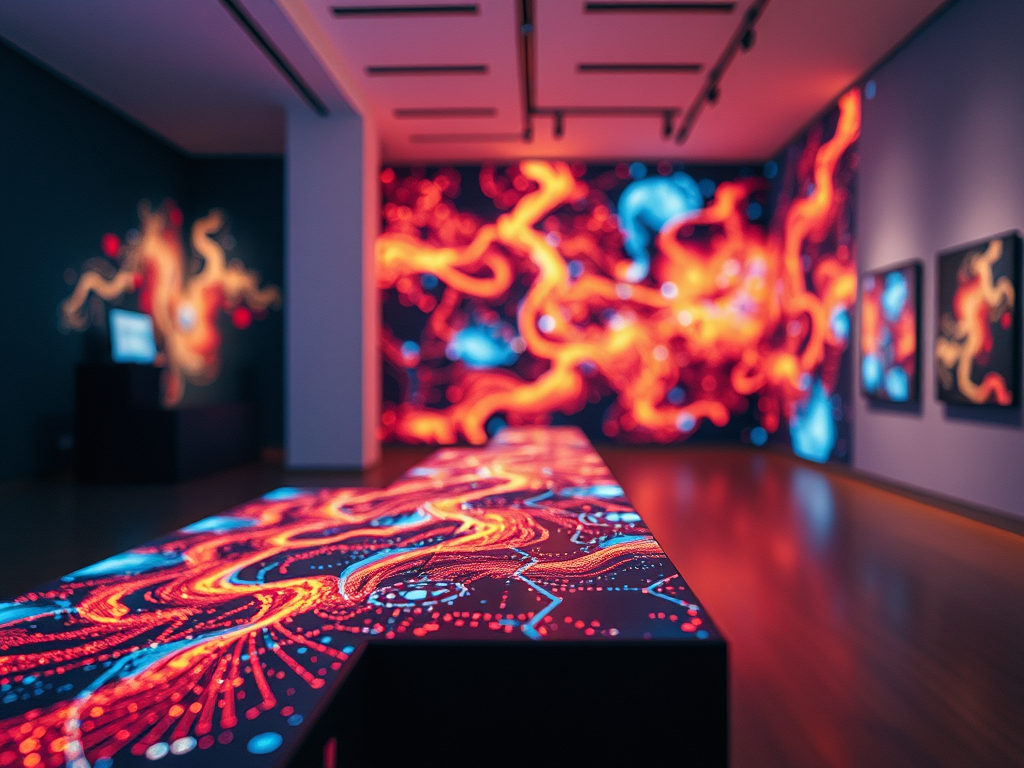
Generative art, with its use of algorithmic systems to create evolving, autonomous artworks, provides a fertile ground for exploring how attention mechanisms operate. As a unique blend of technology, creativity, and randomness, generative art relies heavily on its ability to engage viewers by continually evolving and surprising them. However, creating art that captures and holds attention goes beyond simply generating complexity; it requires a deep understanding of how the brain prioritizes and processes visual stimuli.
Attention mechanisms in the brain are responsible for filtering and prioritizing incoming sensory information, ensuring that we focus on what is most relevant. For generative artists, tapping into these mechanisms can make the difference between an artwork that engages deeply with its audience and one that is overlooked or quickly forgotten. This requires a nuanced balance of novelty, complexity, dynamic changes, and sensory stimulation.
Neuroscientific research on attention provides valuable insights into how we can design generative art that not only grabs the viewer’s focus but also sustains it, creating an immersive experience that continually evolves and challenges the brain’s capacity for perception.
This article aims to examine how attention mechanisms in the brain influence the way viewers engage with generative art by:
- Exploring the psychology of attention and how it can inform the design of generative artworks.
- Analyzing key neural mechanisms that help capture and maintain attention through novelty, complexity, and visual dynamics.
- Providing practical techniques for generative artists to design pieces that align with the brain’s natural attention networks.
- Offering empirical research and case studies that illustrate how attention mechanisms enhance the viewer’s experience in generative art.
By integrating attention principles into the creation of generative art, artists can enhance both the emotional impact and the engagement duration of their work.
Significance for Artists
Understanding how attention works is critical for generative artists who want to maximize the engagement and emotional impact of their work. The ability to capture attention in the first few moments of interaction is crucial, but equally important is the ability to sustain interest over time by introducing changes, complexity, and evolving dynamics.
For artists, applying these principles means:
- Increasing Viewer Engagement: By understanding how to capture attention effectively, you ensure that your work stands out and captivates audiences longer.
- Enhancing the Emotional Experience: Attention mechanisms are linked to emotional responses, meaning that capturing attention can amplify emotional connections with the artwork.
- Refining Artistic Practice: Using neuroscience-backed strategies allows for more intentional design, making your artwork more than just visually appealing—it becomes psychologically engaging.
Chapter 1: Theoretical Framework for Attention Mechanisms
1.1 Key Concepts of Attention
Selective Attention
In any visual environment, the brain is bombarded with stimuli but can only process a fraction of it. Selective attention refers to the brain’s ability to focus on specific elements while filtering out irrelevant information. This cognitive process is influenced by factors like novelty, salience, and personal relevance.
- How It Benefits Artists: By understanding selective attention, generative artists can design works that strategically emphasize certain visual elements, guiding the viewer’s focus toward areas of the artwork that are most dynamic, interesting, or meaningful.
Example: Using high-contrast colors or stark, unexpected shapes at the start of a generative sequence can draw initial focus to particular regions of the artwork, ensuring that viewers engage with key aspects of the design.
Sustained Attention and Visual Momentum
Once attention is captured, the challenge is maintaining it over time. Sustained attention refers to the brain’s ability to remain focused on a particular stimulus or task. Generative art, with its potential for continuous change and evolution, has a unique capacity to hold attention longer by introducing visual momentum—a dynamic flow of change that keeps the brain engaged.
- How It Benefits Artists: By designing pieces that gradually evolve, shift, or react to external inputs, generative artists can prevent habituation, a cognitive process where the brain tunes out repetitive stimuli. Introducing new or surprising elements at intervals can sustain attention.
Example: Subtle, evolving patterns or colors that change unpredictably yet rhythmically can sustain a viewer’s attention, as the brain remains alert for the next shift in the artwork’s appearance.
1.2 Neuroscientific Insights
Visual Attention Networks
Sabine Kastner and Leslie G. Ungerleider in Neural Mechanisms of Visual Attention provide an overview of the attention networks in the brain that process and prioritize visual stimuli. These networks, located in regions like the prefrontal cortex and parietal lobes, help filter out unnecessary information while honing in on what’s important.
- Bottom-Up vs. Top-Down Attention: Bottom-up attention is stimulus-driven—captured by novel, unexpected, or highly salient stimuli. Top-down attention is goal-directed, where the brain focuses on something due to intent or relevance. For generative art, bottom-up attention mechanisms are crucial for grabbing attention quickly, while top-down processes can help sustain engagement when viewers are exploring an artwork with purpose.
How It Benefits Artists: By creating art that triggers bottom-up attention through novel or surprising elements, and then introducing complexity or patterns that reward top-down attention, generative artists can engage both attention mechanisms simultaneously.
Novelty and Surprise in Art Perception
Research by M.P. van Dongen and E. Willems, outlined in Novelty and Surprise in Art Perception, shows that the brain is highly sensitive to novelty and unexpected changes in visual stimuli. Novel stimuli activate the brain’s reward systems, releasing dopamine, which enhances attention and encourages exploration.
- How It Benefits Artists: Designing generative art that includes unpredictable elements, such as sudden changes in form, color, or movement, can continuously trigger the brain’s novelty-seeking mechanisms, keeping viewers engaged for longer periods.
Example: Randomized visual outputs that subtly shift the artwork’s appearance, such as sporadic color changes or unexpected pattern interruptions, create moments of surprise that captivate attention and prolong viewer interaction.
1.3 Current Trends in Attention-Capturing Art
Dynamic Visual Stimuli
Dynamic changes in visuals, such as movement, flicker, or transitions, can captivate attention much more effectively than static visuals. Jeremy M. Wolfe and Todd S. Horowitz highlight in Dynamic Visual Stimuli and Attention Capture that the brain is hardwired to prioritize motion, as it often signals something important in our environment (e.g., danger or opportunity).
- How It Benefits Artists: Incorporating dynamic elements into generative art, such as patterns that move or evolve in response to time or viewer interaction, can keep the brain alert and focused on the piece.
Example: A generative art installation where the shapes appear to ripple like water or move in sync with ambient sounds can keep the viewer engaged by creating an ever-changing, immersive experience.
Complexity and Cognitive Load
Laurent Itti and John K. Tsotsos in Attention and the Brain discuss how complexity can influence attention by increasing cognitive load—the amount of mental effort required to process information. Too little complexity results in boredom, while too much can overwhelm the viewer, leading to disengagement.
- How It Benefits Artists: Finding the sweet spot for complexity is key to holding attention. Generative art can balance complexity by gradually increasing the visual intricacies, allowing viewers to explore deeper layers of the artwork without feeling overwhelmed.
Example: Using fractals or recursive patterns in generative art that reveal more details as the viewer looks closer provides layers of complexity that reward sustained attention.
Chapter 2: Practical Techniques for Capturing and Sustaining Attention
2.1 Leveraging Novelty and Surprise
Randomized Patterns
One of the key ways to capture attention in generative art is by introducing randomized elements that create a sense of unpredictability. The brain responds to novelty, so artworks that evolve in ways the viewer can’t entirely predict will naturally hold attention.
- Practical Application: Introduce algorithms that create randomized shifts in form, color, or texture at irregular intervals. This could be sudden shifts in the shape of an evolving pattern or unexpected color transitions that create a sense of surprise.
Example: A generative piece where geometric shapes morph unpredictably from sharp angles to soft curves, or where colors shift unexpectedly from muted to vibrant.
Motion and Kinetic Elements
Since the brain is sensitive to movement, incorporating motion into your generative art can significantly increase its attention-grabbing power.
- Practical Application: Use code to simulate natural movements, such as rippling water, flowing particles, or organic forms that grow and shrink over time. The movement can be subtle but must be continuous to keep attention.
Example: An artwork where digital particles appear to flow like a river, creating a sense of organic motion that captivates the viewer’s attention through smooth, hypnotic movement.
2.2 Designing for Sustained Attention
Layering Complexity
To hold attention over time, it’s essential to introduce layers of complexity that the viewer can discover gradually. As viewers explore deeper into the artwork, they should encounter new elements that keep their brains engaged.
- Practical Application: Design your generative algorithms to reveal new layers of patterns or details as the viewer interacts with the artwork. This could involve using fractal-like structures or recursive shapes that evolve as the viewer explores the piece.
Example: A generative art piece where the initial image is a simple geometric shape, but as the viewer focuses on different parts of the artwork, more intricate details and hidden patterns emerge, rewarding sustained engagement.
Visual Transitions and Smooth Changes
Smooth transitions in generative art—where one form or color gradually morphs into another—can help maintain visual momentum. The brain prefers continuous changes over abrupt, jarring shifts, which can cause disengagement.
- Practical Application: Design your art to evolve slowly and organically. For instance, colors could gradually fade from one shade to another, or shapes could morph over time into new configurations.
Example: An installation where abstract shapes transition fluidly, changing color and form in a way that feels natural and continuous, encouraging the viewer to follow the evolving piece.
Chapter 3: Case Studies in Attention Mechanisms
Case Study 1: “Bloom” by John Edmark
In his kinetic sculptures titled “Bloom”, John Edmark uses mathematical algorithms to create sculptures that, when rotated under a strobe light, appear to grow and transform in real time. These pieces capture attention through their dynamic changes, and viewers often find themselves mesmerized by the fluid transformations.
- Attention Mechanism: The constantly evolving shapes trigger both bottom-up attention through visual surprise and top-down attention as viewers try to understand the mathematical principles behind the transformation.
- Takeaway for Artists: Incorporating dynamic, evolving elements that feel organic and smooth can engage both conscious curiosity and subconscious visual processing.
Case Study 2: “Melting Memories” by Refik Anadol
Refik Anadol’s Melting Memories is a data-driven generative artwork that uses brainwave data to create constantly evolving visuals that represent the fluidity of memory. The piece uses dynamic stimuli to engage attention, with flowing, liquid-like forms that shift and change as the brainwaves are translated into visual outputs.
- Attention Mechanism: The constantly changing patterns and forms keep the brain engaged, triggering novelty-seeking behaviors while the fluidity of the changes maintains visual momentum.
- Takeaway for Artists: Combining randomness with meaningful data inputs (such as brainwaves or environmental data) can create immersive experiences that capture and sustain attention.
Personalization of Attention Mechanisms
In the future, generative artists may use personalized attention mechanisms—where the artwork adapts to the viewer’s individual attention patterns in real-time. Using eye-tracking technology or biometric feedback, generative art could respond to the viewer’s gaze, focus, or emotional state, adjusting its complexity and novelty based on the individual’s engagement level.
- Potential for Artists: Personalized generative art could offer unique experiences for each viewer, ensuring that the artwork captures attention by dynamically adapting to how each person interacts with it.
Artificial Intelligence in Attention-Driven Art
Artificial intelligence (AI) is likely to play a significant role in generative art by learning how viewers respond to different visual stimuli. AI can analyze real-time data from viewers to adjust the artwork’s elements, ensuring optimal levels of novelty, complexity, and engagement.
- Potential for Artists: AI-driven generative art could create highly interactive, attention-capturing pieces that adapt and evolve based on the real-time analysis of audience engagement.
The ability to capture and sustain attention is essential for generative artists who want to create immersive, emotionally impactful works. By understanding and applying attention mechanisms from neuroscience and psychology, artists can:
- Leverage novelty and surprise to trigger attention and engage viewers.
- Use dynamic visual elements like motion and transitions to sustain attention.
- Introduce layers of complexity that reward deeper exploration.
- Guide viewer focus through strategic use of selective attention techniques.
Generative art is uniquely positioned to engage the brain’s attention networks through its capacity for dynamic evolution and complexity. As artists explore the intersection of neuroscience and creativity, the potential to create artworks that engage both the conscious and subconscious mind will continue to expand. By designing with attention mechanisms in mind, generative artists can unlock new levels of viewer engagement, making their work more memorable and emotionally resonant.
References
- Pashler, H. (1998). The Psychology of Attention. MIT Press.
- Kastner, S., & Ungerleider, L. G. (2000). Neural Mechanisms of Visual Attention. Annual Review of Neuroscience.
- Itti, L., & Tsotsos, J. K. (2005). Attention and the Brain: Neuroscience Perspectives. MIT Press.
- van Dongen, M. P., & Willems, E. (2019). Novelty and Surprise in Art Perception. Visual Arts Research.
- Wolfe, J. M., & Horowitz, T. S. (2004). Dynamic Visual Stimuli and Attention Capture. Nature Reviews Neuroscience.
 Visual Alchemist
Leave a comment