What is Generative Art?
Generative art is a type of art that combines creativity with computer programming. Tyler Hobbs, a well-known generative artist, explains that this kind of art involves using a set of rules and computer code to create images. It’s different from just using digital tools to make art because the computer helps decide the final outcome, adding an element of surprise and uniqueness.
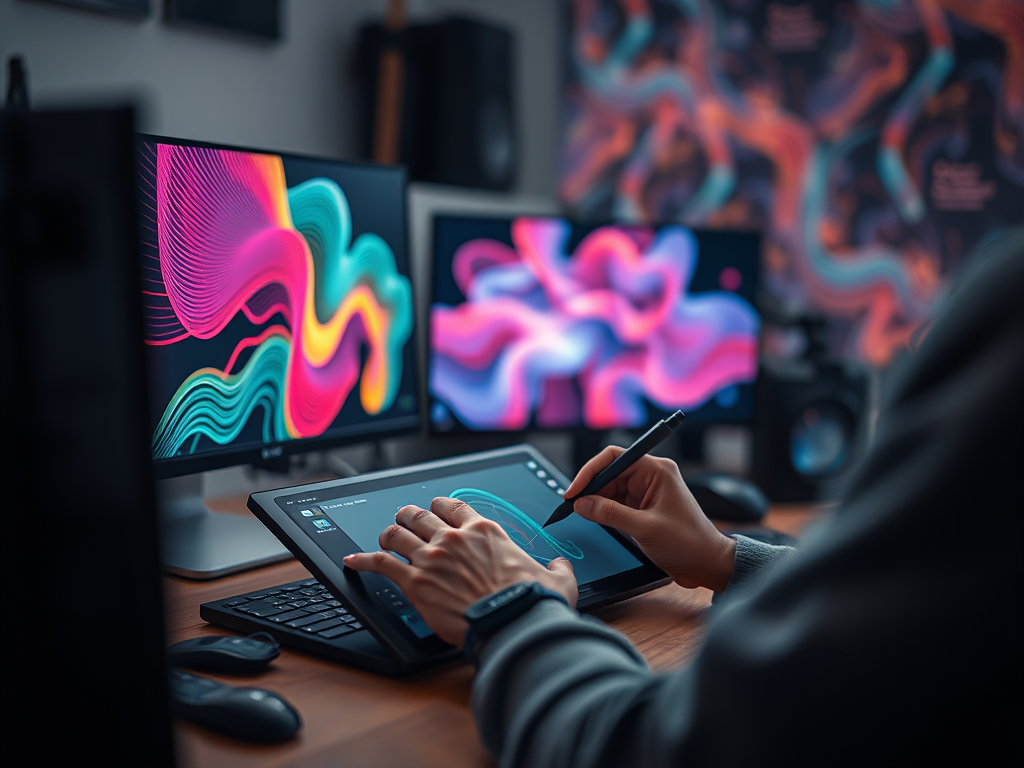
Hobbs mostly creates digital images using his generative programs, but sometimes he makes physical artwork too. He uses machines called plotters to draw out his computer-generated designs on paper. While he began with abstract, computer-generated designs, he now also adds hand-drawn elements using a Wacom tablet. This mix of computer-generated and hand-drawn elements makes his art more complex and interesting.
Tyler Hobbs’s main tools are Quill, a library in Clojure (a type of programming language), and Processing, a creative coding library in Java. Processing is popular among artists because it’s easy to use and lets you work with shapes, lines, and images directly. This makes it a great tool for creating visual art quickly and easily.
Processing and Quill are very flexible. They allow artists to work with vector (lines and shapes) and raster (pixels) graphics. Artists can create 2D and 3D pieces, animations, and interactive works that respond to a keyboard, mouse, or tablet. These capabilities make it easier for artists like Hobbs to combine the accuracy of coding with more spontaneous, creative exploration.
Why Use Clojure for Generative Art?
Tyler Hobbs uses Clojure for his generative art because it helps him balance creativity and technical skill. Here are some reasons why Clojure is a great fit for generative art:
Working with Data to Create Visuals
Clojure is very good at handling data, which is important in generative art. When creating art, Hobbs often works with data about shapes, lines, colors, and pixels. With Clojure, he can easily manipulate these elements to create interesting visuals.
Quick Testing and Experimentation
One of the best features of Clojure is its REPL (Read-Eval-Print Loop), which allows artists to quickly test their code and see changes immediately. This is similar to a painter adding strokes to a canvas and seeing how it looks right away. This instant feedback makes it easier for Hobbs to experiment and make creative adjustments on the fly.
Access to Java Libraries
Clojure runs on the Java Virtual Machine (JVM), which means it can use many Java libraries. These libraries provide extra tools, like ones for handling images, animations, and sounds, which Hobbs can easily use without creating everything from scratch. This makes his creative process more efficient.
Handling Multiple Tasks at Once
In interactive art, it’s often necessary to manage several processes at the same time, like responding to user inputs. Clojure has tools like atoms, agents, and core.async that help manage these tasks smoothly. Hobbs uses these tools to keep his art projects responsive and efficient, even when they require a lot of computing power.
Encouraging Creative Thinking
Clojure’s style of programming supports creative thinking. It encourages the use of higher-order functions and immutability, which means that Hobbs can focus on making new, surprising things happen. This helps him find a good balance between setting clear rules for his program and allowing room for unexpected outcomes.
Challenges in Generative Art
Generative art comes with its own set of challenges, especially balancing the controlled nature of programming with the desire for unpredictable, organic results. Hobbs has identified ways to manage these challenges effectively:
Using Controlled Randomness
One of the key aspects of Hobbs’s work is guided randomness. Unlike typical programming that aims for predictability, Hobbs incorporates randomness to make his work more dynamic and natural. This randomness is controlled by parameters that keep it within a certain range, like a jazz musician improvising within a melody.
For example, Hobbs might use randomness to change the density of lines, angles, or color choices. While each artwork may look different, they all share a certain consistency that aligns with his style. This helps keep his body of work coherent while still allowing for creativity and surprise.
Emergent Patterns and Chaos Theory
Hobbs is also inspired by emergent properties—complex behaviors that come from simple interactions. He looks at examples like Jonathan McCabe, who uses cellular automata (simple rules that lead to complex patterns) in his work.
A good way to understand this is to think of a triple pendulum. While one pendulum swings predictably, adding more pendulums creates chaos, where tiny changes can lead to very different outcomes. Hobbs uses this idea to make his generative art unpredictable in interesting ways, turning simple inputs into rich, complex visuals.
Using Machine Learning: GANs
Machine learning, especially Generative Adversarial Networks (GANs), has become a powerful tool in generative art. GANs have two parts: a generator that creates images and a discriminator that checks if they look real. These networks are trained on huge datasets, allowing them to create detailed, sophisticated images.
Hobbs points out the work of Mario Klingemann, who uses GANs to create surreal, thought-provoking art. Although GANs work autonomously, the artist still plays a crucial role in choosing the training data and guiding the overall look of the generated images. This oversight ensures that the machine’s creations fit into an artistic vision, showing that the artist’s role is still central even when using advanced technology.
Can Aesthetics Be Fully Coded?
Hobbs explores whether an artist’s sense of beauty can be fully coded into a computer system. While generative art can capture some elements of aesthetic decision-making, Hobbs believes that the deeply intuitive and subjective nature of art makes it hard to completely encode.
One challenge is choosing colors. Colors can be represented using math, like with RGB or HSL values, but human perception of color is influenced by cultural meanings, nearby colors, and personal experiences. An algorithm might match colors based on certain rules, but it lacks the human experience that shapes how we see color combinations. Hobbs believes that for AI to truly capture these nuances, it would need a kind of computational empathy—something that current technology is not yet capable of.
The Value and Importance of Generative Art
Generative art isn’t just about making beautiful visuals; it’s also about the experience of exploring and experimenting. Hobbs lists several reasons why he is passionate about generative art:
The Joy of Experimentation
For Hobbs, play is a big part of the creative process. Generative art lets programmers have fun with their skills, using them to explore something personal and creative rather than just practical. Testing different parameters, trying new things, and figuring out how to make the code create beautiful art all bring a sense of joy.
Technical Challenges
Generative art also brings tough technical challenges. Hobbs has to figure out how to get the most out of GPU shaders for his visuals or work within strict limits like those found in the demoscene (a community known for making impressive digital art with very little storage space). These challenges push Hobbs to find creative solutions and bring his ideas to life, which makes his work both an artistic and an engineering feat.
Making Digital Art Physical
Hobbs finds it exciting to bring digital art into the physical world. By using plotters, he can turn computer designs into physical drawings or paintings. This transformation lets people experience his art in a more direct and tactile way, which is different from looking at a digital image on a screen. The physical versions of his art have their own textures and material qualities that add to the viewer’s experience.
Exploring New Artistic Territories
Generative art is still relatively new, which means there’s lots of room for originality and discovery. Hobbs finds this exciting because he can help define what this kind of art can be. By combining code, data, and creative choices, he can develop visual styles and artistic methods that are different from anything traditional art has offered.
Impact on Society and Culture
Hobbs argues that generative art has a broader value to society. By showing people complex algorithms through visual art, generative art can help make advanced technological ideas easier for everyone to understand. This makes technology more approachable and less intimidating.
Generative art also offers a way to think about new technologies, like machine learning, in creative ways. It shows both the strengths and weaknesses of these technologies, sparking discussions about their ethical implications and how they fit into our culture.
The Balance of Algorithms and Creativity
Generative art is a powerful blend of programming and human creativity. It uses the precision of algorithms and combines it with the artist’s intuition, experience, and personal vision. Tyler Hobbs shows us that generative art is not about replacing artists with machines. Instead, it’s about enhancing what artists can do—letting them explore new and unexpected forms of beauty.
The true power of generative art is in its ability to reshape how we understand creativity. It demonstrates that something as strict as an algorithm can produce stunning, unpredictable art when paired with human imagination. This intersection of technology and creativity can lead us to new places in art, culture, and how we see the world.

 Visual Alchemist
Leave a comment