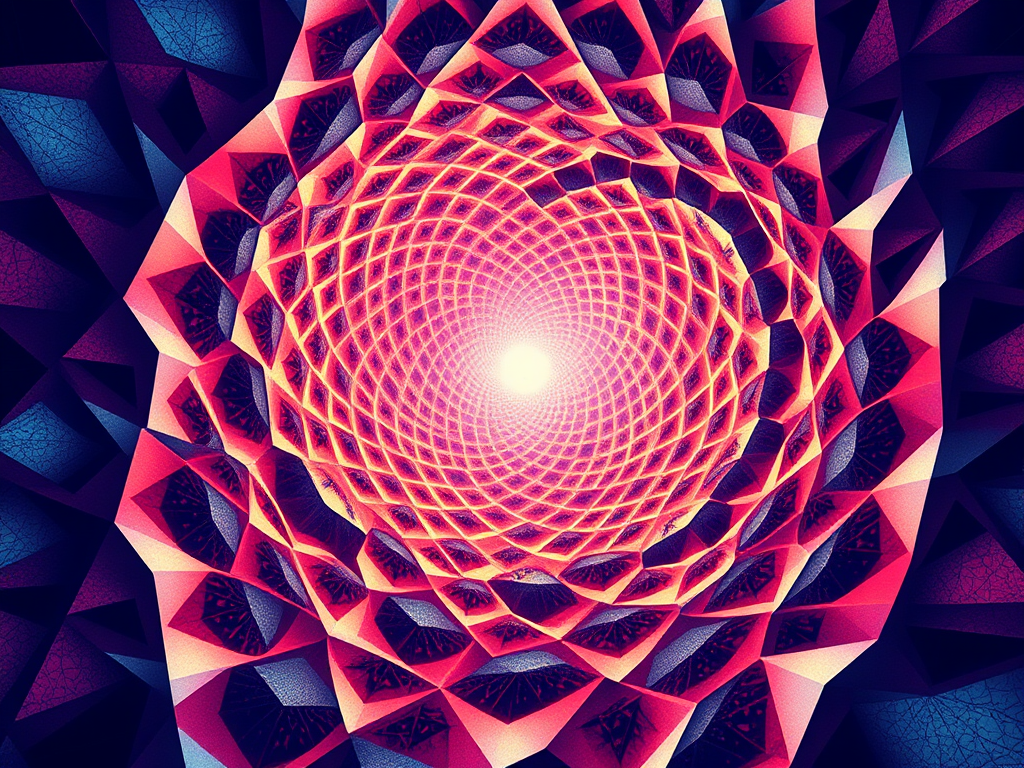
Mathematics and art may seem like an unlikely pair, but the intersection of these two disciplines has led to some truly remarkable creations. From intricate patterns to mind-bending illusions, the fusion of math and art opens up a world of possibilities for creativity and expression. In this post, we will delve into the fascinating relationship between mathematics and art, exploring how these seemingly disparate fields come together to inspire and innovate.
The Essence of Mathematical Art
What is Mathematical Art?
Mathematical art, also known as math art or algorithmic art, is a form of artistic expression that combines mathematical concepts and techniques with creative design. It involves using mathematical principles such as geometry, symmetry, fractals, and patterns to create visually captivating artworks.
Historical Perspectives on Mathematical Influence in Art
Throughout history, mathematics has played a significant role in shaping various forms of art. From the intricate geometric patterns found in Islamic art to the precise perspective techniques used in Renaissance paintings, mathematical principles have been instrumental in creating some of the most iconic works of art.
“Mathematics is the language with which God has written the universe.” – Galileo Galilei
Key Concepts in Mathematical Art
Geometry and Symmetry
Geometry and symmetry play a crucial role in the intersection of mathematics and art. Artists have long been inspired by geometric shapes such as circles, squares, and triangles, using them to create visually appealing compositions. The concept of symmetry, where an object is balanced or mirrored across an axis, is also prevalent in art forms such as architecture, painting, and sculpture. Mathematically precise constructions based on geometric principles can be found in famous works of art throughout history.
Fractals and Chaos Theory
Fractals and chaos theory are more recent additions to the world of mathematical art. Fractals are complex geometric shapes that can be divided into smaller parts, each of which is a reduced-scale copy of the whole. Artists have used fractals to create intricate patterns that repeat at different scales, resulting in mesmerizing visual effects. Chaos theory explores the unpredictable nature of complex systems and has been applied to artistic creations that capture the beauty of randomness and disorder.
“Geometry and symmetry are foundational elements in mathematical art, providing artists with a framework for creating harmonious compositions.”
Famous Mathematical Artists and Their Works
M.C. Escher’s Infinite Patterns
M.C. Escher, a Dutch artist known for his intricate and mind-bending works, often explored mathematical concepts in his art. One of his most famous pieces, “Relativity,” showcases impossible staircases that defy the laws of physics. Escher’s use of tessellations and symmetry in his drawings demonstrates a deep understanding of mathematical principles.
“My work is a game, a very serious game.” – M.C. Escher
Bridget Riley and Op Art
Bridget Riley is an English painter associated with the Op Art movement, which uses optical illusions to create abstract patterns that appear to move or vibrate. Riley’s meticulous use of geometric shapes and precise color combinations creates mesmerizing visual effects that challenge the viewer’s perception.
“The eye can travel over the surface in a way parallel to the way it moves over nature.” – Bridget Riley
Tools and Techniques for Creating Mathematical Art
Digital Software Used in Mathematical Art
In the modern age, digital software has revolutionized the way mathematical art is created. Artists can now use programs like Adobe Illustrator, Processing, and Mathematica to generate intricate geometric patterns, fractals, and other mathematical designs with precision and ease. These tools allow for the manipulation of complex equations and algorithms to produce visually stunning artwork that seamlessly blends mathematics and art.
Traditional Techniques with a Mathematical Base
Before the advent of digital software, artists used traditional techniques to create mathematical art. One such technique is tessellation, where shapes are repeated in a pattern to fill a space without any gaps or overlaps. Another common technique is symmetry, which involves creating balanced compositions using reflection or rotation. These techniques have been used by artists throughout history to explore mathematical concepts such as symmetry, proportion, and geometry in their artwork.
“Mathematics is not only an essential tool for understanding the natural world but also a source of inspiration for artistic creation.”
The Role of Mathematics in Modern Design
Mathematics plays a crucial role in modern design, providing a foundation for creativity and innovation across various fields. From architecture to fashion, the principles of mathematics are evident in the intricate designs and structures that captivate our senses.
Architectural Marvels Inspired by Mathematics
Architects have long been inspired by mathematical concepts such as symmetry, proportion, and geometry. The use of mathematical principles in architectural design can be seen in iconic structures like the Eiffel Tower, with its precise geometric patterns and symmetrical layout.
“Mathematics is the language with which architects communicate with the universe.” – Helmut Jahn
The application of mathematical formulas and calculations allows architects to create buildings that not only stand as feats of engineering but also as works of art that inspire awe and admiration.
Fashion Design: Incorporating Geometric Precision
In the world of fashion design, mathematics plays a vital role in creating garments that are not only visually appealing but also structurally sound. Designers often rely on geometric shapes and patterns to achieve precision in their creations, from perfectly tailored suits to intricately pleated dresses.
“Fashion is architecture: it is a matter of proportions.” – Coco Chanel
By incorporating mathematical principles such as symmetry, tessellations, and fractals into their designs, fashion designers are able to push the boundaries of creativity while maintaining a sense of balance and harmony in their work. The intersection of mathematics and art in fashion design showcases the beauty that can arise when logic meets creativity.
Educational Benefits of Integrating Math into Artistic Curriculums
Art and mathematics, seemingly disparate subjects, actually have a deep-rooted connection that can benefit students in numerous ways. By integrating math into artistic curriculums, educators can unlock a world of educational benefits for their students.
Enhancing Cognitive Development Through Artistic Math
The intersection of mathematics and art provides a unique opportunity for students to enhance their cognitive development. When students engage in artistic activities that involve mathematical concepts, such as symmetry, patterns, and proportions, they are not only honing their artistic skills but also strengthening their mathematical reasoning abilities. This interdisciplinary approach fosters creativity and critical thinking skills, ultimately leading to a more well-rounded education.
Case Studies: Schools Successfully Merging Math and Art Education
Several schools have successfully integrated math into their art programs, demonstrating the positive impact of this interdisciplinary approach on student learning. One notable example is XYZ School, where students participate in collaborative projects that combine mathematical principles with artistic expression. Through these projects, students not only improve their understanding of math concepts but also develop their artistic talents.
Another case study comes from ABC Academy, where teachers have implemented cross-curricular lessons that incorporate both math and art. By connecting these two subjects in meaningful ways, students at ABC Academy have shown improved academic performance and a greater appreciation for the interconnectedness of different disciplines.
In conclusion, the integration of math into artistic curriculums offers numerous educational benefits for students. By embracing this interdisciplinary approach, educators can help students develop essential skills in both math and art while fostering creativity and critical thinking.
How Technology is Shaping the Future of Mathematical Art
3D Printing and Its Impact on Sculptural Design
In recent years, 3D printing has revolutionized the way artists approach sculptural design. This technology allows for intricate mathematical forms to be translated into physical objects with unparalleled precision. Artists can now explore complex geometric shapes and patterns that were once impossible to create by hand. The marriage of mathematics and art through 3D printing has opened up new possibilities for creativity and expression.
Virtual Reality: A New Dimension for Experiencing Math-Art
Virtual reality (VR) offers a unique platform for experiencing mathematical art in a whole new dimension. Through VR technology, viewers can immerse themselves in interactive mathematical worlds created by artists. This innovative medium allows for a deeper understanding and appreciation of the mathematical concepts behind the art. By combining mathematics with immersive virtual experiences, artists are pushing the boundaries of traditional art forms and creating captivating new ways to engage with mathematical ideas.
Our Brand’s Commitment to Promoting Sustainability Through Unique Designs
At our brand, we are dedicated to promoting sustainability through our unique designs. We believe that art and mathematics can come together to create products that not only look beautiful but also have a positive impact on the environment.
Ethical Production Practices in Creating Our Products
When it comes to creating our products, we prioritize ethical production practices. From sourcing materials responsibly to ensuring fair labor practices, we are committed to making sure that every step of the production process aligns with our values of sustainability and social responsibility.
How We Integrate Mathematical Concepts into Our Designs
1. Fibonacci Sequence: One of the mathematical concepts we often incorporate into our designs is the Fibonacci sequence. This sequence, where each number is the sum of the two preceding ones, creates a visually pleasing pattern that can be found in nature and art alike. By using this sequence in our designs, we aim to create products that are not only aesthetically pleasing but also mathematically intriguing.
2. Golden Ratio: The golden ratio, also known as the divine proportion, is another mathematical concept that inspires our designs. This ratio, approximately equal to 1.618, has been used by artists and architects for centuries to create visually harmonious compositions. By incorporating the golden ratio into our designs, we strive to achieve a sense of balance and beauty that transcends mere aesthetics.
3. Fractals: Fractals are complex geometric shapes that exhibit self-similarity at different scales. These intricate patterns can be found in nature and art, inspiring us to create designs that reflect the beauty of mathematical complexity. By incorporating fractals into our products, we aim to showcase the interplay between mathematics and art in a visually captivating way.
In conclusion, at our brand, we are proud to explore the intersection of mathematics and art in our designs. By integrating mathematical concepts such as the Fibonacci sequence, golden ratio, and fractals into our products, we strive to create unique pieces that not only look beautiful but also tell a story of sustainability and creativity.
As we wrap up our exploration of the intersection of mathematics and art, it’s clear that these two disciplines have a lot to offer each other. From historical influences to modern innovations, the connection between math and art continues to shape our world in exciting ways. Whether you’re a seasoned artist or a math enthusiast, there’s something truly special about the magic that happens when numbers meet creativity. So next time you pick up a paintbrush or solve an equation, remember that the possibilities are endless when you embrace the beauty of mathematical art.
 Visual Alchemist
Leave a comment