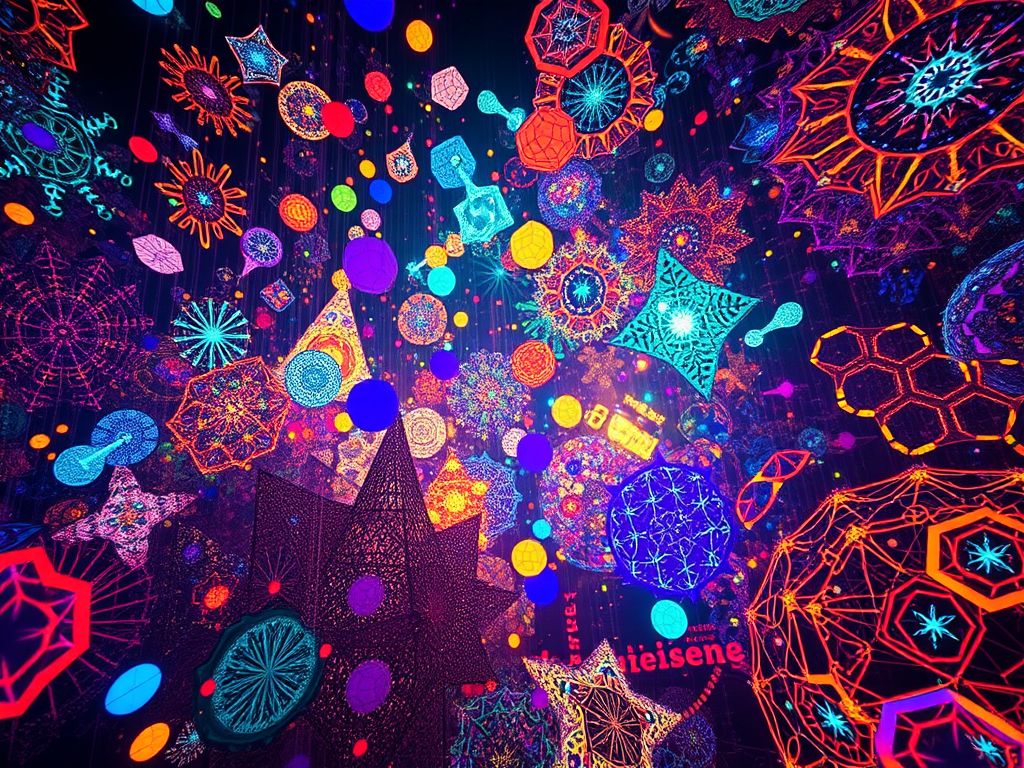
Generative art often draws attention for its capacity to produce an endless array of unique outputs. Systems built on procedural algorithms, rule-based methods, or machine learning models can create a stream of constantly changing forms, patterns, and sequences. This abundance of novelty is compelling, as it taps into a basic human attraction to the unexpected. Yet, as viewers stand before screens that never repeat the same image twice, or installations that perpetually evolve, questions arise about what lies beyond sheer newness. Can a generative system produce work that not only impresses with its infinite variations but also carries genuine meaning? Is it possible to transcend novelty for its own sake and create a generative artwork that speaks to deeper human concerns—insight, emotion, social commentary, intellectual challenge, or philosophical inquiry?
These questions invite a closer examination of what constitutes meaning in art. Traditional artworks—paintings, sculptures, photographs, performances—often provide recognizable points of reference. They may relate to historical context, personal expression, symbolic motifs, or cultural narratives. Meaning arises through the interplay of an artist’s intention, the chosen medium, the conceptual framework, and the viewer’s interpretation. Generative art, however, operates differently. Instead of producing a single, fixed artifact, it sets in motion processes that yield continuous variation. Novelty emerges naturally from the computational system’s capability to explore vast possibilities. The challenge is to locate meaning in a practice that can feel ephemeral, abstract, or detached from conventional markers of significance.
This line of thought leads to the central inquiry: can generative art balance the allure of novelty with the pursuit of meaningful expression? To approach this question, consider several interrelated factors that shape how meaning might arise in generative practice: the role of intention, the importance of context, the pursuit of conceptual depth, and the capacity to evoke emotional resonance. By scrutinizing these aspects, it becomes possible to envision generative art as more than just a novelty engine. Instead, it can be understood as a platform for thoughtful exploration of themes, experiences, and ideas that matter to human observers.
The Allure of Newness
The capacity to produce infinite variations lies at the core of generative art’s appeal. Artists can code instructions or train models that never exhaust the space of possible outcomes. Each run of the system might yield something no one has ever seen before. This continuous generation of novelty can be mesmerizing. Observers find themselves captivated, returning to the evolving display to see what comes next. The promise of encountering something unexpected, unfamiliar, or visually unprecedented drives curiosity and engagement.
In many ways, this allure aligns with humanity’s fascination with the unknown. We pay attention to change, growth, and difference. Novelty can stimulate perception, disrupt habitual patterns of thought, and open imaginative frontiers. A system generating endless new forms can feel like a wellspring of creativity, an unceasing fountain of images or sounds that push the boundaries of what art can look or sound like.
Yet novelty, on its own, does not guarantee meaning. A random scribble might be novel in its details, but lacks conceptual significance. Similarly, a generative system that simply shuffles parameters to create different shapes or colors, without any guiding principle, may entertain momentarily but offers little to reflect upon. Without a framework that connects these variations to broader ideas, novelty risks becoming a spectacle devoid of depth.
This is not to dismiss novelty as unimportant. Indeed, novelty can be the starting point. It can pique interest and invite inquiry. The question is how to move beyond surface-level fascination. Can novelty become a vehicle for meaning? Can the system’s capacity for continuous variation serve as a platform for exploring universal themes, cultural questions, or internal emotional states?
The Risk of Mistaking Newness for Meaning
In seeking meaning, there is a danger of conflating complexity or randomness with depth. Just because an algorithm produces intricate patterns does not mean it conveys anything beyond its own generative rules. Without intentional design, these outputs might remain aesthetically pleasing diversions, lacking a conceptual anchor.
Consider the analogy of language. A random assortment of letters can be infinitely varied, but it conveys nothing meaningful. Only when letters form words, words form sentences, and sentences express ideas does language acquire meaning. Similarly, a generative art system can produce infinite graphic forms, but unless those forms are shaped by an overarching structure of intention and interpretation, they remain akin to random letters on a page.
The risk is that artists and audiences may become satisfied with novelty alone. Some might say, “Look how many different patterns this system can produce!” without asking why these patterns matter or what they communicate. In such a scenario, generative art risks becoming a demonstration of technical prowess rather than a medium of artistic exploration. The artist’s role here is crucial. If the artist views the system as a creative partner or tool for expression, rather than a fireworks display of forms, then the path towards meaning opens.
Intention as a Foundation for Meaning
The first step in moving from novelty to meaning is the artist’s intention. Before the code is compiled or the model is trained, the artist must clarify why this system exists. What does the artist hope to explore or express through these generative processes? Perhaps the artist wants to comment on the complexity of natural ecosystems by modeling patterns inspired by organic growth. Maybe the artist seeks to critique social dynamics by feeding news headlines into the system, thus generating outputs that reflect contemporary discourses. Or perhaps the artist aims to explore existential themes by allowing randomness to stand for uncertainty and impermanence.
Intention need not be overly didactic. It can be subtle or open-ended. The point is that intention guides the selection of algorithms, data, and parameters. It ensures that the system’s novelty emerges within a conceptual framework. The artist can embed meaningful references—cultural symbols, narrative structures, conceptual metaphors—into the generative logic. Even if the viewer does not grasp every detail, the presence of a guiding intention differentiates the artwork from a mere novelty generator.
Moreover, intention interacts with the system’s outputs after they are generated. The artist can act as a curator, selecting certain variations that best convey the intended message. This selection process demonstrates that not all outputs are equal. Some resonate more with the underlying concept, while others do not. By choosing and presenting these outputs thoughtfully, the artist shapes how viewers interpret the work and steers the conversation towards meaningful engagement.
Context and Mapping: Connecting Process and Meaning
Generative art does not exist in a vacuum. It is experienced in contexts—galleries, online platforms, public spaces, educational settings—and interacts with viewers who bring their own backgrounds and perspectives. Context can help transform novelty into meaning by linking the abstract processes inside the algorithm to something tangible or relatable.
One way to achieve this is through mapping—the systematic connection of data inputs, parameters, or computational rules to forms that viewers can interpret. For example, a generative artwork might visualize environmental data as evolving shapes and colors, representing real-time shifts in climate or biodiversity. Another piece might translate seismic activity into auditory signals, giving sound to geological events usually felt rather than heard. By choosing these mappings carefully, the artist connects abstract processes to phenomena that hold significance in the world.
Context also includes the manner of presentation. The same generative artwork displayed as a large-scale projection in a historical building might evoke different reflections than if viewed on a small screen in a personal environment. The artist might provide an accompanying text or incorporate interactive elements, allowing viewers to influence the generative process. Such decisions help root the artwork in particular cultural, physical, or intellectual settings, guiding interpretation and imbuing novelty with layers of meaning.
Conceptual Depth: Beyond Aesthetic Variation
Another crucial dimension of meaning is conceptual depth. While novelty often focuses on producing forms never seen before, conceptual depth invites us to ask: what ideas does this work engage with? Meaningful generative art can wrestle with questions that matter—questions about identity, nature, technology, ethics, beauty, suffering, joy, or knowledge.
For instance, consider a generative artwork that uses historical texts, transforming words into visual patterns. The novelty lies in how these words, rearranged by an algorithm, create ever-changing forms. But if the chosen texts are significant—cultural artifacts, philosophical treatises, or personal diaries—and the algorithm emphasizes certain themes or motifs, then the work can provoke thought about history, memory, and the transformation of meaning over time. Each new variation is not just different—it is a new lens for re-examining old ideas.
Conceptual depth can also emerge through self-referential strategies. An artwork might comment on the nature of generative art itself, reflecting on the tension between human intention and machine autonomy. Another might highlight the ethical implications of data use, showing how algorithmic processes reflect societal biases. By embedding these layers of thought into the generative logic, artists transform novelty into a tool for inquiry. The infinite variations become experiments that probe the boundaries of concepts, rather than displays of pattern-making virtuosity.
Emotional Resonance: Engaging Feeling Alongside Thought
Emotions offer another route to meaning. While generative art is often associated with abstract aesthetics, it can evoke emotional responses just as effectively as more traditional art forms. Surprise, wonder, serenity, tension—these feelings can arise from the unpredictability of the outputs. When viewers sense that the artwork’s variations mirror life’s uncertainty, complexity, or fleeting moments of beauty, they may experience genuine emotional resonance.
To achieve this, artists may design generative systems that progress through phases, allowing viewers to witness slow transformations that evoke growth or decay. Subtle shifts in color or form might suggest passing seasons, life cycles, or emotional transitions. A system might respond to real-time human input, making the viewer feel like a co-creator and sparking a sense of connection or empathy. The randomness baked into the algorithm can reflect the indeterminacy of human experiences—love, loss, hope—thereby forging emotional links between abstraction and lived reality.
Emotional resonance does not require a literal narrative. It can emerge from a careful balancing act: too much randomness and the artwork might feel chaotic and meaningless; too little, and it might feel static and dull. By calibrating the degree of unpredictability, the artist can orchestrate emotional journeys that mirror the complexity of human feelings. Here, novelty is no longer a mere aesthetic trick; it becomes an integral part of how the artwork communicates mood and sentiment.
A Thought Experiment: The Generative Garden
Imagine a scenario as a thought experiment. An artist decides to create a generative installation called “The Garden of Shifting Whispers.” In this garden, plants, flowers, and vines do not exist physically. Instead, they are algorithmically generated visuals projected onto a series of screens arranged around a circular space. Visitors step inside and find themselves surrounded by evolving plant-like forms that grow, wither, and reappear. No two moments look the same.
At first glance, the novelty is striking. Leaves form intricate patterns, flowers bloom in impossible colors, and vines twist in elaborate configurations. Every time a visitor returns, the garden looks different. But does it mean anything beyond being a spectacle of infinite variation?
The artist’s intention, made clear through a short statement at the entrance, is to explore ecological fragility. Data from several ecosystems—ranging from tropical rainforests to arctic tundra—feeds into the generative algorithm. Temperature changes, deforestation rates, and species migrations influence the parameters governing how these digital plants evolve. The mapping is explicit: when real-world data indicates a decline in a particular species, the corresponding digital flowers fade more quickly. When data suggests a successful conservation effort, new blossoms appear in the virtual canopy.
Context deepens the experience. The garden is presented in a cultural center known for hosting environmental discussions. Next to the installation, a panel displays environmental statistics and news headlines related to biodiversity loss. Visitors realize that the garden’s transformations are not random—they echo global environmental conditions. In this setting, novelty becomes a living metaphor for the delicate balance of ecosystems and the human impact on nature.
Conceptual depth emerges as visitors contemplate the meaning of these changes. Each variation of the garden is not just visually distinct; it represents shifts in environmental health. The piece invites reflections on responsibility, coexistence, and the transient nature of life on Earth. The complexity of the forms and their continuous evolution serve as an allegory for ecological complexity. In seeing digital blossoms appear and vanish, visitors might ponder the real plants and animals undergoing similar cycles outside the gallery walls.
Emotional resonance arises when viewers notice subtle details. Perhaps a certain type of flower only appears when certain environmental conditions improve, giving a sense of hope. Or maybe certain patterns, reminiscent of coral reefs, fade as reports of bleaching events roll in. The interplay of growth and decay might evoke sadness, urgency, and perhaps a resolve to support environmental protection. Thus, a viewer who arrived curious about novelty leaves touched by the message behind it.
In this thought experiment, novelty and meaning coexist. The infinite variations are not an end in themselves but a means to convey ecological narratives. The system’s complexity and unpredictability amplify the message rather than overshadow it. Through intention, context, conceptual depth, and emotional resonance, the generative garden goes beyond visual stimulation. It becomes a space for reflection, dialogue, and insight.
Balancing Novelty and Meaning in Practice
Achieving the balance between novelty and meaning in generative art is no simple task. Artists must navigate a landscape of technical challenges, conceptual decisions, and audience expectations. Technical complexity alone will not guarantee meaning; nor will conceptual sophistication suffice if the art is inaccessible or visually unengaging.
One approach involves iterative refinement. An artist might start with a generative system that produces intriguing forms, then gradually incorporate layers of meaning by adjusting parameters, embedding references, and clarifying intentions. Over time, the artist can test how viewers respond. Do they find significance in the variations or merely appreciate the aesthetic patterns? Based on this feedback, the artist might refine mappings, add explanatory notes, or re-contextualize the work to ensure that novelty serves a purpose rather than existing for its own sake.
Another strategy involves interdisciplinary collaboration. A generative artist might work with scientists, historians, or philosophers who provide data, narratives, or theoretical frameworks. By feeding these inputs into the generative system, the artist anchors novelty in knowledge and ideas that carry cultural weight. The resulting artworks could visualize socioeconomic data, reinterpret historical archives, or reflect philosophical inquiries about human nature. In these cases, meaning is not incidental but integrated from the outset, ensuring that infinite variations illustrate a broader intellectual landscape.
Why Meaning Matters
Some might question why meaning is necessary at all. After all, art can be appreciated on multiple levels. If novelty alone provides pleasure or inspiration, is that not enough? While there is no universal rule that all art must be meaningful, the pursuit of meaning can enrich both the artist’s creative process and the audience’s engagement.
Meaning invites dialogue. When a generative artwork communicates a concept, references a cultural issue, or evokes an emotion, it stimulates conversation. Viewers discuss what they see, debate interpretations, and connect the artwork’s abstractions to their own lives. Without meaning, novelty may become forgettable—a spectacle that fades once the initial surprise wanes. With meaning, the artwork leaves a more lasting impression, encourages critical thinking, and may even influence how people understand the world.
Meaning can also differentiate one generative work from another. As generative techniques proliferate and tools become accessible, many artists will produce infinite variations of shapes and colors. Those who invest in conceptual depth and intentional frameworks will stand out, offering experiences that resonate longer and deeper than mere novelty displays. In a sea of generative outputs, meaning serves as a compass that guides viewers through complexity and helps them discover layers of significance.
The Future of Meaningful Generative Art
As generative art evolves—driven by advancements in machine learning, real-time data integration, virtual reality, and interactive interfaces—the question of meaning versus novelty grows more urgent. Newer technologies make it easier than ever to produce infinite unique outputs. Without careful thought, this abundance could overwhelm viewers with endless but shallow variety. On the other hand, the expanded toolkit also enables more complex mappings, richer conceptual frameworks, and deeper emotional resonance.
In the future, generative artists may experiment with adaptive systems that learn from audience reactions. For instance, the artwork could analyze how viewers respond—tracking which variations captivate attention, provoke discussion, or elicit emotional responses—and adjust the generative logic accordingly. By doing so, the system could evolve towards more meaningful outputs over time, guided by both the artist’s initial intentions and the audience’s engagement.
We might also see generative art integrated into broader cultural or social processes. Imagine a generative installation in a public space that visualizes community health metrics or social inequality data. The novelty of changing patterns would make the piece continually relevant, while the meaning would arise from its connection to real human conditions. As the community changes, so does the artwork, reflecting shifting realities and encouraging people to see their environment through a different lens.
Generative art may also intersect with ethical and political debates. Artists might design systems that highlight environmental degradation, data privacy concerns, or algorithmic biases. Each new variation of the artwork would not just be a visual curiosity but a reminder of pressing issues, challenging viewers to consider their roles as citizens and decision-makers.
Meaning as an Evolving Process
Just as generative outputs evolve, so can the meaning of a generative artwork. Meaning is not fixed at the moment of creation. It can accumulate over time as external contexts shift. For example, an artwork conceived as a commentary on technological progress might take on new significance as technology advances and social attitudes change. The generative process, continually producing new variations, can mirror the evolving cultural landscape, ensuring that the artwork remains relevant and open to reinterpretation.
This temporal dimension underscores that meaning and novelty need not be opposites. Novelty can be the engine that keeps the artwork alive, while meaning is the framework that allows us to navigate the evolving territory. As cultural narratives unfold, as data streams shift, as algorithms improve, the artwork’s potential for meaningful engagement can grow rather than diminish.
Engaging Viewers as Collaborators
One way to solidify meaning is to involve viewers more directly. Generative art can be interactive, allowing audience members to influence parameters or provide inputs that guide the generative process. In doing so, viewers become participants, not just observers. Their choices introduce personal or collective meaning into the artwork. Each interaction can highlight the tension between human agency and algorithmic logic, offering a direct experience of how meaning emerges from both sides of the human-machine relationship.
When viewers can shape the outputs, they invest emotionally and intellectually in the artwork. They might discover patterns that resonate with their own stories or beliefs. By facilitating this kind of engagement, generative art shows that meaning can be co-created. Novelty remains, but it now serves a richer purpose: enabling participants to find their own significance within the evolving streams of form and pattern.
Beyond the Artistic Sphere
The implications of balancing novelty and meaning in generative art extend beyond galleries and art institutions. In a world increasingly guided by algorithmic processes—recommendation engines, automated decision-making systems, predictive models—understanding how to forge meaning from complexity is valuable. Generative art can serve as a laboratory where we experiment with ways to make sense of the abundance of data and the rapid pace of technological change.
If we can learn to imbue algorithmic outputs with conceptual frameworks, emotional resonances, and cultural relevance in the art domain, we might apply similar principles in other fields. For example, data visualization could benefit from artistic strategies that balance novelty with narrative, turning raw statistics into meaningful stories. Educational tools might use generative techniques to engage learners emotionally and conceptually, not just aesthetically. Urban planners could employ generative simulations that visualize the impact of policy decisions, helping communities understand the trade-offs involved.
In these broader contexts, the lessons from generative art about novelty and meaning can inform how we communicate complex information, engage with computational systems, and navigate a future shaped by algorithmic creativity.
A Continuous Challenge
The pursuit of meaningful novelty is not a goal that can be achieved once and for all. It is an ongoing challenge. As generative artists refine their methods, audiences develop more sophisticated interpretations, and technologies advance, what counts as meaningful may shift. This dynamism mirrors the core nature of generative art itself: nothing is static, everything evolves.
There will always be temptations to embrace novelty for novelty’s sake. The ease of producing infinite variations might seduce artists into complacency, just as audiences might enjoy the spectacle without asking deeper questions. But those committed to meaningful engagement will push back against this tendency. They will ask: why does this matter? What does this say about the human experience, about the world we inhabit, about the future we are creating?
By maintaining this critical stance, generative art can grow as an artistic discipline. It can establish itself as a field capable of more than technical feats or aesthetic displays. It can become a medium for wrestling with the complexities of existence, using code, data, and rules as materials for profound artistic exploration.
Conclusion: Towards a Synthesis of Novelty and Meaning
The question, “Can generative art be both new and profound?” invites us to envision a practice that does not sacrifice depth for novelty, nor novelty for depth. The potential is clear: generative art can produce infinite new forms and also encode intentions, contextual references, conceptual layers, and emotional textures. It can connect abstract variation to meaningful commentary on the world.
This synthesis depends on the artist’s thoughtfulness, the frameworks they build, and the dialogues they foster with audiences. It relies on viewing generative systems not as mere novelty machines but as platforms for inquiry, interpretation, and reflection. The infinite possibilities offered by generative methods become canvases on which cultural, philosophical, and emotional landscapes can be depicted, examined, and reimagined.
In doing so, generative art can stand alongside traditional forms of expression, contributing uniquely to the global conversation about who we are, what we value, and how we make sense of our environment. It can remind us that, even in an age of algorithmic abundance, meaning remains within reach—provided we approach generative systems not as empty novelty factories, but as tools for forging connections between the ephemeral and the enduring, the abstract and the meaningful, the new and the profound.
 Visual Alchemist
Leave a comment