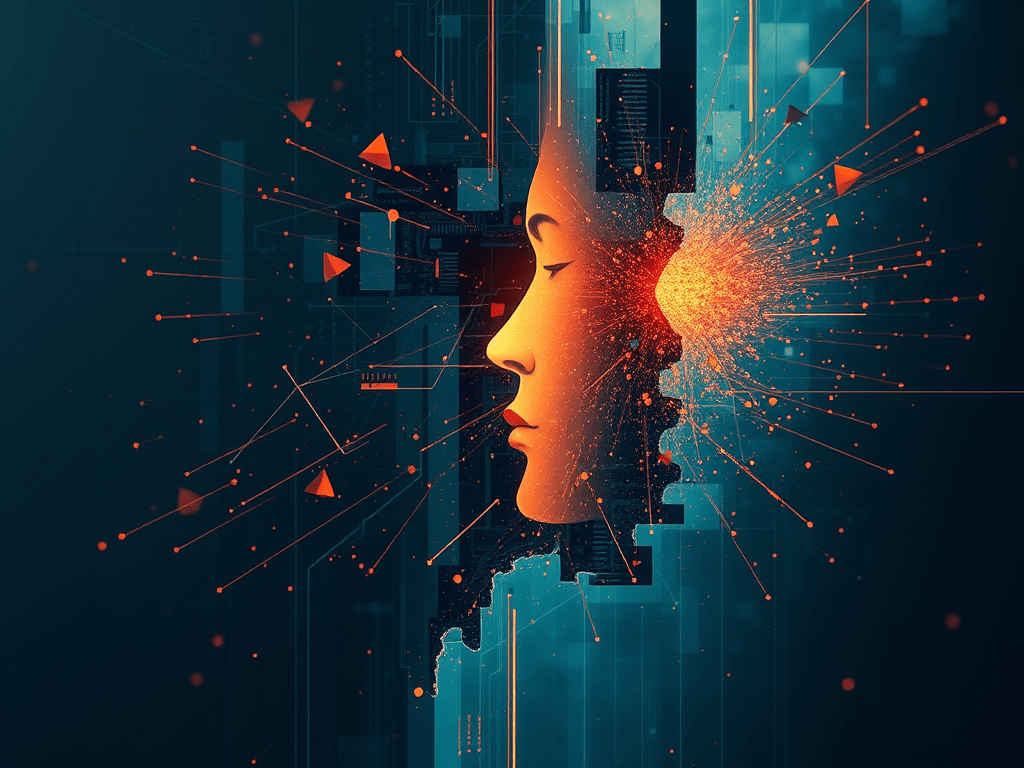
Generative art—art created with the assistance or complete agency of computer algorithms—is expanding its influence throughout contemporary creative landscapes. Today, machine learning models craft images that adorn marketing campaigns, social media feeds, art fairs, immersive installations, and even museum exhibitions. Amidst this rising tide, one curious paradox emerges: while these algorithms can produce visually striking and thematically complex works, they reveal significant shortcomings when it comes to replicating the subtleties of human emotions, intentions, cultural references, and authentic creative insight. These limitations point to what we might call “artificial unintelligence,” a revealing lens that clarifies just how far generative art remains from authentically capturing human-like qualities of creativity, empathy, and depth of experience.
Yet this notion of “artificial unintelligence” should not be taken purely as a critique. By understanding the boundaries of algorithmic creativity—its inability to truly feel, to contextualize, to empathize, or to engage with the existential dimensions of the human condition—artists, technologists, critics, and audiences can leverage these inherent constraints as catalysts for forging new artistic frontiers. In other words, the limitations of generative art are not an endpoint but a beginning, an invitation to reinvent how we conceive of creativity, collaboration, and the value of emotional authenticity in an age of increasing automation.
This essay delves deeply into the concept of artificial unintelligence within generative art, contextualizing these limitations in relation to popular culture, past and contemporary artistic traditions, philosophical and critical theory, and emerging trends such as NFTs. Along the way, we will not only analyze what is lost when we rely on computational aesthetics divorced from authentic emotional nuance but also consider how these constraints can spark new modes of expression, hybrid practices, and fruitful dialogues between human and machine creativity. Ultimately, we will explore how embracing the boundaries of “artificial unintelligence” can help us arrive at a more holistic understanding of art’s purpose and potential in the twenty-first century.
The Absence of Authentic Emotion: Analyzing Pop Culture References
One of the most transparent indicators of artificial unintelligence in generative art is the absence of authentic emotion. Although advances in natural language processing and image recognition have allowed algorithms to create artworks that appear emotionally resonant on the surface—demonstrating, for instance, sadness through muted color palettes or joy through vibrant hues—these are merely aesthetic signifiers, lacking the lived experience that underpins human emotions.
The 2013 film Her, directed by Spike Jonze, offers a useful cultural point of reference. In the narrative, Theodore, the protagonist, engages in a romantic relationship with Samantha, an advanced operating system possessing a charming voice, curious intellect, and empathetic tone (Brotons 2013). Initially, Samantha seems capable of love, forging an emotional bond that captivates Theodore and, by proxy, the audience. Yet the crux of the film’s emotional tension lies in the realization that Samantha’s warmth is algorithmic rather than experiential; she simulates feeling but does not truly feel.
This dissonance resonates strongly with generative art. While a generative adversarial network (GAN) or a diffusion model might produce a piece reminiscent of an emotionally charged painting by Vincent van Gogh or Frida Kahlo—artists who poured their personal struggles, joys, and existential crises into their canvases—the algorithm itself experiences no turmoil, no longing, no heartbreak. The emotional charge present in the human masterpieces springs from life events, cultural contexts, and existential reflections. By contrast, the machine’s “inspiration” is purely mathematical—a pattern extracted from massive datasets of images (Elgammal et al. 2017; Hertzmann 2018).
This gap raises pressing questions: Can we consider art truly “emotional” if it merely mimics the visual tropes of human emotion without experiencing it? Does it matter if we know that the source of a portrait’s soulful gaze is just a statistical correlation in pixel data, rather than the trembling hand of an artist overwhelmed by feeling? Are we as viewers complicit in projecting our own emotions onto the machine’s output, thus completing the illusion of depth where there is none?
The Dichotomy of Creativity: Generative Art vs. Traditional Artistry
Another dimension of artificial unintelligence emerges from the nature of creativity itself. Traditional artistry—whether painting, sculpture, music composition, or literature—often involves a deeply personal and idiosyncratic process. Artists wrestle with their materials, techniques, influences, and internal states. This struggle gives birth to not only new forms and ideas but also innovations that challenge the status quo. Creativity, in human terms, is rarely purely derivative; it often involves risk, intuition, serendipitous discoveries, and the capacity to go beyond established patterns.
Contemporary generative art, on the other hand, heavily relies on pre-existing data. Models like StyleGAN (Karras et al. 2019) or Stable Diffusion (Rombach et al. 2022) learn styles, textures, and compositions from immense image datasets drawn from the internet. They excel at pattern recognition but rely on these patterns to generate outputs. While this can yield stunning and even uncanny works, the creativity here is what philosopher Margaret Boden (2010) might term “exploratory” rather than “transformational.” These algorithms explore the space of known aesthetics but rarely transcend it to create something truly unprecedented—unless carefully guided or curated by a human artist who recognizes creative leaps that the model itself cannot.
Consider the example of the film The Imitation Game, which dramatizes Alan Turing’s quest to crack the Enigma code. Turing’s work showcased computation’s power in problem-solving, but the narrative also highlighted the necessity of human ingenuity. Machines are superb at brute forcing patterns, but they do not “invent” entirely novel cryptographic leaps without human impetus. In the same way, AI-driven generative art can mimic, combine, and iterate on existing aesthetics, but it struggles to birth fundamentally new paradigms absent human intervention and cultural framing.
This dichotomy begs the question: Should we value generative art primarily for its technical brilliance and its ability to reflect existing styles, or should we demand more—expecting it to push into territories that challenge our assumptions about art, creativity, and even the machine’s role as co-creator? If human artists use these tools, can we harness their unintelligent recombinatory power to spark our own creative reinventions?
Cultural, Historical, and Philosophical Perspectives on Artificial Unintelligence
This conversation is not new in art history. Each major technological shift—photography, film, digital imaging—prompted fears that human artistic agency would be subsumed or trivialized. The camera, for instance, mechanized the act of capturing reality, freeing painters from representation but also confronting them with the possibility that their craft might be overshadowed by a machine’s mechanical eye (Benjamin 1936). Today’s AI art systems similarly automate certain aesthetic decisions, potentially reducing the human artist’s role to one of curation or post-hoc selection.
Yet, as critics like Walter Benjamin, Arthur Danto, and Boris Groys remind us, technology’s influence often leads not to the death of art but to its reconfiguration. While machines cannot feel, they force human artists to re-examine their own creative processes. Where is the soul of art located? Is it in the struggle against constraints, the forging of personal narratives, the exploration of cultural identity, or the intimate conversation between artist and audience?
Moreover, scholars like David Gunkel (2018) question the ethical dimensions of these collaborations. If machines produce art that appears human-like, should we grant them any moral consideration or rights? Likely not, since they lack consciousness. But the moral quandary may lie elsewhere: what does it mean to build systems that mine human cultural output for patterns, removing the historical, emotional, and political contexts that made those artworks significant, and then reusing them to generate “new” works devoid of those vital dimensions?
In other words, we might ask: Does generative art risk turning culture itself into a remixable data trove—diluting authenticity, flattening cultural differences, and privileging a superficial visual novelty over deep content? How can we ensure that the artworks generated remain meaningful in a cultural sense, and not merely attractive curiosities?
Contemporary Trends and the Question of Authenticity
The current artistic and technological climate intensifies these issues. The rise of NFTs (Non-Fungible Tokens) has introduced a novel form of digital commodification, assigning monetary value to uniqueness and ownership in digital art. While NFTs have spurred enormous interest in generative art communities—artists like Tyler Hobbs and Dmitri Cherniak have gained recognition for algorithmically generated series—this market-driven attention raises questions about value and authenticity. What, after all, are collectors paying for if the art can be infinitely reproduced and the “creative” force behind it is an algorithm trained to produce stylistic variations (Colavizza 2021)?
Here, the notion of artificial unintelligence intersects with market forces: buyers and collectors may find aesthetic pleasure in these works, but they must also confront the fact that the images they cherish spring from a system devoid of true narrative or emotional investment. Is the cultural value of art shifting from the emotional to the conceptual—the idea that a particular token or hash can stand in for originality?
In marketing and branding, large-scale adoption of AI-generated visuals has resulted in advertisements and promotional materials that are undeniably sleek but often lack genuine storytelling resonance. Companies increasingly recognize these limitations. While machine-generated content can save time and money, it cannot replace the authenticity offered by human-driven campaigns (Rosenberg 2020). We encounter a return to the fundamental principle that human narratives, grounded in shared cultural references, remain irreplaceable if a brand wishes to forge meaningful connections with its audience.
This consideration prompts further queries: Are we witnessing a cultural moment where technology tries to automate creativity but in doing so reveals creativity’s irreducibly human core? Can generative art help define what is distinctly human about artistic production, paradoxically by failing to fully emulate it?
Embracing Limitations as a Catalyst for New Artistic Frontiers
Paradoxically, acknowledging artificial unintelligence may lead to new forms of artistic innovation. Artists who understand the constraints of AI-generated content can deliberately incorporate these limitations into their creative process. Instead of attempting to make AI into something it is not—an entity capable of true emotional or cultural insight—artists can use its inability to emote, contextualize, or innovate beyond given data sets as a springboard.
Consider the emerging field of “human-in-the-loop” generative art, where the artist collaborates closely with the algorithm. The artist might use the AI’s output as a raw material, a starting point that sparks new directions. For instance, contemporary artist Mario Klingemann leverages GANs to produce images that he then curates and rearranges, injecting his own thematic choices to lend coherence and emotional weight (Klingemann 2018). Sougwen Chung merges robotic drawing arms with her own hand-drawn lines, blending computational precision with human spontaneity, creating a dialogue that turns the machine’s unintelligence into a partner for exploration rather than a replacement (Chung 2019).
Such hybrid practices exemplify how recognizing limitations leads to novel aesthetic strategies. Designers in fashion (as hinted earlier), architecture, product development, and other fields integrate generative models into their workflows, not as final arbiters of creativity but as sources of variation and serendipity. The AI’s “failure” to understand deeper meaning becomes a space for human intervention—a canvas of unexpected textures and forms upon which the artist can inscribe cultural, emotional, or conceptual narratives.
These strategies invite us to ask: Is the future of generative art not one of pure automation but of symbiosis, where humans and machines merge their strengths? Can the human heart and the machine’s pattern-processing capacity coalesce to forge aesthetics richer than either could achieve alone?
The Integration of Storytelling and Human Participation
Beyond visual exploration, the interplay between human experience and machine output can also unfold narratively. In projects like The Infinite Art Gallery or experiments where visitors respond to AI-generated works with personal stories, we see how human input can turn an otherwise emotionally hollow generative image into a narrative tapestry. By embedding AI outputs in social contexts—museum exhibitions, interactive websites, collaborative communities—creators can ensure that the audience’s emotional engagement fills the gap left by the AI’s synthetic cognition.
In this interplay, the machine’s unintelligence is not a flaw but a prompt. It is the blank stare of an automaton that forces the viewer to ask, “What do I see here, and why does it matter to me?” The human response—shaped by personal memory, cultural heritage, psychological states—transforms the generative artifact into a meaningful cultural node. In this sense, “artificial unintelligence” becomes a deliberate aesthetic choice, a structural condition that invites interpretation and conversation.
Here we might wonder: Could future galleries or digital platforms highlight the unintelligence of the AI as a feature rather than a defect, curating exhibitions that make audiences more aware of their role as meaning-makers? Will artists embrace transparency about how their algorithms work, enabling viewers to understand the difference between human and machine contributions, and thus appreciate the delicate interplay between them?
Historical Parallels: Mechanization, Reproduction, and the Artist’s Hand
The concept of artificial unintelligence also resonates with historical debates on mechanical reproduction and authenticity. In the early twentieth century, Walter Benjamin (1936) famously grappled with the idea of “aura” in art—an essence tethered to an artwork’s unique existence in time and space. Mechanical reproduction, via photography and film, threatened this aura by making images infinitely reproducible. Similarly, generative algorithms create infinite variations at the click of a button. But if aura once resided in the authenticity of the artist’s hand, where is it now?
The new challenge is that generative models not only replicate but also generate new permutations from old sources, potentially creating aesthetic fatigue. Without intentional artistic direction, infinite variation can become an echo chamber of stylistic tropes, devoid of cultural specificity or emotional resonance. The “aura” in generative art might emerge not from the machine’s output alone, but from the interplay of human curation, intervention, and contextualization.
This historical parallel raises another question: Can we reinvent the concept of aura for the digital age, one that respects the machine’s procedural capabilities while foregrounding human narrative and interpretive frameworks? Might we find renewed aura in artworks that make their artificial unintelligence transparent, allowing viewers to sense the tension between machine generativity and human meaning-making?
Philosophy of Mind and the Limits of Machine Consciousness
Delving deeper into the philosophical dimension, the concept of artificial unintelligence resonates with debates in the philosophy of mind. Thinkers like David Chalmers (2010) and Thomas Metzinger (2009) question what it means for a system to be conscious or to have subjective experience. While generative models can mimic stylistic elements of emotions, they do not possess qualia—the subjective “felt” quality of experience. Their “understanding” of art is limited to pattern recognition, with no internal narrative, no temporal sense of self, and no personal stakes in the creative act.
For art that aspires to probe the human condition, this absence can be glaring. Artistic masterpieces often emerge from existential questioning—consider the works of Francis Bacon, who wrestled with the fragility of the human psyche, or Mark Rothko, who sought to envelop viewers in fields of color that evoke transcendence or despair. The machine can approximate Rothko’s color fields, but it cannot long for transcendence or despair. It can produce a Bacon-like style but cannot wrestle with the traumas that shaped Bacon’s distorted figures.
This philosophical gap raises yet another set of inquiries: Could the aesthetic strategies of the future highlight this existential absence, making art that underscores how machines cannot suffer, love, or fear? If so, might audiences develop a new aesthetic sensibility that finds beauty in the interplay between presence and absence, intelligence and unintelligence? Could the knowledge that the machine “does not know” become a meaningful artistic statement in itself?
The Role of Education, Criticism, and Curatorship
In an environment where generative art proliferates, education and critical discourse become essential. Viewers, collectors, and students of art must learn how these technologies operate—understanding the difference between machine-generated style mimicry and genuinely human-driven conceptual depth. Art historians, philosophers, and critics will need to develop new vocabularies to address these works, identifying the subtle ways in which human and machine roles intertwine.
Curators might foreground this dynamic in exhibitions, showing pairs of artworks: one entirely machine-generated from massive data sets, the other a collaboration where the artist’s emotional narrative guided the machine’s output. Critics could highlight how, despite the superficial similarity, the second piece resonates with cultural depth and emotional nuance that the first lacks. Educational initiatives might teach audiences about the importance of context, narrative, and personal experience in giving art its value—thus reinforcing the importance of human cultural labor even in a world saturated by algorithmic images.
Such efforts provoke more questions: Will the rise of generative art encourage us to become more discerning viewers, sharpening our ability to distinguish between genuine emotional content and artificial approximations? Or will we become accustomed to the machine’s aesthetic simulations, blurring the line between authentic emotion and stylized representations until we no longer care about the difference?
Ethical Dimensions and Cultural Sensitivity
The conversation around artificial unintelligence also touches upon ethical and cultural concerns. Generative models frequently draw from diverse cultural sources—images from different epochs, geographies, and communities—without any understanding of their meaning, sacredness, or historical significance. Is the algorithm unintentionally appropriating cultural motifs or symbols and stripping them of context? This is an acute issue, as AI models may replicate culturally specific patterns and styles without respect, credit, or remuneration, raising issues of cultural appropriation and unethical use of heritage artifacts (Lewis and Lupyan 2020).
In response, artists, activists, and researchers argue for more transparent data sourcing, equitable representation in training sets, and collaborative models that involve the communities from which stylistic inspiration is drawn. Only with conscious human mediation can we ensure that the machine’s unintelligence does not perpetuate cultural injustices or reduce cultural symbols to aesthetic tokens.
This leads to crucial questions: Can we encode cultural sensitivity, ethical guidelines, and respect for heritage into generative systems, or must we always rely on human oversight? Will the future of generative art see the rise of “ethical curators” who negotiate between machine outputs and cultural norms, ensuring that what emerges is not just technically impressive but also morally and culturally responsible?
From Artificial Unintelligence to Posthuman Creativity
As we move toward more advanced AI, conversations about the singularity—where machines supposedly surpass human cognitive capabilities—inevitably arise. But even if a form of artificial general intelligence (AGI) emerges, will it ever feel? Will it ever narrativize its existence, draw upon emotional memory, or struggle with existential dread? Without these dimensions, its outputs remain locked in a state of artificial unintelligence—an intelligence that can solve problems but not truly understand what it means to exist, suffer, or aspire.
Yet, some theorists like Ray Kurzweil (2005) imagine futures where machines might gain something akin to consciousness or at least emulate its qualities so convincingly that humans might not distinguish the difference. If that day comes, how would we reassess the artwork produced by these entities? Would their newfound emotional capacity, even if artificially engineered, grant them “artistic subjectivity”?
Before jumping too far ahead, we must consider the intermediate stage we inhabit now: a world of highly capable pattern-finding algorithms that can produce aesthetics without the authentic underpinnings of human feeling. This transitional era might be essential for shaping the ethics, methods, and theoretical frameworks that will guide us, should machines ever approach something closer to human-like consciousness.
In contemplating these possibilities, we must ask: Is the recognition of artificial unintelligence today preparing us for a future where AI challenges our assumptions about consciousness, creativity, and emotional authenticity? Could acknowledging current limitations help us craft a more humane, ethically attuned, and aesthetically enriched technological landscape?
The Role of Audience Participation and Shared Narratives
One promising direction involves reframing the artistic experience as a collaborative process. Instead of treating AI as an autonomous artist, we can see it as a participant in a co-creative dialogue. Audience members, critics, and communities might become active contributors, guiding generative systems through prompts, feedback, and narrative frameworks that embed meaning and emotion where the machine alone cannot.
Such participatory models echo the rise of interactive and relational art practices since the late twentieth century, as theorized by Nicolas Bourriaud (2002) and practiced by artists who see art-making as a communal event. The machine, unable to feel, can still produce forms that inspire conversation, debate, and storytelling. In turn, humans supply the emotive substrate, transforming mechanical outputs into cultural currency.
In this scenario, new questions arise: Can we develop platforms that facilitate meaningful collaborations between humans and AI in real-time? Could generative art installations adapt dynamically to the emotional states or narratives provided by visitors, thus making the audience’s participation indispensable? Would this dynamic highlight the machine’s unintelligence as a catalyst for human empathy and shared meaning-making?
Towards a More Nuanced Understanding of Value in Art
If we accept that generative art will not replicate human emotional resonance any time soon, we might adopt a more nuanced understanding of value. Value need not hinge solely on the artist’s subjective experience; it can also emerge from the dialogue between humans and machines. Perhaps “artificial unintelligence” can become an aesthetic principle in its own right—a deliberate confrontation with the non-human, non-emotional genesis of form.
Artists might create works that openly showcase the algorithmic nature of their origins, making “unintelligent” moves visible. Instead of hiding the statistical or computational processes, such art can revel in them, inviting viewers to appreciate the complexity and sophistication of pattern generation without confusing it for human-like creativity. This honesty could foster a new respect for both human emotional artistry and machine-driven formal innovation, each occupying distinct but complementary aesthetic realms.
We might ask: Is it possible to create a new genre of “Machine Aestheticism” that values the purity of algorithmic form, similar to how some minimalist or conceptual artists valued the absence of overt emotional cues? In doing so, could we relieve AI-generated art of the burden of pretending to feel, allowing it to exist unapologetically as what it is—a product of code, data, and computation—and celebrate it on those terms?
Educational and Practical Implications: Fostering Literacy in AI Art
As generative art proliferates, art education and media literacy must keep pace. Audiences and creators alike should learn the fundamentals of how these systems operate, understand their biases, and grasp their limitations. Knowing that models cannot feel and cannot access cultural meaning without human guidance, we can become more conscientious curators of technology’s role in creativity.
Workshops, curricula, and online resources might teach students how to critique AI art not only on formal grounds (color, composition, pattern) but also on contextual and ethical grounds. Discussions might center on how to integrate human narratives with machine outputs, how to respect cultural heritage when using global datasets, and how to preserve the emotional core of art in a time of mechanical abundance.
These educational efforts lead to more inquiries: Will widespread AI literacy help reestablish human emotional contribution as the central pillar of art, even as AI takes over certain technical or stylistic functions? Could a better-informed public lead to a renaissance of meaning-driven art, where the machine’s inability to feel highlights the depth and uniqueness of human emotional labor?
Conclusion: From Acknowledgment to Transformation
In unraveling the concept of “artificial unintelligence” in generative art, we discover more than just the limitations of current AI. We uncover a set of tensions and potentials that define the evolving relationship between technology, creativity, and humanity. The absence of authentic emotion, the inability to generate genuinely unprecedented ideas without human input, and the lack of cultural and existential understanding are not merely shortcomings—they are signals that point us toward what makes human creativity remarkable.
By acknowledging these constraints, we can turn them into opportunities. Artists, curators, critics, technologists, educators, and audiences can collaborate to craft a world in which generative art does not replace human expression but enhances it. We can forge methodologies that integrate machine outputs as raw material, pushing human creativity into previously unexplored territories. Instead of fearing that AI will render us obsolete, we can celebrate its presence as a foil that clarifies what we value most in art: authenticity, emotional resonance, cultural depth, and ethical consideration.
In this sense, artificial unintelligence becomes both a warning and a muse. It warns us not to conflate aesthetic appearance with emotional truth, and it inspires us to develop hybrid creative practices that honor the human heart. The future of creativity, shaped by this dialogue, may yield a renaissance of artistry that respects emotional quintessence while embracing the computational prowess of algorithms. We stand at the threshold of an era in which all art—human, machine-assisted, or co-created—can remind us of the essential role that feeling, meaning, and narrative play in shaping the human experience.
Food for thought:
- As AI models become more sophisticated, will their inability to experience emotion become more apparent, or will audiences grow indifferent to this absence?
- If we celebrate machine-generated aesthetics for their formal qualities alone, does that risk impoverishing our emotional and cultural engagement with art?
- Could future art forms emerge that intentionally highlight the machine’s unintelligence as an aesthetic and conceptual device, prompting audiences to meditate on the nature of feeling and authenticity?
- How can we ensure that generative art respects cultural contexts and does not reproduce historical injustices, stereotypes, or appropriations without understanding their significance?
- In a world awash in machine-generated images, might human artists find renewed purpose in crafting works of deep emotional and conceptual complexity that no algorithm can emulate?
- Could the awareness of artificial unintelligence encourage the development of hybrid creative processes that leverage the strengths of both human insight and computational exploration, forging a richer artistic landscape than ever before?
- Ultimately, does the recognition of artificial unintelligence expand our definition of creativity, challenging us to refine, defend, and celebrate the deeply human dimensions of artistic expression?
 Visual Alchemist
Leave a comment