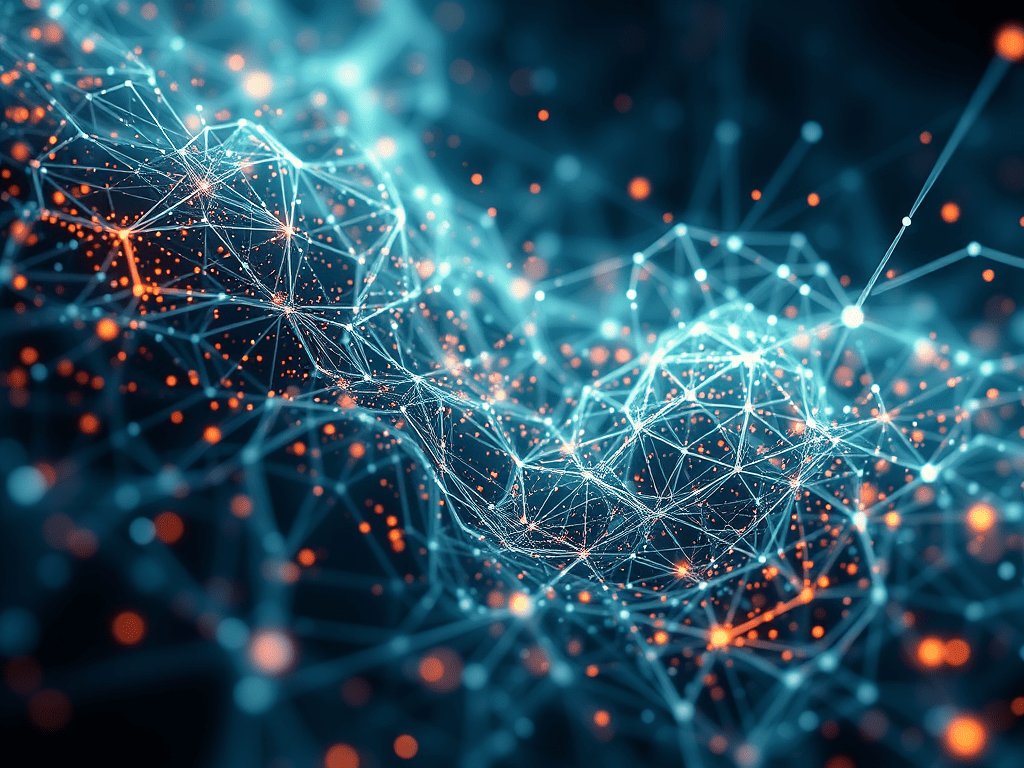
Art has long served as a vehicle for grappling with life’s most fundamental mysteries. From the earliest cave paintings to the boldest contemporary installations, artists have attempted to capture what it means to exist—to be. While traditional forms of art often rely on the deliberate shaping of materials by a single authorial hand, generative art stands apart by using processes, rules, and autonomous systems to explore the metaphysical terrain of creativity and existence. It is here, in this intersection of code, chaos, and conceptual inquiry, that we encounter some of the most intriguing questions about the nature of being, meaning, and the evolving role of the artist.
More Than a Medium, a Method of Inquiry
At its core, generative art might be described as the use of systems—algorithmic instructions, computational processes, mechanical devices, or sets of rules—that, once defined, can produce artistic outcomes with a degree of independence from direct human manipulation. The artist in this context is not merely a painter wielding a brush or a sculptor chipping away at marble. Instead, the artist becomes a kind of meta-creator: one who crafts the logic and environment within which forms will emerge. The final art piece may be visual, auditory, spatial, or even architectural, but it is the process—the interplay of rules, parameters, and unpredictable outcomes—that takes center stage.
This methodology is striking because it compels us to rethink where creativity truly resides. Is it in the mind of the artist who sets the rules, in the computational or procedural system that executes them, or in the dynamic dance between both? Generative art forces us to ask what we mean by “creation” when the output may be something the artist themselves could never have foreseen. In doing so, it sets a stage for profound philosophical reflection.
Systems, Autonomy, and the Role of the Artist
To fully appreciate generative art, we need to understand its central components:
- The Process as Primary Medium:
Unlike traditional art forms that emphasize the final artifact—be it a painting, sculpture, or photograph—generative art situates the creation process itself as the primary medium. The artist crafts a set of rules (or code, or mechanical principles) and then steps back to let the system operate. This mirrors certain philosophical traditions that emphasize becoming over being, suggesting that the world is not a static constellation of objects, but rather an endless flow of transformations and events. In generative art, what matters is not just what emerges but how it emerges. The audience is invited to consider the “how” and “why” behind the work, to see the visible output as a window into an ongoing, generative process. - The System as a World-in-Miniature:
Every generative artwork relies on a carefully constructed system—an enclosed universe defined by rules, parameters, and often a degree of randomness. These systems can be mathematical, algorithmic, biological, or a hybrid of all three. Crucially, they need not be computerized; a set of mechanical linkages that produce patterns in sand, for instance, can be just as generative as the latest piece of computational art. In each case, the system represents a controlled environment where simple starting conditions can yield mesmerizing complexity. Here we find a resonance with complex systems theory, where astonishing patterns arise from a few straightforward rules. This parallels philosophical accounts of the cosmos: simple forces and constraints acting over vast stretches of time can produce galaxies, ecosystems, and consciousness itself. - Autonomy and the Artist’s Ebbing Presence:
Traditional models of authorship favor the concept of the solitary genius—an artist whose personal vision and mastery dictate every brushstroke. Generative art complicates this narrative. While the artist still makes crucial decisions—selecting the rules, choosing the data inputs, fine-tuning parameters—there is a relinquishing of direct control. The system’s autonomy introduces uncertainty, surprise, and even serendipity. By stepping back, the artist acknowledges that art can be co-created with non-human agents. This raises a challenging question: who, or what, authors the final piece? Is it the artist who set the initial conditions, the algorithm carrying out the instructions, or some emergent interplay between the two that transcends traditional notions of authorship?
Complexity, Emergence, and the Organic Within the Machine
Generative art often draws aesthetic and conceptual inspiration from the natural world. Consider how plants grow, how cells divide, or how ecosystems emerge from interdependent networks of organisms. Nature does not follow a single linear blueprint; rather, it evolves through intricate, interlocking systems that produce complexity from simplicity.
- Complexity and Emergence:
Complexity theory shows us that a few simple, iterative rules—like those found in fractals—can yield structures of unimaginable richness. Generative artworks similarly leverage iterative processes, often producing patterns reminiscent of natural phenomena. This emergent complexity is not a mere imitation of life’s intricacies; it can also help us understand how order and meaning arise in nature. By creating digital ecosystems, algorithmic “life-forms,” or rule-based patterns, generative artists give us art that grows rather than art that is simply made. This growth-oriented perspective resonates with philosophical views that see existence not as static being, but as an ongoing process of becoming, influenced by countless relationships and events. - Organic Growth vs. The Traditional “Hard Way”:
Traditional sculptors carve away at stone, imposing their vision upon inert material. Generative systems, by contrast, can resemble living organisms that build themselves “from within,” unfolding according to their inner logic. The artist’s role aligns more closely with that of a gardener nurturing conditions for growth rather than a carpenter imposing form from the outside. This paradigm shift reimagines the creative act as an evolutionary process, one that can produce surprising, unanticipated, and even “illogical” outcomes—forms that feel alive despite their computational origins.
The Philosophical and Ethical Frontier
The rise of generative art compels us to reevaluate core assumptions about creativity, originality, and meaning:
- Authorship Reimagined:
If an artwork emerges from a system that operates beyond direct human oversight, who claims authorship? One might argue that the artist is the author of the conditions for creation rather than the final output. Others suggest that the system itself, once set in motion, bears some responsibility for what arises. Such questions destabilize the long-held belief in the artist as sole originator. Instead, we see a more fluid, relational model of creative authorship—a co-creation involving human intention, machine logic, and the fertile interplay between them. - Creativity Beyond the Human?:
Generative art intensifies the debate over machine creativity. Can an algorithm truly create something new? Or is it merely recombining pre-coded elements and instructions? While many generative artworks rely on combinatorial creativity—mixing known elements into novel configurations—the emergent complexity of these systems can surprise even the artist. When a generative process yields outcomes the creator never anticipated, a boundary is blurred. The line between human imagination and algorithmic suggestion becomes hazy. This tension invites us to consider whether “creativity” is a uniquely human capacity or if it can be distributed across networks of rules, environments, and code. - Intent and Meaning in the Process:
Traditional viewers often look to final artworks for meaning, expecting that all significance resides in the completed piece. Generative art reorients our attention to the process: the setting of parameters, the iteration of forms, and the logic that underpins them. The artist’s intent might rest more in the conceptual framework and the creative method than in any single outcome. Meaning resides in the interplay of rules and results, and in the philosophical inquiries these processes awaken. Hence, interpretation extends beyond what we see or hear to include an understanding of how the work was generated—an invitation to reflect on the intangible questions of being, perception, and reality.
Process, Relationality, and Perception
Generative art provides a powerful platform for exploring deep philosophical questions:
- Process Over Product:
Philosophers have long debated whether the universe is best understood as a collection of discrete entities or as a continuous process of becoming. Generative art aligns with process ontologies, showing forms emerging, evolving, and dissolving back into their generative logic. The artwork itself models life’s impermanence, instability, and flux, mirroring the philosophical notion that existence is an ongoing event rather than a static condition. - Relational Ontologies and Interconnectedness:
In generative systems, nothing exists in isolation. Each element depends on others, and patterns arise from interactions rather than from any single component. This resonates with relational ontologies, which posit that entities gain their identity not from intrinsic properties but from the relationships they maintain. Generative art thereby embodies a worldview in which form and meaning are relational, demonstrating that what is emerges from the interplay of countless parts rather than from a single defining essence. - Order from Chaos, Being from Becoming:
Generative art often starts from simple rules and lets complexity bloom. This mirrors the tension in our universe between order and chaos, structure and randomness. Complexity theory informs us that coherent systems can arise spontaneously from chaotic interactions. Generative artworks visually and conceptually reflect this dynamic, suggesting that what we call “being” is itself a dynamic phenomenon—an emergent outcome of countless underlying interactions and influences. - Challenging Human Perception and Stability:
Generative pieces frequently produce forms that defy easy categorization. Viewers may struggle to describe what they see in familiar terms. By challenging our perceptual frameworks, generative art reveals how subjective and limited human perception can be. If an algorithm can produce forms that are constant variations of a hidden “codeness,” then our stable concepts of objects and beings may be illusions. Existence, the art suggests, is a fluid tapestry, and what we call “reality” may be just our interpretation of one moment in a ceaseless generative cycle.
The Cultural and Educational Implications of Generative Art
Generative art is not a mere technological curiosity. It is a cultural phenomenon with wide-ranging implications:
- Redefining the Concept of Art Itself:
As generative art gains prominence, it compels us to expand our definitions. Art is not limited to canvases, sculptures, or choreographed performances. It can be an evolving system, a cascade of code, a logic-based garden whose blooms surprise us anew each day. This expansion of art’s domain encourages innovation and invites viewers to participate in a more philosophical engagement with creativity. - Human Identity, Nature, and Cultural Context:
Generative art’s emphasis on process and emergence can help us understand our place in the universe. Just as natural systems produce complexity and novelty, so too does our own experience of life. We are products of generative processes—biological, cultural, and personal. By recognizing ourselves as participants in larger generative systems, we can rediscover our sense of place and agency in a world that is never static, always unfolding. - A Pedagogical Tool:
In educational contexts, generative art can serve as a powerful teaching tool. Students can learn to design their own processes and observe the results, improving their understanding of nature, complexity, cultural identity, and even philosophical concepts of being and becoming. By blending creativity with logic and culture, students gain a holistic view of art and design that acknowledges the fluid interplay between environment, identity, and emergent meaning.
As a Lens on Existence
Generative art stands at the intersection of philosophy, technology, and aesthetics, offering a fresh vantage point on age-old inquiries into existence. By prioritizing process over product, relationality over isolation, and emergence over fixed form, it resonates powerfully with contemporary philosophical thought. Generative art challenges us to ask where creativity resides, who authors meaning, and how complex order arises from simple beginnings.
As this field evolves—spurred by advancements in computation, artificial intelligence, and system design—it will undoubtedly continue to shape artistic and philosophical discourse. Viewers, artists, and thinkers are invited into a collaborative inquiry about the nature of being, guided by code, complexity, and a shared fascination with how new forms emerge. In this engagement, we discover that generative art is more than an aesthetic practice; it is a profound philosophical endeavor—a medium through which we can better understand ourselves, our world, and the eternal dance of becoming that underlies all existence.
In embracing the logic and life of generative art, we approach a deeper understanding of creativity, authorship, and the very fabric of reality. Through it, we see that being is not a fixed state but an ongoing generative process—one that art can visualize, challenge, and celebrate.
 Visual Alchemist
Leave a comment