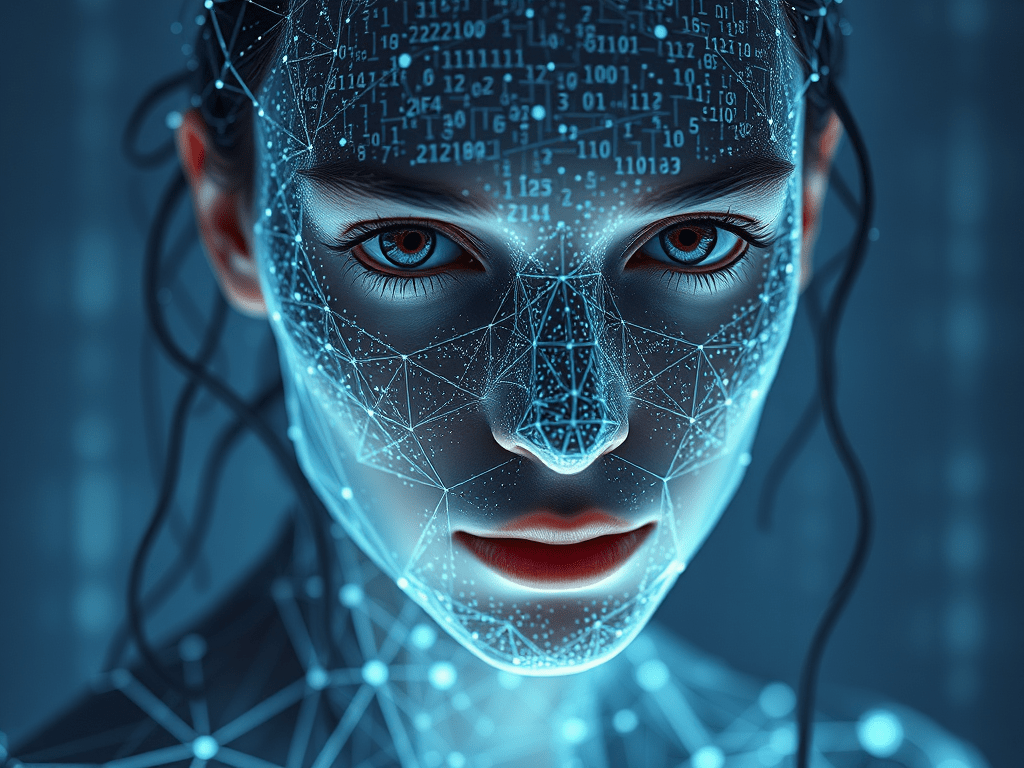
Artistic practice has always engaged with the representation and interpretation of human bodies, identities, and selves. From portraits to sculptures, from photographs to performance, the body has served both as subject matter and as a site of meaning. Today, digital technologies have reshaped how artists represent bodies and how viewers understand them. In this environment, generative art—art produced by systems that operate with a degree of autonomy defined by an artist’s instructions—plays a significant role. Generative processes allow artists to create dynamic, evolving, and often personalized representations of human bodies and identities. When these systems incorporate data related to real individuals, or allow users to interact and mold their own digital representations, a new phenomenon arises: the blurring of boundaries between the physical self and the digital self.
This dynamic is captured by the concept of “digital epidermalization,” a term coined by Jill Walker Rettberg. The concept refers to how our physical selves become entangled with digital technologies through processes of self-representation, image manipulation, and the sharing of personal data online. As generative art tools integrate these digital processes into their core functioning, the lines between the physical and the virtual become harder to distinguish. One’s identity, once anchored in a physical presence, now appears as malleable, data-driven, and susceptible to continual transformation. Generative art participates in this dynamic by producing digital embodiments that respond to user input, evolve over time, and incorporate algorithmic patterns.
Yet this practice is not without complexities. Digital epidermalization involves turning aspects of personal identity into data, subjecting it to algorithmic systems that may contain biases, limitations, and assumptions. Generative systems that create digital self-portraits or avatars raise issues of privacy, consent, data security, and control. They also prompt questions about who holds authorship and which party owns these digital representations. Moreover, the capacity to manipulate and experiment with one’s digital body and identity can be liberating, but it can also entangle users within systems shaped by external constraints and biases. Understanding these dynamics requires a careful, critical examination of the technologies, artistic decisions, cultural contexts, and ethical considerations involved.
This text will examine how generative art facilitates digital epidermalization, exploring the key processes and implications. It will analyze personalized avatars, dynamic self-portraits, algorithmic bias, and the transformation of identity into data, as well as the associated challenges of consent, control, privacy, and authorship. By doing so, it will situate generative art and digital epidermalization within broader philosophical debates about identity, technology, and representation. The goal is not to reject the creative potential of generative techniques, but to ensure a deep understanding that can guide practitioners, viewers, and critics as this field continues to evolve.
1. Defining Generative Art and Its Connection to Identity
Generative art relies on computational processes designed by an artist. The system, once set in motion, produces outputs—visuals, sounds, or interactive experiences—according to rules defined in code, algorithmic logic, or procedural constraints. While the final outcomes still stem from initial human intention, the generative nature of the process introduces variation, unpredictability, and complexity. Rather than manually creating every detail, the artist crafts conditions that allow emergent patterns.
Historically, generative art included algorithmic drawings, randomized compositions, and pattern-based works. In the digital era, machine learning, neural networks, and advanced image processing techniques have expanded possibilities. Artists can feed photographs, sensor data, or user input into generative systems, producing unique outputs that reflect both the system’s logic and the input’s characteristics.
When such processes represent the human body, the intersection with identity becomes significant. Identity is not simply a stable entity; it is dynamic, constructed, and influenced by context. In digital environments, identity often manifests through profiles, avatars, selfies, and curated images. Generative art engages with these forms by algorithmically transforming personal images, merging data sources, or creating evolving self-portraits. The artworks become sites where the physical and digital interplay, rendering the skin—or “epidermis”—as a surface that can be digitally simulated and modified. This convergence sets the stage for digital epidermalization.
2. Understanding Digital Epidermalization
“Digital epidermalization” describes a phenomenon where physical embodiment and digital representation become inseparable. As people represent themselves online—through profiles, images, videos, and now generative artworks—these digital materials influence how they perceive their physical selves. The body, once understood as strictly material, now appears as a flexible data construct subject to manipulation and reinterpretation. Social media filters, augmented reality overlays, and generative avatars exemplify this merging of real and virtual embodiments.
This concept does not merely describe the presence of digital representations; it points to the intimate entanglement. The term “epidermalization” suggests something akin to a second skin—an additional layer that merges seamlessly with the body. Digital epidermalization means that one’s digital representations become a fundamental part of how one is seen and how one sees oneself. They are not external images but integral to self-identity, shaping how the individual interacts with the world and perceives their presence.
Generative art contributes by providing tools and frameworks for dynamically generating these digital layers. Instead of static profile pictures, generative systems can produce endless variations of one’s image, responding to input, context, or user interaction. The result is a fluid digital epidermis that changes over time, reflecting internal states, cultural influences, data-driven patterns, and algorithmic interpretations.
3. Personalized Avatars, Self-Portraits, and the Self as Data
Generative art often begins with personal data. Consider a user uploading a portrait image into a generative system trained on facial recognition or style transfer algorithms. The system then creates multiple variations—abstracted versions, stylized interpretations, hybrid forms that blend different artistic traditions. The user sees their face transformed across diverse aesthetics and contexts. Each iteration might highlight different facial features or alter the skin’s texture and color patterns. This process makes explicit the idea that the physical self can be digitized, broken down into data points, and recombined at will.
Personalized avatars created through generative methods reveal how identity can be packaged as configurable data. Instead of a static cartoon or pre-designed character, generative avatars adapt to input parameters, evolving as the user interacts. This adaptability allows users to explore different facets of their identity in a digital space. They can adjust the avatar’s appearance in real-time, blurring gender boundaries, experimenting with cultural markers, or removing certain traits. This fluidity extends what digital epidermalization means: it transforms identity into a canvas for algorithmic exploration.
Yet this process is not neutral. The generative system’s parameters, training datasets, and chosen visual models influence how the avatar appears. Certain facial features might be emphasized or minimized, aesthetic styles may be drawn from certain cultural traditions over others, and embedded biases might manifest in how the system represents skin tones or facial structures. Thus, while personalization promises user agency, it is also constrained by the system’s logic and the data that shapes it. The user’s digital epidermis emerges as a co-creation between individual input and algorithmic interpretation.
4. Interactivity, Agency, and the Dynamics of Digital Representation
One hallmark of generative art is interactivity. Many generative systems invite users to modify parameters or input their own data, influencing the output. When applied to self-representation, this interaction lets users shape their digital identities directly. Instead of passively consuming a created image, they engage with the generative process—selecting color palettes, tweaking facial proportions, or integrating new elements. In doing so, the user actively participates in digital epidermalization, making choices that affect their digital body.
However, this agency is conditional. Users operate within constraints set by the artist who designed the generative system. Certain transformations may be allowed while others remain impossible. The code enforces limits on what the user can do. If an algorithmic bias skews outputs in certain ways—such as consistently rendering certain skin tones less accurately—the user’s control is partial. They can adjust parameters but cannot easily override fundamental biases. Thus, interactivity offers a form of co-authorship but not complete freedom. Digital epidermalization is shaped by the interplay of user desire and system constraints, reflecting power relations between the system designer and the user-subject.
This co-creative dynamic also has philosophical implications. If the body is partially defined by digital representations, and these representations are shaped by algorithms beyond the user’s full understanding, then identity becomes entangled with opaque computational processes. The user’s sense of self might adjust to these algorithmic outputs, internalizing certain patterns or norms suggested by the generative system. Over time, one might come to see one’s digital epidermis—this algorithmically mediated outer layer—as a natural extension of the self.
5. Malleability of Identity and the Expansion of Self-Exploration
One potential benefit of digital epidermalization is the expanded capacity for self-exploration. In physical reality, altering one’s appearance is limited by time, resources, and biological factors. In digital form, however, appearances can shift instantaneously. Users can explore gender presentations, cultural aesthetics, or entirely fantastical bodies. Generative art makes these transformations immediate and reversible, turning identity into a mutable construct.
This flexibility can empower individuals who wish to experiment with aspects of their identity not easily expressed physically. It can provide a safe environment to try out different forms of self-presentation, enabling users to discover parts of themselves they had not considered. The ability to shift digital skins at will can foster a form of personal growth.
Yet this fluidity must be examined critically. The generative system’s underlying logic may reflect cultural norms or biases, guiding users toward certain aesthetic choices while discouraging others. If the training data emphasize particular standards of beauty, the system may subtly push users to conform. Identity experimentation might then become constrained by algorithmic hegemony—an environment where certain forms of self-expression are readily supported, while others remain obscure or misrepresented. Thus, while malleability suggests freedom, it coexists with structural constraints that shape what kinds of identities users can effectively explore.
6. Algorithmic Bias and the Shaping of Digital Identities
Algorithmic bias remains a central issue in digital epidermalization. Generative models rely on training datasets. If these datasets underrepresent certain populations or reflect historical prejudices—such as lighter skin tones being treated as “normal” or certain facial features associated with negative classifications—then the generated representations will reflect and reinforce these biases. Users from marginalized groups may find their digital epidermises distorted, misrepresented, or aligned with harmful stereotypes.
This problem underscores that digital epidermalization is not a neutral process. It involves power and politics. The biases embedded in algorithms shape how users see themselves and how others see them. If a generative portrait system consistently yields less accurate or less flattering images for certain demographics, it can harm the self-esteem and social perception of those users. Far from a simple aesthetic choice, the system’s outputs carry social consequences.
Addressing bias requires careful auditing of datasets, more inclusive training data, and transparent communication about how algorithms operate. The artist or technologist designing the generative system must take responsibility for identifying and mitigating bias. This goes beyond a technical fix. It involves a commitment to equity, representation, and cultural sensitivity. Without these measures, digital epidermalization risks reproducing the same forms of discrimination that exist in the physical world, now amplified through computational processes.
7. Data as Identity and the Transformation of Personal Information
Digital epidermalization involves converting aspects of one’s identity—facial features, body shape, cultural markers—into data. In generative art contexts, this data becomes the raw material for creating new images. Identity thus shifts from something tied closely to a physical body and social environment into a set of manipulable data points. One’s “digital skin” is composed of pixels, vectors, parameters, and code instructions. This dematerialization of identity raises philosophical and ethical questions.
When identity is data, it can be stored, duplicated, and transmitted. It can be mixed with other data sources, generating hybrid identities. The boundaries between self and others may blur if the generative system merges multiple face datasets. Furthermore, data once recorded can be repurposed for analysis, profiling, or commercial exploitation. The individual might lose control over how their digital epidermis circulates or evolves.
This transformation calls for scrutiny. Whose interests are served by turning identity into data? How is consent obtained for using personal images, and how can users regain control if they wish to withdraw their image from a generative system’s dataset? The process of digital epidermalization exposes users to new vulnerabilities, such as facial recognition surveillance, non-consensual image manipulation, or identity theft. Artists and developers need to address these concerns when creating generative identity systems.
8. The Role of the Artist and the Power of System Design
Traditionally, the artist’s role was seen as that of a creator who shaped every detail of the artwork. In generative art, the artist designs the conditions, rules, and algorithms that will produce outcomes. While the user might contribute data and influence the generative process, the artist holds a defining power: they decide which algorithms to employ, how they handle input data, and what outputs the system generates.
This power is significant in digital epidermalization. The artist effectively sets the parameters for how bodies and identities are represented. They choose the training datasets, the stylistic transformations, the ways user input can modify the output. The artist can highlight or obscure certain features, can emphasize interactivity or limit it, and can integrate biases—whether intentionally or not—into the system.
The artist’s decisions shape the user’s sense of agency. The user might feel in control while interacting with the system, but behind every choice the user makes lies a framework established by the artist. Thus, digital epidermalization is always partly curated by another’s vision. This does not negate the artist’s creative legitimacy, but it calls for responsibility. If the artist is defining how digital bodies form and transform, then their ethical and cultural awareness matter greatly. Their choices can empower or disempower users, reinforcing or challenging existing social hierarchies.
9. Case Studies and Illustrative Scenarios (Without Specific Artworks)
While this discussion avoids referencing specific artworks, we can imagine scenarios that illustrate digital epidermalization in practice. Consider a generative system that takes a user’s webcam input and stylizes it in real-time. The user sees their face transform into various artistic styles—impressionistic brushstrokes, geometric abstractions, culturally inspired motifs. As the user moves their face or changes expressions, the system responds dynamically, producing endless variations.
In such a scenario, the user’s digital epidermis is under constant negotiation. The system’s responsiveness to facial movements fuses the physical and digital selves. Yet the styles chosen by the artist may emphasize certain features or apply certain color palettes that resonate with particular cultural aesthetics. If the training data did not include many references to certain hairstyles, facial shapes, or skin tones, the system might poorly represent users who deviate from the dataset’s norm. The user might feel alienated or misrepresented, experiencing the digital epidermis as a poor fit.
Another scenario: a generative avatar builder allows users to upload their photo and create a virtual character for use in online platforms. The avatar’s features can be tweaked—eye shape, hair texture, skin hue—within algorithmic limits. Some users find empowerment, shaping a virtual identity that reflects an aspirational self-image. Others notice that the system’s default parameters skew toward Western beauty standards. Users with non-Western facial features must work harder to achieve a faithful representation. Digital epidermalization here reveals systemic biases that shape how individuals interact with their digital identities.
10. Ethical and Practical Challenges: Consent, Control, and Privacy
Digital epidermalization raises pressing ethical challenges. One concerns consent: when users submit their images or biometric data to a generative system, do they fully understand what will happen to that data? Are they aware that their image might be stored, processed, or even repurposed for other projects? Clear, transparent communication about data usage is essential. Users must have the option to withdraw consent and remove their data from the system if they choose.
Control over digital representations is another issue. Once a generative system creates a digital self-portrait, who controls its distribution? The user might want to share it widely or keep it private. The artist or platform operator, however, may have different interests, such as showcasing the project or using outputs for promotional materials. The complexity of authorship and ownership complicates matters. The user provided the input data (their face), the artist designed the system, and the algorithm produced the final image. Negotiating rights and responsibilities can be difficult.
Privacy and data security also come into play. Facial images are sensitive biometric data. If a generative system is hacked or if data leaks occur, users may face identity theft or other abuses. Robust security measures and adherence to data protection regulations become critical. Ethical guidelines and industry standards might be required to ensure that digital epidermalization practices respect user well-being and autonomy.
11. Bias, Representation, and the Imperative of Inclusive Design
Addressing algorithmic bias is not optional. Artists and developers must consider how their datasets and algorithms represent diverse human populations. Inclusive design means actively seeking broad and representative training data. It also means involving people from diverse backgrounds in the design process to identify potential biases. If the system is intended for global use, it should accommodate a wide range of physical characteristics, cultural aesthetics, and identity expressions.
Transparency is key: if a generative system struggles to represent certain identities accurately, its limitations should be acknowledged. Users should know that the system’s interpretation of their image may not be neutral or universal. This honesty can empower users to make informed decisions about how they engage with digital epidermalization. Artists can also frame the biases in their systems as critical commentary on the state of digital culture, inviting reflection rather than pretending neutrality.
In some cases, biases might serve as artistic statements, highlighting the fractured nature of digital identity or the inadequacy of current technologies. But this must be done responsibly, ensuring users understand the conceptual intent and have the agency to opt out if they find it harmful.
12. Authorship, Ownership, and the Complexity of Creation
Authorship in generative art challenges traditional notions. When dealing with digital epidermalization, authorship becomes even more complex because the “canvas” is a user’s identity. One might ask: Who is the creator of a digital self-portrait generated by an algorithm using the user’s image? The artist designed the system, the user provided the input data, and the machine produced the final representation. In this triad, ownership and authorship are not straightforward.
If the output resembles the user’s likeness, does that user hold some claim over it? If the artist’s code produced that specific aesthetic, does the artist retain intellectual property rights? If the algorithm integrated data from many other images during training, what about the rights of those individuals? These questions lack simple answers. Different jurisdictions may have varying laws about image rights and data ownership. Ethical practices would suggest that the user should have some say over how their image-based data is used, and the artist should respect that autonomy.
This complexity calls for new frameworks. Artists, technologists, and legal experts must collaborate to define terms of engagement, clarify ownership, and establish guidelines that protect user interests. Transparency, consent forms, and agreements outlining data usage and rights can mitigate conflicts. Without such structures, digital epidermalization will operate in a legal and ethical gray area, leaving users vulnerable to exploitation.
13. Philosophical Dimensions: Identity, Being, and Representation
The phenomenon of digital epidermalization raises broad philosophical questions about what it means to have a body, to hold an identity, and to represent oneself. Physical bodies are grounded in biological and cultural realities that shape experiences and social meanings. Digital bodies are abstractions—representations mediated by code and data. Yet as digital embodiments become integrated into daily life, they influence self-perception, social interactions, and even emotional responses.
Identity, once considered relatively stable, now appears in flux. Users can adopt multiple digital skins, shifting from one representation to another with minimal friction. This multiplicity aligns with philosophical views that see identity as relational, processual, and emergent rather than fixed. Generative art amplifies this fluidity. The user navigates through a landscape of possible selves, each generated by computational logic. Over time, these digital experiments inform how the user sees their “real” identity, potentially eroding the boundary between the physical self and its digital doubles.
This transformation resonates with earlier discussions about the nature of being in digital contexts. If reality is understood as a set of processes rather than static objects, then identity can be seen as a generative phenomenon, always emerging from interactions with environments, technologies, and other agents. Digital epidermalization underscores that identity is co-constructed by humans and algorithms, by material conditions and virtual possibilities. It prompts reflection on whether identity is now partly defined by the infrastructures and platforms we inhabit.
14. Cultural Contexts and Global Perspectives
Digital epidermalization does not unfold uniformly across cultural contexts. Different societies have distinct norms, aesthetics, and relationships with technology. A generative system trained predominantly on Western faces and aesthetics may misrepresent users from other regions. Cultural symbols might be misinterpreted or flattened into mere stylistic elements. Body norms and beauty standards vary widely; a system built around one standard may offend or marginalize users who hold different values.
Awareness of cultural diversity matters. Developers and artists can consult cultural experts, integrate diverse reference data, and ensure that their generative systems do not default to a single cultural framework. This is especially important if the system aims to appeal to a global audience. Digital epidermalization should not replicate colonial hierarchies or impose dominant cultural aesthetics on all users. Instead, it can become an arena for celebrating pluralism and encouraging cross-cultural dialogues.
Addressing cultural differences also involves recognizing that privacy expectations, data protection laws, and attitudes toward bodily representation vary worldwide. In some places, facial recognition and digitization of personal images might be met with skepticism and considered invasive. Generative artists must navigate these complexities responsibly, adapting their designs to respect local norms and legal frameworks.
15. Technological Futures and the Evolution of Digital Epidermalization
As technology advances, digital epidermalization will likely grow more intricate. Improved machine vision, more sophisticated generative models, and integration with virtual and augmented reality environments will deepen the blending of physical and digital embodiments. Users might wear devices that track their bodily states—heart rate, emotion recognition via facial muscle movements—and feed this data into generative systems that adapt their digital representation in real-time.
This future raises new questions. If our digital epidermis can reflect not only physical features but also emotional states or health indicators, identity representation becomes even more complex. Will users consent to systems that visualize their inner conditions? Will generative art turn private bodily signals into public aesthetic displays? How do we ensure that such technologies do not become tools for surveillance or social control?
Technological advances might also make it possible to create generative avatars that integrate historical or ancestral images, blending personal identity with cultural heritage. This could foster richer understandings of selfhood as a temporal and communal construct. But it also risks commodifying heritage or trivializing complex cultural histories into mere visual elements. Balancing innovation with sensitivity remains crucial.
16. Ethical Guidelines, Industry Standards, and Best Practices
To address the challenges of digital epidermalization, stakeholders can develop guidelines and best practices. Such guidelines might include:
- Informed Consent:
Explicitly explain how user data will be used, stored, and processed. Obtain clear consent before generating digital self-representations. Allow users to withdraw data at any time. - Bias Audit and Mitigation:
Regularly check training datasets for biases, diversify them where possible, and document known limitations. Implement strategies to reduce discriminatory outcomes. - Cultural Sensitivity:
Consult experts to ensure cultural elements are represented respectfully. Allow users from different backgrounds to influence system design and output interpretation. - Privacy and Security Measures:
Encrypt sensitive data, minimize data retention, and comply with data protection regulations. Be transparent about storage and sharing policies. - User Agency and Control:
Provide tools for users to modify or delete their digital representations, set access levels, and understand how the system generates its outputs. - Open Communication and Documentation:
Explain how algorithms work in understandable terms. Make it clear that the system’s results reflect certain assumptions and limitations.
By following these practices, developers, artists, and platforms can build trust and reduce the risk of harm. This approach acknowledges that technology alone will not solve the issues of bias, consent, and cultural misrepresentation. Human oversight, interdisciplinary collaboration, and ongoing critical reflection remain vital.
17. Engaging with Criticism and Reflexive Practice
Artists and developers working in this space should be prepared to engage with critique. Communities of users, scholars, and activists may highlight shortcomings in generative systems, pointing out biased outcomes or harmful stereotypes. Instead of dismissing this criticism, creators can treat it as valuable feedback that guides improvements. Reflexive practice means constantly examining the assumptions embedded in the code, questioning aesthetic choices, and considering how different groups experience the system.
This reflexivity can lead to more robust and equitable design. It encourages iteration, experimentation with more inclusive datasets, and involving diverse voices in the creation process. Over time, artists and engineers might find ways to make digital epidermalization practices that are more respectful, empowering, and context-aware.
18. Balancing Creative Possibilities with Ethical Responsibilities
Generative art thrives on pushing boundaries and exploring new creative frontiers. Digital epidermalization, as a concept, opens many creative possibilities. Artists can produce works that provoke questions about the nature of selfhood, comment on social norms regarding body image, or imagine utopian or dystopian visions of identity fluidity. As an artistic medium, generative systems offer a rich language for analyzing how technology transforms human existence.
Yet with these possibilities come responsibilities. The power to manipulate digital identities places artists and developers in a position of influence over how users perceive themselves. Ethical responsibility means acknowledging that art can harm as well as enlighten. A generative self-portrait system that consistently distorts certain facial features may inadvertently cause emotional distress or reinforce stigmas. Balancing creativity with a commitment to not harm is essential for building a sustainable and respectful digital culture.
This does not mean censorship or avoiding challenging themes. Rather, it means approaching digital epidermalization as a form of cultural production that interacts with real people’s lives. Artists can use disclaimers, educational materials, or workshops to ensure users understand the conceptual framework. They can highlight biases as part of the artwork’s message, turning the generative process into a critique of digital representation itself.
19. Interdisciplinary Collaboration and Ongoing Dialogue
Moving forward, addressing digital epidermalization effectively will require collaboration among multiple fields. Artists may partner with computer scientists specializing in machine learning fairness. Ethicists, sociologists, and anthropologists can advise on cultural sensitivities and social implications. Legal experts can clarify rights, ownership, and data protection. Policy makers and advocacy groups can work on standards that guide responsible practice.
This interdisciplinary dialogue ensures that no one perspective dominates. The complexity of digital epidermalization calls for a holistic approach. Art historians can examine how these practices relate to historical modes of portraiture and self-fashioning. Philosophers can question how identity and embodiment shift in a digital era. Psychologists can study user experiences and emotional impacts. Together, these efforts build a more comprehensive understanding that respects the complexity of the phenomenon.
20. Reflecting on the Future of Digital Identity and Generative Art
Digital epidermalization, as facilitated by generative art, signals broader changes in how society constructs and understands identity. As technology integrates further into daily life—through wearable devices, augmented reality glasses, or haptic feedback—the digital layer of self-presentation will grow more complex. Future generations may consider having multiple dynamic digital skins normal, each adapted to different social contexts or online communities. The boundaries between online and offline, physical and virtual, will continue to blur.
In this emerging landscape, generative art serves as both a diagnostic tool and a creative force. By experimenting with digital representations, it reveals underlying assumptions and power structures. By offering new aesthetic possibilities, it expands the vocabulary for expressing identity. By encountering the ethical dilemmas it raises, it prompts necessary debates about how society wants to navigate these new frontiers.
The concept of digital epidermalization, as introduced by Jill Walker Rettberg and applied here to the domain of generative art, offers a framework for understanding how physical bodies and digital selves intersect and transform one another. Generative art, through personalized avatars, dynamic self-portraits, and data-driven identity constructs, actively participates in the creation of these new digital embodiments. This process can empower users to explore identity fluidly, but it also risks entrenching biases, compromising privacy, and reducing user agency if not approached responsibly.
The challenges raised by digital epidermalization are not insurmountable. Ethical design principles, critical engagement with datasets, user education, and transparent communication can mitigate harms. Inclusive practices can ensure that digital epidermalization does not replicate existing inequalities but instead encourages a more equitable digital culture. Artists, developers, and stakeholders have the opportunity to shape this phenomenon thoughtfully, ensuring that the blending of physical and virtual selves becomes a meaningful and respectful dimension of human experience.
In the end, digital epidermalization in generative art prompts societies to reconsider the nature of identity and representation. It asks us to acknowledge that identity is no longer confined to a singular, stable body. Instead, it emerges across multiple layers—physical and digital—each informed by cultural norms, technological parameters, and individual desires. By engaging with these complex intersections, we can guide the evolution of digital epidermalization toward outcomes that enrich human creativity, understanding, and dignity.
 Visual Alchemist
Leave a comment