
In today’s rapidly evolving technological landscape, the fusion of artificial intelligence (AI) with design is not merely an emerging trend—it is a revolution that redefines how we conceptualize, create, and experience design. As digital transformation reshapes industries worldwide, the role of AI in determining the future of design has become increasingly critical. Designers, researchers, technologists, and policymakers are all grappling with pivotal questions: How will AI transform traditional design methodologies? What new opportunities and challenges will emerge from this synergy? And how can designers best harness AI’s potential to innovate and inspire?
This article embarks on an in-depth exploration of “AI design futures,” addressing your most pressing questions and delving into the academic, practical, and ethical dimensions of AI-driven design. With an interdisciplinary approach grounded in design theory, computer science, and sociology, we aim to provide a comprehensive, rigorously researched discussion that is both engaging and timeless in its insights. Whether you are a practicing designer, a student of design, or simply curious about the future of creativity in an AI-dominated world, this article will offer clarity and direction.
- THE INTERSECTION OF AI AND DESIGN: SETTING THE STAGE
The intersection of artificial intelligence and design is a confluence of creativity, computation, and critical inquiry. Historically, design has always evolved in tandem with technological innovations—from the drafting tools of the Renaissance to the digital imaging systems of the modern era. Today, AI stands at the forefront of this transformation, promising to not only augment the design process but also to fundamentally alter the creative ecosystem.
Key Themes in the Intersection:
• Technological Convergence: The blending of traditional design principles with computational techniques.
• Enhanced Creativity: AI’s capacity to generate novel ideas and explore design spaces beyond human imagination.
• Process Optimization: Streamlining workflows through automation, predictive analytics, and intelligent data management.
• Ethical and Societal Implications: Navigating issues of bias, privacy, and the socioeconomic impact of automation.
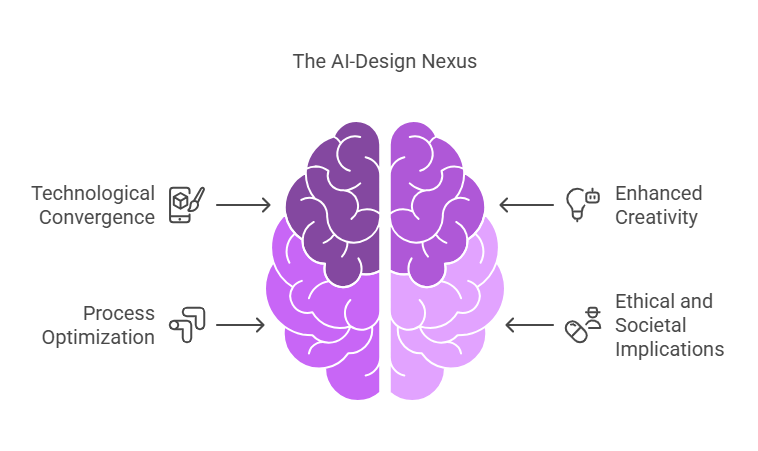
As we advance, it is essential to understand that AI does not merely serve as a tool—it acts as a collaborator, challenging designers to rethink conventions and push creative boundaries. This paradigm shift requires both a technical understanding of AI algorithms and an appreciation of design’s humanistic aspects.
- UNDERSTANDING AI IN THE CONTEXT OF DESIGN FUTURES
To appreciate how AI is reshaping design futures, we must first understand the core technologies and methodologies that underpin modern AI. At its heart, AI involves the simulation of human intelligence processes by machines, particularly computer systems. The applications of AI in design range from generative design algorithms to machine learning-driven personalization. Below, we unpack the major components:
A. Machine Learning and Neural Networks
Machine learning enables computers to learn from data without being explicitly programmed. Neural networks—a subset of machine learning—mimic the human brain’s interconnected neuron structure, facilitating pattern recognition and decision-making processes. These technologies are integral to: – Generative Design: Algorithms that autonomously create design variations based on set parameters. – Predictive Analytics: Tools that forecast trends and consumer preferences, guiding design decisions. – Image and Pattern Recognition: Enhancing visual design through the analysis of aesthetics, textures, and form.
B. Generative Adversarial Networks (GANs)
GANs have emerged as a groundbreaking tool for generating realistic images and designs. They work by pitting two neural networks against each other—a generator and a discriminator—resulting in increasingly refined outputs. In the context of design, GANs facilitate:
– Rapid prototyping and visualization.
– Innovation in art and graphic design.
– Exploration of design alternatives that may not be immediately apparent through conventional methods.
C. Augmented and Virtual Reality
While not exclusively AI, augmented reality (AR) and virtual reality (VR) technologies are often enhanced by AI-driven analytics and interactive algorithms. These immersive technologies are reshaping how users interact with designs, from virtual showrooms to dynamic spatial configurations in architecture.
D. Data-Driven Design
AI thrives on data. In design futures, the use of big data analytics informs design choices by analyzing consumer behavior, market trends, and social media sentiments. This approach enables:
– Personalized user experiences.
– Efficient resource allocation in design projects.
– Evidence-based decision-making that reduces guesswork.

3. KEY QUESTIONS ABOUT AI AND DESIGN FUTURES
A central theme that resonates through the academic and professional discourse on AI in design is the need to answer critical questions. Below, we tackle some of the most frequently asked queries regarding AI’s influence on design futures.
3.1 How Is AI Reshaping the Design Process?
AI is revolutionizing the design process in several fundamental ways:
1. Accelerated Iteration: AI-powered generative tools can produce hundreds of design iterations in a fraction of the time it would take a human.
2. Enhanced Creativity: By analyzing vast datasets of past designs and consumer responses, AI suggests innovative solutions that push traditional boundaries.
3. Real-Time Adaptation: AI systems can adjust designs on-the-fly based on user feedback and contextual data.
4. Cross-Disciplinary Integration: AI fosters collaboration between designers, engineers, and data scientists, leading to a more holistic design approach.
3.2 What Are the Ethical Considerations in AI-Driven Design?
Ethical concerns are paramount in discussions about AI. These include:
• Bias in Algorithmic Decision-Making: AI systems may inadvertently perpetuate existing biases in design aesthetics or consumer targeting.
• Intellectual Property: Who owns the rights to an AI-generated design—the machine, the programmer, or the designer?
• Privacy: Data-driven design relies heavily on user data, raising concerns about consent and data security.
• Employment: The automation of design processes may lead to job displacement, necessitating a reevaluation of workforce roles.
3.3 How Will AI Impact Creative Autonomy?
A common misconception is that AI might stifle human creativity by automating design entirely. In reality, AI functions as an enabler rather than a replacement. Consider the following points:
– AI-generated ideas serve as starting points that spark human imagination.
– Designers retain control over the creative direction, using AI insights to refine and enhance their work.
– Collaborative frameworks between humans and AI promote novel aesthetics that neither could achieve alone. A balanced approach that recognizes AI’s role as a creative partner is essential for future-proofing design practices.
3.4 What Role Do Designers Play in an AI-Dominated Future?
Designers will continue to be at the forefront of innovation, with their roles evolving rather than diminishing. Future roles may include:
• AI Curators: Professionals who interpret and refine AI-generated outputs.
• Hybrid Creators: Designers who possess strong technical skills in both design and programming.
• Ethical Guardians: Advocates for ethical AI practices, ensuring that design outputs are inclusive and unbiased.
• Strategic Innovators: Visionaries who leverage AI insights to drive large-scale design transformation. These evolving roles highlight the need for interdisciplinary education and training that bridges design and technology.
3.5 How Should Educational Institutions Adapt to the AI Revolution in Design?
Educational curricula must evolve to incorporate AI literacy and cross-disciplinary methodologies. Recommendations include:
– Integrating courses on machine learning, data analytics, and computational design.
– Offering workshops and hands-on projects that combine AI tools with traditional design practices.
– Fostering partnerships between design schools and technology companies to provide real-world experience.
– Emphasizing ethical frameworks and critical thinking in the context of AI applications. For more information on transforming education for the digital age.

4. CASE STUDIES IN AI-DRIVEN DESIGN
To move from theory to practice, let us examine several case studies that illustrate how AI is reshaping various design domains. Each case study reflects the integration of advanced AI tools with human creativity, highlighting both the successes and challenges of this transformative journey.
Case Study 1: AI in Architectural Design
Overview:
An international architecture firm partnered with a technology start-up to develop an AI-powered design assistant. The system analyzed climatic data, urban trends, and historical architectural patterns to generate multiple design proposals for a sustainable urban center.
Key Outcomes:
• Speed and Efficiency: The AI system produced over 300 design variations in weeks, compared to the months it typically took a human team.
• Sustainability: Designs optimized for energy efficiency and environmental impact were prioritized.
• Collaboration: Human architects refined the AI-generated concepts, integrating cultural and contextual insights that the algorithm alone could not capture.

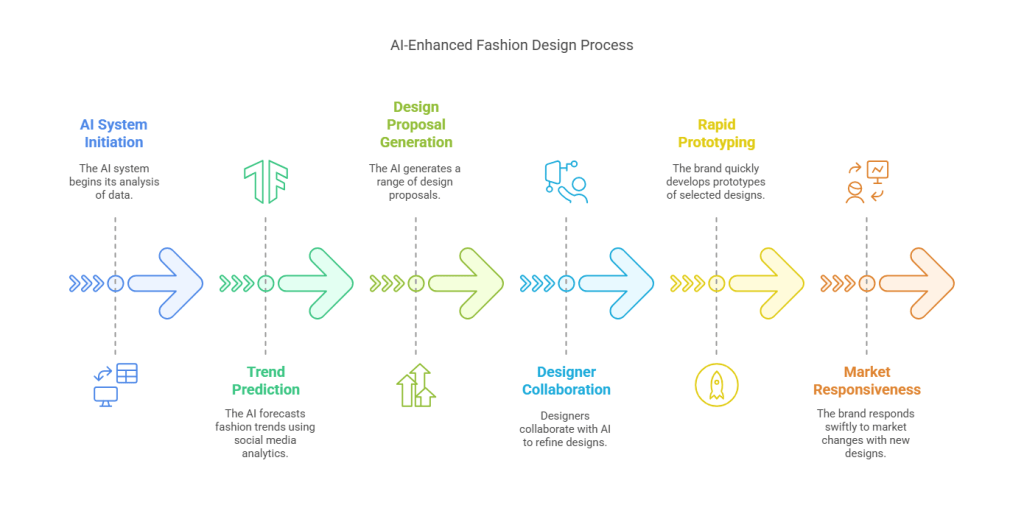
Case Study 2: Generative Fashion Design
Overview:
A leading fashion brand incorporated AI into its creative process to predict trends and generate new apparel designs. Using consumer sentiment analysis and visual pattern recognition, the AI system proposed a range of designs that balanced modern aesthetics with classic elements.
Key Outcomes:
• Trend Prediction: The system accurately forecasted fashion trends based on social media analytics.
• Creative Inspiration: Designers used the AI suggestions as a basis for developing unique collections that resonated with target audiences.
• Market Responsiveness: Rapid prototyping enabled the brand to reduce lead times and react swiftly to market changes.
Implications:
This example underscores the role of AI in merging quantitative data with qualitative creative processes, thereby democratizing design innovation.
Case Study 3: Interactive Graphic Design Platforms
Overview:
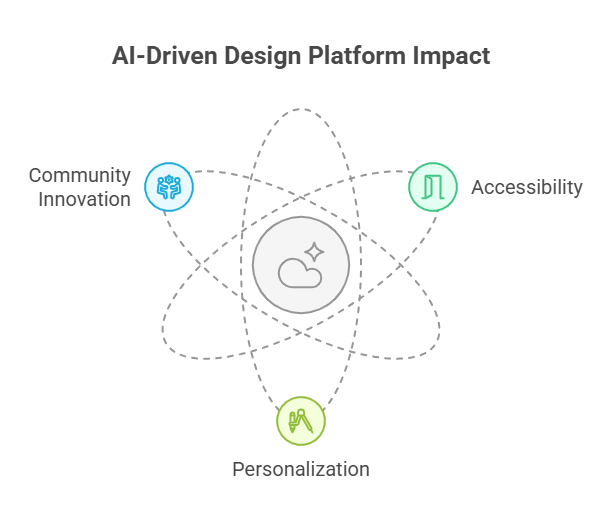
An online design platform integrated AI-powered tools that allowed users to generate custom graphics based on textual input. The platform used natural language processing (NLP) and image synthesis techniques to produce high-quality designs tailored to individual preferences.
Key Outcomes:
• Accessibility: Non-professional users gained access to professional-grade design tools.
• Personalization: The system offered personalized design recommendations, improving user engagement.
• Community Innovation: A collaborative environment emerged where users shared AI-generated designs, sparking new trends. Impact:
This initiative illustrates how AI democratizes design, making creative tools accessible to a broader audience and fostering a community of shared innovation.
5. ACADEMIC PERSPECTIVES ON AI AND DESIGN FUTURES
The academic community has increasingly recognized the transformative potential of AI in design. Research spans multiple disciplines, including computer science, cognitive psychology, and design theory, each contributing unique insights into how AI reshapes creative processes.
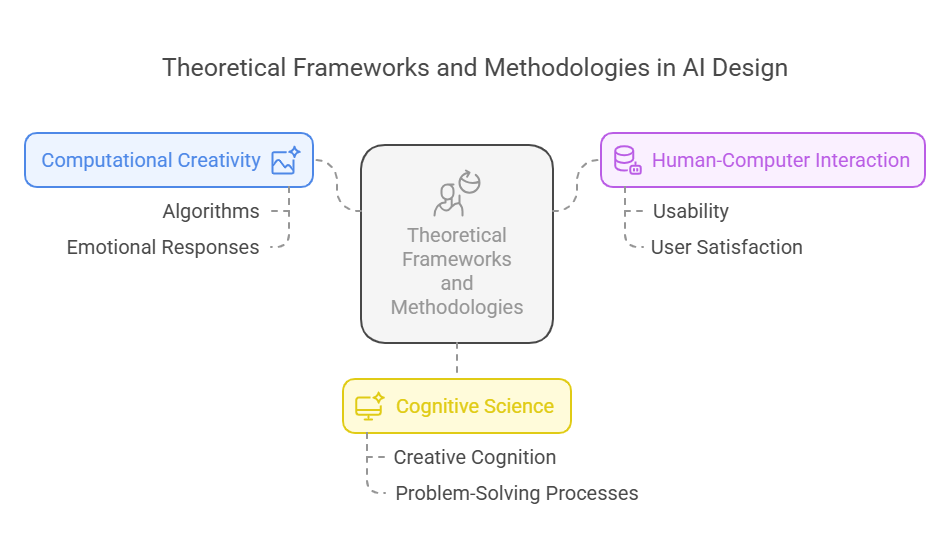
A. Theoretical Frameworks and Methodologies
Academic research often employs frameworks that blend humanistic inquiry with computational analysis. Key areas include:
1. Computational Creativity: Examining how algorithms can generate art, music, and design that evoke emotional and aesthetic responses traditionally associated with human creativity. 2. Human-Computer Interaction (HCI): Investigating how users interact with AI-powered design tools and the implications for usability and satisfaction.
3. Cognitive Science: Studying how AI influences creative cognition and problem-solving processes. For instance, a seminal paper on computational creativity by Boden (1998) laid the groundwork for understanding how AI systems can mimic or even enhance creative thought processes. More contemporary research can be found in the proceedings of the ACM Conference on Creativity and Cognition (https://www.acm.org).
B. Interdisciplinary Research and Collaborative Studies
The future of design is inherently interdisciplinary. Collaborative studies between design schools and technology research centers have yielded rich insights into:
– The synergy between algorithmic processes and human intuition.
– The role of AI in reducing cognitive load and expanding creative horizons.
– Methods to evaluate the originality and aesthetic quality of AI-generated designs. Case in point, research conducted at Stanford University has demonstrated that when AI is used as a creative partner, human designers report a significant increase in ideation speed and satisfaction.

C. Quantitative and Qualitative Metrics in Evaluating AI-Driven Design
Assessing the success of AI integration in design involves both quantitative metrics—such as speed, efficiency, and error reduction—and qualitative assessments like user satisfaction and creative novelty. Mixed-methods studies often use surveys, focus groups, and performance analytics to derive a comprehensive understanding of AI’s impact. Key Metrics Include:
• Design Output Quality: Evaluated through peer reviews and industry benchmarks.
• Efficiency Gains: Measured in terms of reduced time-to-market and cost savings.
• User Engagement: Analyzed via interactive metrics and social media responses.

6. THE FUTURE TRAJECTORY: PREDICTIONS AND POSSIBILITIES
Looking forward, the integration of AI into design is poised to unlock new paradigms of creativity and innovation. As the boundaries between technology and design continue to blur, several trends and possibilities emerge:
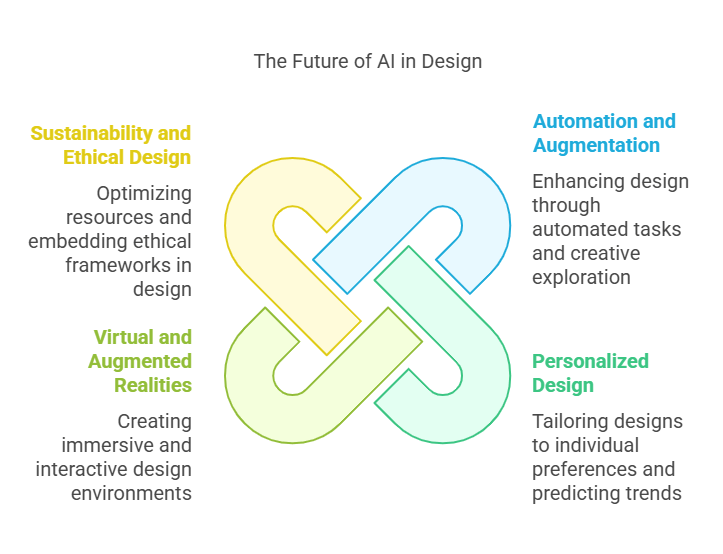
A. Automation and Augmentation of Creativity
While automation might conjure images of job displacement, in design it is more accurately described as augmentation. Designers are increasingly leveraging AI to:
– Automate repetitive tasks such as layout adjustments and color matching.
– Explore design permutations that would be impractical manually.
– Enhance creativity by providing a rich array of starting points for new concepts. This collaborative relationship between man and machine is predicted to lead to a more dynamic and responsive creative industry.
B. Personalized and Adaptive Design
As AI systems learn from user behavior and preferences, the design outputs become increasingly tailored to individual needs. Key possibilities include:
• Personalized user interfaces that adapt in real time.
• Customizable product designs that reflect personal aesthetics.
• Data-driven design strategies that predict consumer trends with high accuracy. This shift towards personalization not only improves user experience but also presents lucrative opportunities for businesses looking to differentiate themselves in competitive markets.
C. Expansion of Virtual and Augmented Realities
The future will see more immersive design experiences through enhanced AR and VR integrations. AI plays a crucial role in:
– Creating virtual environments that are responsive and intuitive.
– Enabling interactive design prototypes that users can experience before physical production.
– Bridging the gap between digital and physical spaces through real-time design modifications. These technologies are expected to transform sectors ranging from entertainment and education to retail and healthcare.
D. Sustainability and Ethical Design
The future of design is inseparable from sustainability. AI can optimize resource usage, reduce waste, and create environmentally conscious designs. In addition:
• AI-driven simulations can predict environmental impacts.
• Data analytics can inform sustainable material choices.
• Ethical design frameworks can be embedded in AI algorithms to ensure inclusivity and fairness. Industry leaders are already exploring these avenues, with companies such as Autodesk leading initiatives that combine AI with green design principles.
Key Predictions:
– AI will serve as a creative co-pilot, rather than a replacement.
– Interdisciplinary collaboration will become the norm in design innovation.
– Ethical frameworks and regulatory measures will be critical in governing AI use.
– Continuous learning and adaptability will define successful design practices.
– The evolution of design will be marked by a seamless integration of technology and human creativity.
7. CHALLENGES AND ETHICAL CONSIDERATIONS
While the potential benefits of AI in design are vast, several challenges and ethical dilemmas must be addressed to ensure that this transformation is inclusive, responsible, and sustainable.
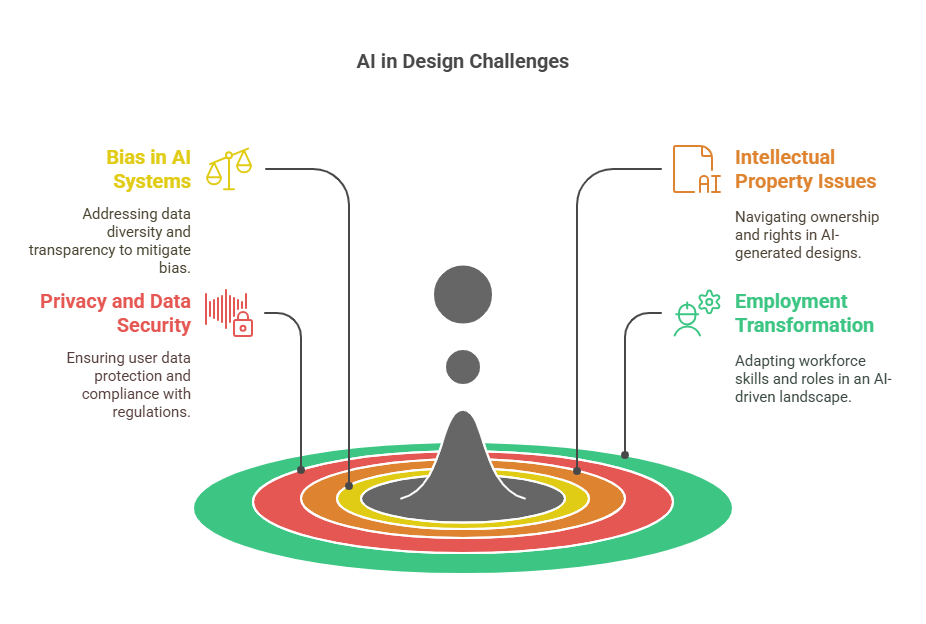
A. Bias in AI Systems
One of the most pressing concerns is the risk of inherent bias in AI algorithms. Since these systems are trained on historical data, they may inadvertently reproduce or amplify existing prejudices. Key considerations include:
• Data Diversity: Ensuring that training datasets encompass a wide range of cultural, socioeconomic, and aesthetic perspectives.
• Algorithmic Transparency: Demanding clarity in how design decisions are made by AI.
• Regular Audits: Implementing periodic reviews of AI systems to identify and rectify biases.
B. Intellectual Property and Authorship
The question of ownership over AI-generated designs is complex. Some key issues include: – Determining legal ownership when a design is co-created by human and machine.
– Establishing standards for intellectual property rights that account for algorithmic contributions.
– Balancing the rights of original designers with those of the technology providers. These concerns have spurred debates in academic journals such as the Harvard Journal of Law & Technology, where ongoing discussions seek to create a fair framework for AI-generated creative works.
C. Privacy and Data Security
Data is the lifeblood of AI systems. However, the reliance on extensive datasets raises significant privacy concerns:
– Informed Consent: Ensuring that users are aware of how their data is collected and used.
– Anonymization: Protecting individual identities in large datasets.
– Cybersecurity: Implementing robust measures to safeguard sensitive design and user data. These challenges are addressed by regulatory bodies such as the European Union’s General Data Protection Regulation (GDPR) (https://gdpr.eu), which serves as a benchmark for data privacy practices.
D. Employment and Workforce Transformation
The advent of AI in design has sparked concerns about job displacement. While automation can streamline processes, it also requires a shift in workforce skills:
• Reskilling Programs: Initiatives that train existing professionals in AI and computational design.
• New Job Roles: The emergence of roles such as AI curators, data analysts, and digital ethicists.
• Collaborative Work Models: Frameworks that encourage human-AI collaboration rather than competition. Industry studies, such as those by McKinsey & Company, indicate that while certain routine tasks may be automated, the overall effect is likely to lead to job transformation and the creation of new, more specialized roles.
8. PRACTICAL GUIDANCE FOR DESIGNERS IN THE AGE OF AI
For designers looking to thrive in an AI-enhanced environment, a proactive and adaptive mindset is key. The following actionable recommendations can help you harness AI effectively in your design practice:
- Embrace Continuous Learning
- Stay informed about emerging AI tools and trends.
- Attend workshops, webinars, and industry conferences.
- Engage with academic journals and online courses focused on AI and design.
- Experiment with AI Tools
- Integrate AI software into your design workflow.
- Use platforms that offer generative design, predictive analytics, and data visualization.
- Collaborate with technical experts to optimize tool usage.
- Recommended Tools: Adobe Sensei, Autodesk Dreamcatcher, and Runway ML are some industry-standard tools that are reshaping creative processes.
- Prioritize Ethical Design
- Evaluate the ethical implications of your design decisions.
- Ensure diversity and inclusion in your design data and processes.
- Advocate for transparent and accountable AI practices within your organization.
- Cultivate Interdisciplinary Collaborations
- Build networks that include data scientists, engineers, and ethicists.
- Participate in collaborative projects that push the boundaries of traditional design.
- Leverage cross-functional insights to drive innovation.
- Foster a Culture of Experimentation
- Encourage risk-taking and iterative development in your projects.
- Create safe spaces for creative experimentation without the fear of failure
- Document lessons learned to inform future projects.
- This approach not only leads to breakthrough innovations but also builds resilience in rapidly changing market conditions.

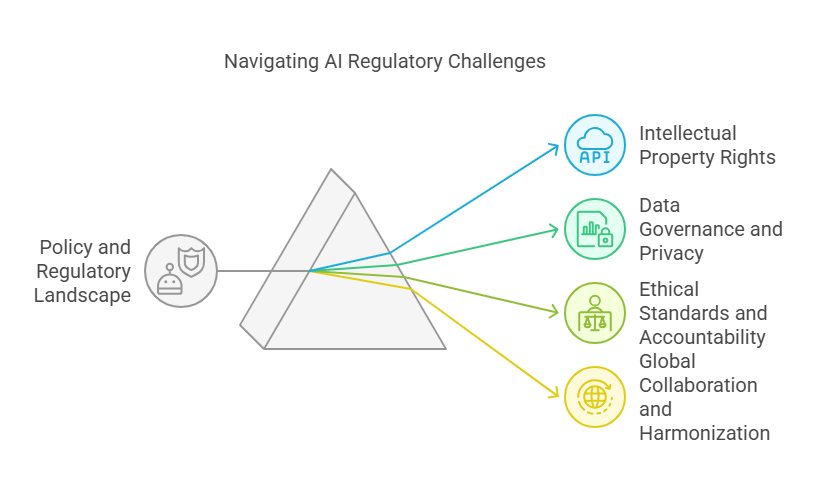
9. POLICY AND REGULATORY LANDSCAPE
As AI reshapes design, regulatory frameworks must evolve to keep pace with technological advances. Policymakers worldwide are grappling with issues related to intellectual property, data privacy, and ethical AI use. Key policy considerations include:
A. Intellectual Property Rights
– Defining authorship for AI-generated works.
– Establishing legal frameworks that balance innovation with protection.
– Creating standards that recognize the collaborative nature of human-AI design. Legal B. Data Governance and Privacy
– Implementing stringent data protection laws similar to GDPR.
– Promoting transparency in data collection and usage.
– Encouraging best practices in data security among tech companies. International Standard: The ISO/IEC 27001 standard provides guidelines for managing information security, applicable to AI-driven design projects.
C. Ethical Standards and Accountability
– Developing industry-wide ethical standards for AI use.
– Establishing oversight committees that include experts from design, technology, and ethics.
– Mandating regular audits of AI systems for bias and fairness. Policy Recommendation: Policymakers are encouraged to collaborate with academic and industry leaders to develop comprehensive guidelines that ensure responsible AI deployment.
D. Global Collaboration and Harmonization
– Facilitating international dialogue on AI ethics and regulation.
– Harmonizing policies across borders to ensure a level playing field.
– Engaging in public-private partnerships to address technological and social challenges. For additional insights on regulatory developments, consult the World Intellectual Property Organization (WIPO) at https://www.wipo.int.
10. FUTURE RESEARCH
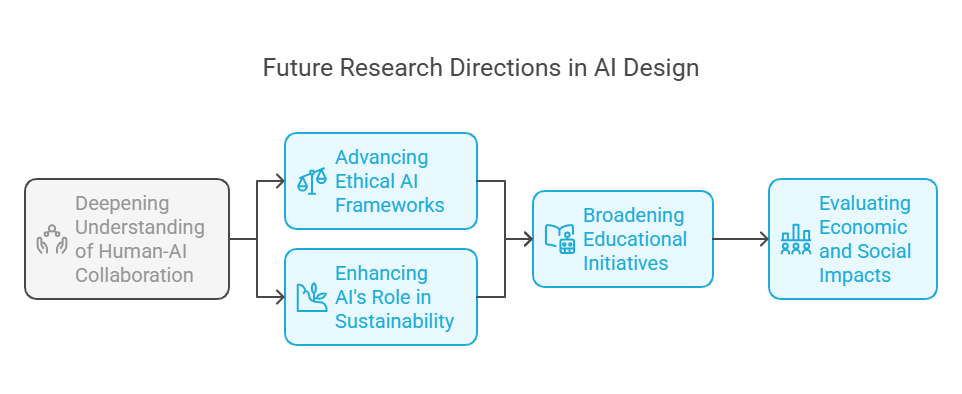
As we stand at the crossroads of technological innovation and creative evolution, several avenues for future research emerge. Academics, practitioners, and policymakers must collectively explore the following directions:
A. Deepening the Understanding of Human-AI Collaboration
– Investigate the cognitive processes that underpin effective human-AI interactions.
– Develop frameworks that measure the qualitative impact of AI on creative output.
– Explore the potential of AI to augment rather than replace human ingenuity.
B. Advancing Ethical AI Frameworks
– Conduct interdisciplinary studies that analyze bias, fairness, and accountability in AI-generated design.
– Propose standardized ethical guidelines that can be adopted across the industry.
– Evaluate the long-term societal implications of AI in creative industries.
C. Enhancing AI’s Role in Sustainability
– Research how AI can optimize resource allocation and reduce waste in design processes.
– Explore innovative ways to integrate environmental considerations into generative design algorithms.
– Assess the impact of AI-driven sustainability practices on global environmental outcomes.
D. Broadening Educational Initiatives
– Develop curricula that merge design, technology, and ethics.
– Create cross-disciplinary educational programs that prepare future designers for an AI-integrated landscape.
– Evaluate the effectiveness of educational interventions in fostering innovation.
E. Evaluating the Economic and Social Impacts
– Study the macroeconomic effects of AI integration in design industries.
– Examine workforce transitions and the creation of new job roles.
– Analyze consumer behavior and market responses to AI-driven products.
In this comprehensive exploration of AI design futures, we have navigated the dynamic interface between technology and creativity. From the historical context of design evolution to the latest breakthroughs in machine learning, our discussion underscores that AI is not a distant prospect—it is a present reality shaping the future of design. Through detailed analysis, case studies, and academic perspectives, we have answered critical questions on how AI transforms design processes, influences creative autonomy, and redefines the roles of designers in an increasingly digital world.
Key Insights:
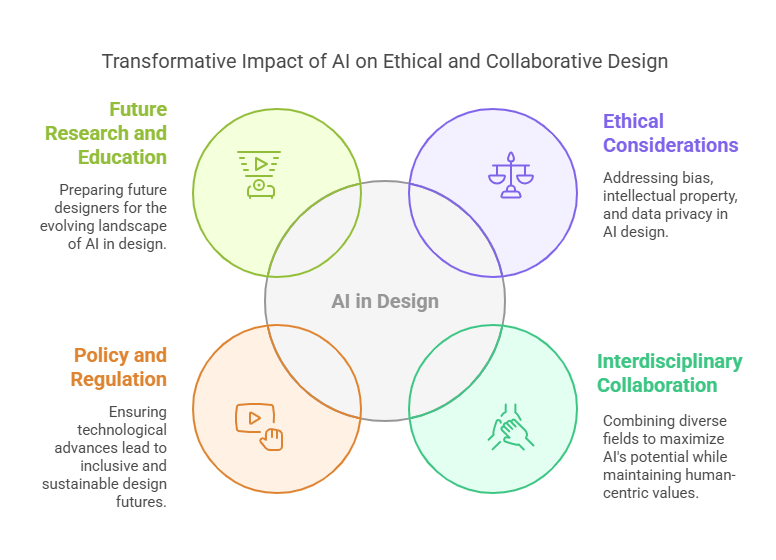
• AI is revolutionizing design by accelerating iteration, enhancing creativity, and enabling personalized experiences.
• Ethical considerations, including bias, intellectual property, and data privacy, must be proactively addressed.
• Interdisciplinary collaboration is essential for harnessing the full potential of AI while safeguarding human-centric values.
• Policy and regulation play a pivotal role in ensuring that technological advances lead to inclusive and sustainable design futures.
• Future research and educational initiatives will be critical in preparing the next generation of designers for a rapidly changing landscape.
As we conclude this extensive discussion, it is clear that the journey into AI-driven design is both exciting and challenging. Designers, technologists, and scholars alike must embrace continuous learning, ethical practices, and innovative collaborations to navigate this evolving terrain. The future of design is not predetermined—it is shaped by the questions we ask today and the creative solutions we implement tomorrow.
 Visual Alchemist
Leave a comment