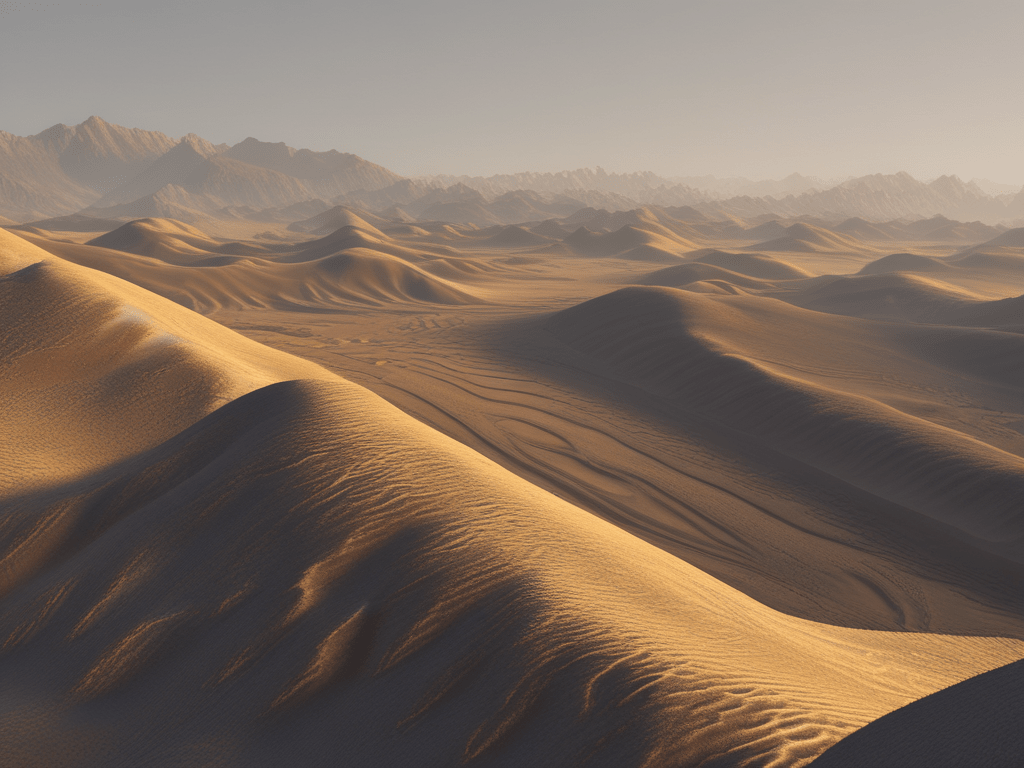
Noise functions are essential tools in generative art, providing a way to introduce natural randomness and complexity into visual compositions. These functions generate random values that can be used to create textures, patterns, and dynamic forms that mimic natural phenomena. This comprehensive guide explores various noise functions, their applications, and how artists leverage them to produce captivating generative artworks.
What are Noise Functions?
Noise functions are algorithms that generate sequences of random values, often producing smooth and continuous variations that resemble natural textures. Unlike purely random values, noise functions can create more structured randomness, making them ideal for simulating organic patterns.
Significance in Generative Art
In generative art, noise functions help create textures, shapes, and patterns that feel natural and aesthetically pleasing. By mimicking the randomness found in nature, noise functions allow artists to produce artworks that resonate more deeply with viewers. This technique is crucial for adding depth and complexity to digital compositions.
Artists Embracing Noise Functions
Many artists have embraced noise functions for their creative potential. Notable generative artists like Casey Reas and Tyler Hobbs use noise functions to add depth and complexity to their works, creating intricate patterns and dynamic forms. For instance, Casey Reas’s software-based art often incorporates noise to generate organic and evolving visuals.
Perlin Noise: The Classic Algorithm
Description
Perlin noise, developed by Ken Perlin in the 1980s, is one of the most famous noise functions. It generates smooth, continuous patterns by interpolating random values at grid points. This results in natural-looking gradients that are widely used in various applications.
How Perlin Noise Works
Perlin noise generates values by blending the contributions of several random points, creating smooth transitions between them. This makes it ideal for generating terrain, cloud patterns, and organic textures.
Example: Terrain Generation
Perlin noise is commonly used in procedural landscape generation to create mountains, valleys, and other natural features.
# Python pseudo-code for generating terrain with Perlin noise
import noise

import numpy as np

import matplotlib.pyplot as plt

shape = (100, 100)

scale = 100.0

octaves = 6

persistence = 0.5

lacunarity = 2.0

terrain = np.zeros(shape)

for i in range(shape[0]):

 for j in range(shape[1]):

 terrain[i][j] = noise.pnoise2(i/scale,

 j/scale,

 octaves=octaves,

 persistence=persistence,

 lacunarity=lacunarity,

 repeatx=1024,

 repeaty=1024,

 base=42)

plt.imshow(terrain, cmap='gray')

plt.show()
Applications Beyond Terrain
Besides terrain generation, Perlin noise is used to simulate cloud patterns, flowing water, and other organic textures in digital art. For example, Ken Perlin’s own work demonstrated how Perlin noise could be used to create natural-looking textures in CGI for films like Tron.
Simplex Noise: A Refined Alternative
Description
Simplex noise is an improved version of Perlin noise, also developed by Ken Perlin. It addresses some limitations of the original algorithm, providing faster computation, better visual quality, and fewer artifacts.
Advantages of Simplex Noise
- Faster Computation: Simplex noise is computationally more efficient.
- Better Visual Quality: It produces smoother and more aesthetically pleasing patterns.
- Fewer Artifacts: Reduces the directional artifacts common in Perlin noise.
Example: Creating Realistic Water Ripples
Simplex noise can be used to create realistic water ripples or turbulent flows in digital art. For instance, the Shadertoy community often uses Simplex noise for generating complex visual effects in real-time shaders.
// GLSL shader code for Simplex noise-based water ripples

float simplexNoise(vec3 v);

float turbulence(vec3 p) {

 float w = 100.0;

 float t = -0.5;

 for (float f = 1.0 ; f <= 10.0 ; f++ ){

 float power = pow(2.0, f);

 t += abs(simplexNoise(p * power) / power);

 }

 return t;

}

void main() {

 vec3 p = vec3(gl_FragCoord.xy * 0.01, time);

 float n = turbulence(p);

 gl_FragColor = vec4(vec3(n), 1.0);

}
Random Noise: Unpredictable Chaos
Description
Random noise, such as white noise, consists of completely unpredictable values. It is used to introduce high levels of randomness and chaos into generative art.
Creating Chaotic Patterns
Random noise can be used to create abstract art with dynamic, irregular shapes and patterns.
# Python pseudo-code for generating points with random noise

import numpy as np

import matplotlib.pyplot as plt

width, height = 100, 100

random_image = np.random.rand(width, height)

plt.imshow(random_image, cmap='gray')

plt.show()
Embracing Spontaneity
Random noise adds an element of surprise and spontaneity to generative artworks, making them more dynamic and engaging. For example, artist Joshua Davis uses random noise to generate unpredictable visual patterns in his digital art.
Other Noise Algorithms
Worley Noise
Worley noise, also known as Voronoi diagrams, creates patterns based on the distance to the nearest point in a set of randomly placed points. It is often used to generate cellular textures.
Fractal Noise
Fractal noise, such as fractional Brownian motion (fBm), combines multiple layers of noise at different scales. This technique is used to create complex, multi-scale textures.
Turbulence Noise
Turbulence noise involves adding several layers of noise together, each with increasing frequency and decreasing amplitude, to create swirling, turbulent patterns.
Artistic Applications
Noise functions are versatile tools in the hands of creative artists. Here are some of their applications:
Digital Painting
Artists use noise functions to add texture to brush strokes, enhancing the depth and realism of digital paintings. For example, digital artist Aaron Koblin uses noise to create complex, textured visualizations.
Generative Sculptures
In 3D modeling, noise functions help create intricate forms and textures for generative sculptures, adding complexity and natural variation. See the works of Rafael Lozano-Hemmer for examples of how noise can be used in interactive sculptures.
Textile Design
Noise algorithms simulate fabric patterns, allowing designers to create realistic and dynamic textile prints. For instance, textile designers use noise functions to generate organic patterns for fabrics and clothing.
Music Visualization
Noise-based animations sync visuals to sound, creating captivating music visualizations that respond dynamically to audio input. Platforms like D3.js and TouchDesigner often use noise functions for real-time music visualizations.
Challenges and Limitations
Controlling Noise
Finding the right parameters for noise functions can be challenging. Artists often need to experiment with scale, persistence, and octaves to achieve the desired effect.
Avoiding Excessive Noise
Too much noise can overwhelm the composition, making it look chaotic and unstructured. Balancing noise levels is crucial for maintaining visual appeal.
Overcoming Challenges
Artists overcome these challenges through experimentation and practice, learning to fine-tune noise functions to suit their creative vision.
Conclusion
Noise functions play a vital role in generative art, providing the means to create natural, complex, and engaging visual compositions. By understanding and experimenting with various noise algorithms, artists can explore endless creative possibilities and discover unique patterns and textures.
FAQ
1. What are noise functions?
Noise functions are algorithms that generate sequences of random values used to create natural-looking textures and patterns.
2. Why are noise functions important in generative art?
They help introduce natural randomness and complexity, enhancing the aesthetic and emotional impact of the artwork.
3. What is Perlin noise?
Perlin noise is a classic algorithm developed by Ken Perlin that generates smooth, continuous patterns ideal for simulating natural textures.
4. How does simplex noise differ from Perlin noise?
Simplex noise is an improved version of Perlin noise, offering faster computation, better visual quality, and fewer artifacts.
5. What is random noise?
Random noise, such as white noise, consists of completely unpredictable values used to introduce high levels of randomness and chaos.
6. How is Perlin noise used in terrain generation?
Perlin noise creates smooth gradients that simulate natural landscapes like mountains and valleys.
7. What are some applications of simplex noise?
Simplex noise is used for creating water ripples, turbulent flows, and other smooth, organic patterns.
8. What is Worley noise?
Worley noise, or Voronoi diagrams, generates patterns based on the distance to the nearest point in a set of randomly placed points, often used for cellular textures.
9. How is fractal noise created?
Fractal noise combines multiple layers of noise at different scales to create complex, multi-scale textures.

 Visual Alchemist
Leave a reply to A New Era of Creativity fuelled by Quirk-Pilled Design – Visual Alchemist Cancel reply