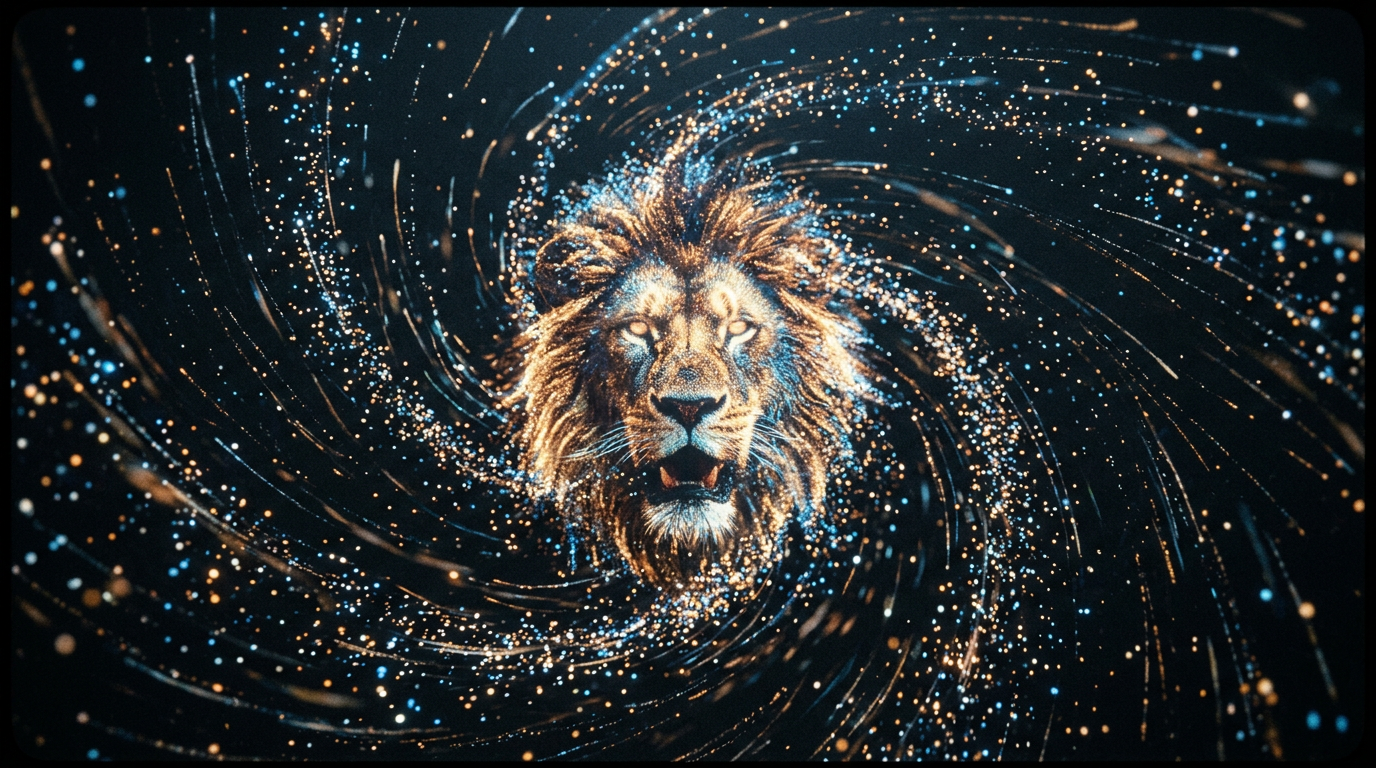
The trajectory of AI image systems represents one of the most significant paradigm shifts in the history of visual media. As we stand at the intersection of machine learning, computer graphics, and creative practice, the capabilities now emerging are reshaping not merely how images are produced, but how visual communication itself is conceived, distributed, and experienced. Understanding the future of AI image systems requires examining the technological vectors, economic forces, and cultural shifts that are converging to redefine the boundaries of the possible.
The Technological Foundations
The evolution of AI image systems rests upon several foundational technological advances that have matured over the past decade. Diffusion models, which emerged from research laboratories and entered public consciousness through platforms like DALL-E, Stable Diffusion, and Midjourney, represent a fundamental rethinking of how machines can generate visual content. These models operate by learning the statistical distribution of visual data and then reversing a noise process to produce coherent imagery from random seeds. The mathematics underlying this approach, rooted in nonequilibrium thermodynamics and stochastic differential equations, has proven remarkably effective at capturing the subtle statistical regularities that characterize natural images.
What distinguishes contemporary AI image systems from earlier generative approaches is the scale at which they operate. Modern foundation models are trained on billions of image-text pairs, encompassing an extraordinary range of visual concepts, styles, and compositions. This scale enables emergent behaviors that were not explicitly programmed—the ability to compose novel scenes, to understand spatial relationships, to render lighting and material properties with photorealistic fidelity, and to interpret complex natural language descriptions with remarkable accuracy. The training methodologies themselves have evolved substantially, incorporating techniques such as classifier-free guidance, latent diffusion, and adversarial training to improve output quality and alignment with human intent.
Architectural Innovations
The architecture of AI image systems continues to evolve at a rapid pace. The original U-Net architectures that powered early diffusion models are being supplemented and in some cases replaced by transformer-based approaches that offer superior scaling properties and more coherent handling of global image structure. Vision transformers, adapted from the transformer architectures that revolutionized natural language processing, treat image patches as tokens in a sequence, enabling the model to reason about long-range dependencies and compositional relationships that convolutional approaches struggle to capture.
Latent diffusion models have emerged as a particularly important architectural innovation, operating not in pixel space but in the compressed latent space of a pretrained autoencoder. This approach dramatically reduces computational requirements while maintaining output quality, making AI image systems accessible on consumer-grade hardware. The latent space itself becomes an object of study, revealing structure in how visual concepts are organized and related. Researchers have found that latent spaces exhibit surprising geometric properties, with directions corresponding to meaningful visual attributes such as lighting, pose, expression, and style.
The integration of attention mechanisms has been another crucial advance. Cross-attention layers allow text prompts to condition the image generation process at multiple scales, while self-attention layers enable the model to maintain consistency across different regions of the generated image. Recent work on attention control has given users unprecedented ability to influence the spatial arrangement of elements in generated images, moving beyond simple text prompts toward more interactive and iterative creation workflows.
Real-Time and Interactive Generation
One of the most anticipated developments in AI image systems is the transition from batch generation to real-time, interactive creation. Current systems typically require several seconds to generate a single image, but advances in model distillation, neural architecture search, and hardware acceleration are rapidly reducing this latency. The emergence of consistency models, which can generate high-quality images in a single forward pass rather than the dozens or hundreds of steps required by standard diffusion models, points toward a future where real-time generation becomes the norm rather than the exception.
Interactive generation represents a fundamental shift in the creative relationship between human and machine. Rather than specifying a prompt and waiting for a result, creators will be able to manipulate parameters in real time, watching as the image evolves under their direction. This closed-loop interaction, where the system provides immediate visual feedback for each creative decision, enables a mode of exploration and discovery that is closer to traditional creative practices like sketching or sculpting than to current prompt-based workflows.
The implications for AI image systems in interactive contexts extend beyond still images to video, 3D content, and immersive environments. Frame-by-frame generation with temporal consistency, real-time texture synthesis for virtual environments, and on-the-fly asset generation for game development are all active areas of research that promise to transform production pipelines across multiple industries.
Multimodal Integration
The future of AI image systems is inherently multimodal. The most powerful emerging systems do not operate in isolation but rather integrate seamlessly with text, audio, 3D geometry, and video. A single model might accept as input a combination of text description, reference images, spatial layouts, and style exemplars, producing outputs that respect all of these constraints simultaneously. This multimodal conditioning enables workflows that were previously impossible or impractical.
Image-to-image translation capabilities have become increasingly sophisticated. Contemporary AI image systems can transform sketches into photorealistic renderings, change the style of existing images while preserving content, add or remove objects with contextual awareness, and extend images beyond their original boundaries through outpainting. These capabilities blur the distinction between generation and editing, creating a continuum of manipulation that empowers creators at every skill level.
The integration of 3D understanding represents another frontier. Systems that can generate consistent views of an object from multiple angles, infer 3D structure from a single image, or generate 3D assets directly from text descriptions are beginning to emerge. While these capabilities remain less mature than 2D image generation, the rapid progress suggests that volumetric and geometric understanding will become standard features of AI image systems in the near future.
Personalization and Customization
The one-size-fits-all approach of early AI image systems is giving way to increasingly personalized and customizable alternatives. Fine-tuning techniques such as LoRA (Low-Rank Adaptation), DreamBooth, and textual inversion allow users to teach existing models new concepts, styles, or characters using relatively small amounts of reference data. This capability has profound implications for brand identity, where consistent visual language across thousands of generated assets is essential.
Custom models trained on proprietary datasets will become increasingly common as organizations recognize the strategic value of unique visual capabilities. A fashion brand might train a model that understands its specific design language, fabric textures, and aesthetic sensibilities. An architectural firm might develop a model that can generate visualizations consistent with its design philosophy and project history. These customized AI image systems represent a form of intellectual property that provides durable competitive advantage.
The economics of customization are shifting as well. The cost of training a custom model has dropped dramatically, from millions of dollars to thousands, and is continuing to decrease. Services that offer managed fine-tuning, model hosting, and inference APIs are making customized AI image generation accessible to small and medium enterprises, not merely large corporations with substantial AI budgets.
Quality, Fidelity, and Controllability
Output quality has improved dramatically since the first public demonstrations of AI image systems. Early systems produced images that were often surreal in unintended ways, with anatomical impossibilities, nonsensical text, and incoherent backgrounds. Contemporary systems have largely overcome these limitations, producing images that are often indistinguishable from photographs or human-created artwork in controlled contexts.
Controllability remains an active area of research and development. Current systems excel at generating impressive images from simple prompts but can struggle with precise specifications regarding composition, lighting, color palette, and the spatial arrangement of multiple elements. Advances in layout conditioning, region-based prompting, and iterative refinement are progressively addressing these limitations, giving creators more precise control over generated outputs.
The relationship between resolution and quality is being reexamined as AI image systems adopt hierarchical generation strategies. Rather than generating images at a fixed resolution, cascaded models first produce a low-resolution image and then iteratively upsample and refine it, often producing results superior to single-stage generation at the target resolution. Super-resolution techniques, both generative and interpolation-based, continue to improve, enabling the production of print-quality assets suitable for large-format output.
Economic and Industry Implications
The economic impact of AI image systems is already substantial and is projected to grow significantly. Industries as diverse as advertising, publishing, game development, film production, architecture, fashion, and product design are being transformed by the ability to generate high-quality visual content rapidly and at low cost. Stock photography, illustration, and certain categories of commercial photography are experiencing disruption as generated imagery competes with and in some cases replaces traditionally produced content.
The democratization of visual creation carries both opportunities and challenges. On one hand, small businesses, independent creators, and organizations with limited budgets can now access visual communication capabilities that were previously available only to well-funded enterprises. On the other hand, the devaluation of certain creative skills and the displacement of traditional creative professionals raise serious questions about economic transition and the future of creative work.
Content creation workflows are being restructured around AI image systems. Where a marketing campaign might previously have required a photoshoot, a designer, and an illustrator, the same results can now be achieved by a single creative director working with AI tools. This consolidation of roles has implications for team structure, skill development, and career trajectories across the creative industries.
Cultural and Aesthetic Impact
The aesthetic implications of AI image systems are profound and still unfolding. The visual language of AI-generated imagery—characterized by specific lighting qualities, textural patterns, and compositional tendencies—is becoming recognizable and is beginning to influence human creators. We are witnessing the emergence of a distinct AI-native aesthetic that is neither purely synthetic nor purely derivative but rather represents a new category of visual expression.
Questions of authorship, originality, and creativity are being reexamined in light of generative capabilities. When a creator crafts a prompt, selects from generated options, and combines and refines outputs, where does authorship lie? The collaborative relationship between human and machine in contemporary AI image systems challenges traditional notions of creative agency and suggests new frameworks for understanding creativity as a distributed process.
Cultural institutions are grappling with the implications of AI-generated visual content. Museums and galleries are beginning to exhibit AI-generated artworks, raising questions about curation, valuation, and the role of the artist. Copyright offices worldwide are developing policies regarding the protectability of AI-generated works, with implications that extend far beyond the art world into commercial applications.
Ethical Considerations and Responsible Development
The ethical dimensions of AI image systems demand careful attention. Issues of bias, representation, and fairness are inherent in systems trained on Internet-scale datasets that reflect the biases and inequities of the societies that produced them. Ensuring that generative systems do not perpetuate or amplify harmful stereotypes requires ongoing attention to dataset composition, model behavior, and deployment context.
Misuse and disinformation represent significant concerns. The ability to generate photorealistic images of events that never occurred, people who do not exist, or scenes that could not have been photographed has implications for trust in visual media. Technical solutions such as content provenance standards, digital watermarking, and detection systems are being developed alongside policy frameworks and legal responses.
Environmental sustainability is another important consideration. Training large-scale AI image systems requires substantial computational resources and energy consumption. However, the per-inference cost is relatively modest, and the overall environmental impact must be weighed against the resources consumed by traditional content production processes. Ongoing research into more efficient architectures, training methodologies, and hardware will continue to reduce the environmental footprint of generative systems.
The Regulatory Landscape
Governments and regulatory bodies around the world are developing frameworks to govern the development and deployment of AI image systems. The European Union’s AI Act, which categorizes AI systems based on risk level and imposes corresponding requirements, represents one of the most comprehensive regulatory approaches to date. Similar efforts are underway in other jurisdictions, creating a complex and evolving compliance landscape.
Transparency requirements are a common theme across regulatory approaches. Many proposed regulations would require disclosure when content is AI-generated, enabling audiences to make informed judgments about the provenance and authenticity of visual media. The technical implementation of such disclosure requirements, whether through metadata, visible markers, or other mechanisms, remains an active area of discussion and development.
Liability frameworks for AI-generated content are also being developed. Questions about who bears responsibility when an AI image system produces harmful, defamatory, or infringing content involve complex interactions between model developers, platform operators, and end users. The evolution of case law and regulatory guidance in this area will have significant implications for the commercial deployment of generative systems.
Research Frontiers
Several research frontiers promise to further advance AI image systems in coming years. Few-shot and zero-shot learning capabilities, which enable models to generalize to novel concepts and tasks with minimal or no additional training data, continue to improve. In-context learning, where models adapt to new tasks based on examples provided at inference time without parameter updates, represents a particularly exciting direction.
The integration of physical understanding into generative models is another important frontier. Current AI image systems often produce physically implausible results because they lack understanding of physics, geometry, and materials. Research on physics-informed generation, which incorporates physical simulation or learned physical priors, promises to address these limitations and produce imagery that is not only visually convincing but physically consistent.
Neuromorphic computing and specialized AI hardware represent a longer-term frontier. Hardware architectures designed specifically for the computational patterns of neural networks, including analog computing approaches, optical computing, and in-memory computing, could dramatically improve the efficiency and capability of AI image systems. While these technologies remain largely experimental, their potential impact is substantial.
FAQ
Q: How will AI image systems affect employment in creative industries?
A: The impact will vary significantly across roles and industries. Some positions, particularly those involving routine content production, face disruption. However, new roles are emerging, including prompt engineering, AI creative direction, and model fine-tuning. The net effect on employment depends on adaptation and skill development.
Q: What is the difference between diffusion models and GANs?
A: Diffusion models generate images by gradually denoising random noise, while GANs (Generative Adversarial Networks) use a generator-discriminator framework. Diffusion models currently produce higher quality and more diverse outputs, have better mode coverage, and are more stable to train, but are slower at inference.
Q: Can AI-generated images be copyrighted?
A: The copyright status of AI-generated images varies by jurisdiction. In the United States, the Copyright Office has determined that works created entirely by AI without human creative input are not copyrightable. Human modifications and creative selection may establish copyright in derivative works.
Q: What hardware do I need to run AI image systems locally?
A: Requirements vary by model. Consumer GPUs with at least 8GB VRAM can run many open-source models. Higher-end GPUs enable faster generation and support for larger models. Cloud-based inference services provide access without local hardware investment.
Conclusion
The future of AI image systems is characterized by rapid technological advancement, expanding application domains, and profound cultural and economic implications. The trajectory from research curiosity to practical tool has been remarkably short, and the pace of progress shows no signs of slowing. For creators, organizations, and societies, the challenge is not merely to adapt to these changes but to actively shape them in ways that realize the positive potential of generative technologies while mitigating their risks.
The most successful approaches will be those that recognize AI image systems not as replacements for human creativity but as collaborators that augment and extend human capabilities. The future belongs not to AI or to humans alone but to the productive partnerships between them. As these systems continue to evolve, the question is not what they will be capable of but what we will choose to create with them.
Ready to stay ahead of the curve? Our weekly newsletter delivers curated insights on AI-native design, generative systems, and computational creativity directly to your inbox.
Leave a Reply