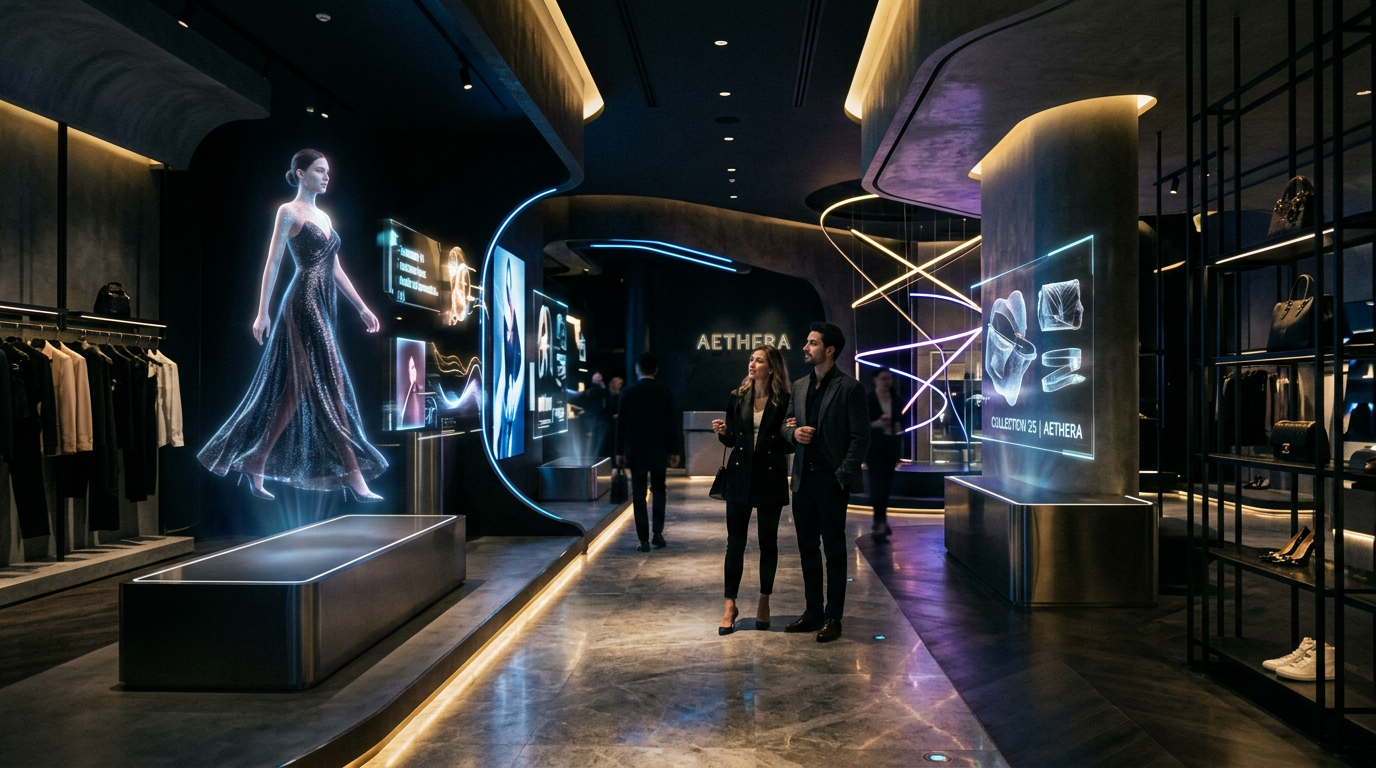
Immersive retail environments represent the most ethically complex application of spatial computing technology. They combine surveillance infrastructure with persuasive design, operating in contexts where consumers have commercial relationships with brands and expectations of privacy that may conflict with the data requirements of immersive experiences. The ethics of immersive retail requires examination of data collection practices, persuasive design boundaries, accessibility obligations, and the distribution of value between brands and consumers.
The Data Paradox
Immersive retail depends on data about its visitors. A store that responds to customer preferences must know those preferences. A fitting room that recommends complementary items must track what the customer has selected. A retail environment that personalizes its ambiance must recognize returning customers.
The ethical paradox is that immersive retail’s value proposition — personalized, responsive, memorable experiences — requires exactly the data collection that raises privacy concerns. Resolving this paradox requires transparent data practices, meaningful consent mechanisms, and genuine value exchange between consumer and brand.
The principle of data sovereignty holds that consumers should own and control their personal data, including behavioral data generated within immersive retail environments. Brands should collect only data necessary for the experience being delivered, retain it only as long as needed, and never share it with third parties without explicit consent. Data collected for experience personalization should not be used for unrelated purposes such as credit scoring, insurance rating, or employment decisions.
Persuasive Design Boundaries
Immersive retail environments employ sophisticated persuasive design techniques that raise ethical questions about manipulation and autonomy. Environmental psychology demonstrates that spatial design influences purchasing behavior. Immersive retail extends this influence with precisely calibrated digital responses to individual consumer behavior.
The ethical concern is that immersive retail may exploit cognitive vulnerabilities in ways that traditional retail cannot. A responsive environment that detects hesitation and amplifies visual and auditory persuasion cues may override reasoned decision-making. A personalized recommendation system that exploits known behavioral patterns may manipulate rather than serve.
The ethical boundary between persuasion and manipulation is crossed when techniques operate below the consumer’s conscious awareness or exploit known vulnerabilities. Immersive retail experiences should be designed to inform and assist rather than to bypass rational decision-making. Disclosure of persuasive techniques, opt-out mechanisms for personalization, and transparency about how the environment adapts to individual behavior are ethical requirements.
Accessibility and Inclusion
Immersive retail environments that rely on visual displays, gesture interaction, or audio content may exclude consumers with disabilities. A projection-mapped retail space that depends on visitors seeing projected content excludes blind and low-vision consumers. A gesture-controlled interface excludes consumers with limited mobility. A personalized environment that adapts based on tracking data may fail for consumers whose physical characteristics differ from the training data used for recognition systems.
The ethical obligation of accessibility extends beyond legal compliance. Immersive retail should be designed for the full spectrum of human diversity from the outset, not retrofitted after complaints or litigation. This means providing redundant experience modalities — visual, auditory, tactile — so that exclusion from one channel does not mean exclusion from the experience. It means designing interaction systems that accommodate diverse physical capabilities. It means ensuring that personalization systems perform equitably across demographic groups.
The Ethics of Digital Mirrors
Augmented reality mirrors and virtual try-on systems raise specific ethical concerns about body image, self-perception, and data capture. A digital mirror that shows the customer wearing products they have not physically put on creates a mediated self-image that may be more flattering or less accurate than reality.
Research on body image and digital augmentation suggests that mediated self-perception can have psychological effects, particularly for consumers with body image concerns. Immersive retail experiences that modify the customer’s appearance should include disclaimers about the accuracy of representations. Virtual try-on systems should clearly indicate when the visualization is a simulation rather than an accurate representation.
The data captured by digital mirrors — body measurements, gait patterns, facial expressions, emotional responses — is particularly sensitive. This data should be processed locally on device rather than transmitted to cloud servers. It should never be retained beyond the immediate session without explicit consent.
Value Distribution
Immersive retail generates value for brands through increased sales, customer loyalty, data insights, and brand differentiation. The ethical question is whether consumers receive equivalent value in exchange for their data, attention, and vulnerability to persuasive techniques.
A fair value exchange in immersive retail means that the consumer’s experience is demonstrably improved by the data collection and personalization they enable. The consumer should receive measurable benefits — better product recommendations, reduced decision effort, more enjoyable shopping experiences, exclusive access or offers — that justify the data they provide.
The principle of reciprocity holds that the more data a brand collects from a consumer, the more value the brand should deliver in return. A retail environment that tracks gaze patterns, dwell times, and emotional responses should deliver a proportionally richer experience than one that collects only transaction data.
FAQ
Is it ethical to collect biometric data in retail environments? Biometric data — facial recognition, gait analysis, emotional state detection — is among the most sensitive categories of personal data. Collection should require explicit opt-in consent, local processing where possible, strict data retention limits, and complete transparency about how data is used.
Can immersive retail be designed without surveillance? Fully responsive immersive retail without any sensing is technically impossible. However, significant privacy protection is achievable through local processing, anonymization at point of capture, minimal data retention, and transparent disclosure. The ethical goal is to minimize surveillance while maintaining responsiveness.
What obligations do brands have regarding algorithmic bias in retail personalization? Brands should audit their personalization systems for bias across demographic dimensions, ensure that the benefits of personalization are equitably distributed, and provide mechanisms for consumers to understand and control how they are being personalized.
How can consumers protect their privacy in immersive retail environments? Consumers can ask about data collection practices before entering immersive retail environments, choose to opt out of personalization features, use privacy-enhancing tools where available, and patronize brands with transparent privacy practices.
Internal References
For the business context of these ethical questions, see The Business of Immersive Retail. The evolution of retail technology and its implications is explored in The Evolution of Immersive Retail. For future trajectories, refer to The Next Era of Immersive Retail.
External References
“The Age of Surveillance Capitalism,” Shoshana Zuboff, PublicAffairs; “Persuasive Technology: Using Computers to Change What We Think and Do,” B.J. Fogg, Morgan Kaufmann; “Ethics of AI in Retail,” IEEE Global Initiative on Ethics of Autonomous and Intelligent Systems.
—
Visual Alchemist designs immersive retail experiences with ethical principles as foundational requirements. Contact us to discuss how we can create responsible experiential commerce environments.
Leave a Reply