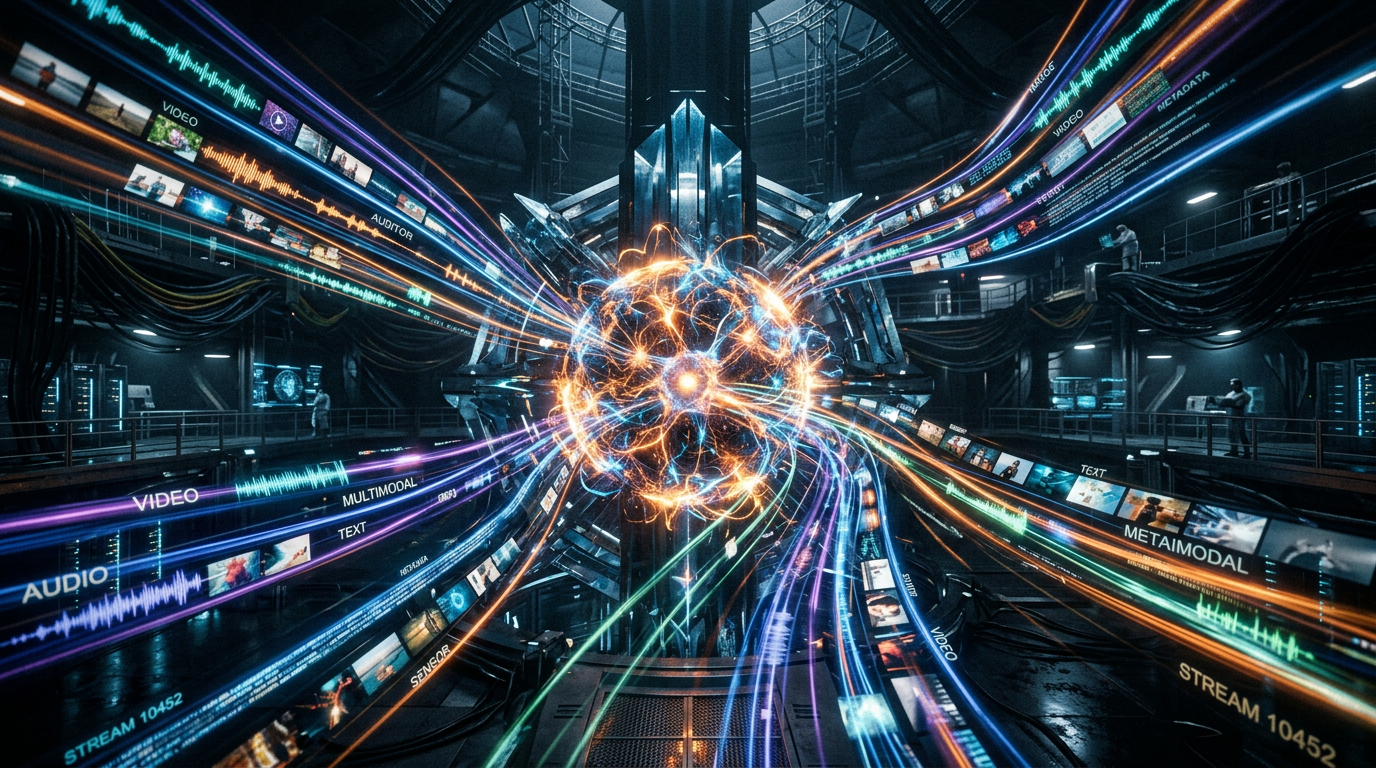
The trajectory of AI image systems continues to accelerate, with each month bringing advances that reshape the landscape of possibility. Identifying and understanding the trends that will define this space in 2026 is essential for practitioners, organizations, and observers who wish to anticipate rather than react to change. These AI image systems trends for 2026 represent the convergence of technological capability, market demand, and creative practice that will characterize the next phase of generative AI development.
Trend One: Real-Time Generative Interaction
The most transformative trend in AI image systems for 2026 is the shift from batch generation to real-time interactive creation. Current systems typically require several seconds to generate an image, creating an asynchronous interaction pattern where the creator specifies intent, waits for output, evaluates, and iterates. Real-time generation collapses this cycle into a continuous feedback loop where parameters can be adjusted and results appear instantly.
This shift is enabled by advances in model architecture, hardware acceleration, and algorithmic efficiency. Consistency models that generate images in a single forward pass, rather than the dozens or hundreds of steps required by standard diffusion models, dramatically reduce latency. Specialized inference hardware and optimized software stacks further accelerate generation to the point where it approaches real-time responsiveness.
The implications for creative practice are profound. Real-time interaction enables a mode of exploration that is closer to traditional creative practices — sketching, sculpting, playing an instrument — than to current prompt-based workflows. Creators can explore visual ideas with the immediacy of traditional media while leveraging the generative capability of AI.
Applications in interactive contexts will expand substantially. Real-time AI image generation will power dynamic content in games, virtual environments, live performances, and interactive installations. The boundary between content creation and content experience will blur as generative systems respond to user input in real time.
Trend Two: Multimodal Foundation Models
The unification of generative capabilities across modalities is a defining trend for AI image systems in 2026. Rather than separate models for image generation, text understanding, audio processing, and 3D creation, next-generation foundation models will handle multiple modalities within a single architecture.
A multimodal model might accept as input a combination of text, images, audio, and 3D geometry, and produce outputs in any of these modalities. This integration enables workflows that are currently fragmented across specialized tools. A creator could describe a scene verbally, provide a reference image for style, specify a musical mood through audio, and receive a generated 3D scene with matching visual and audio content.
The interoperability across modalities has particular significance for AI image systems. Image generation will benefit from audio input (describing atmosphere through sound), 3D input (specifying geometry to be rendered), and video input (extracting temporal patterns). The richness of multimodal input will enable more precise and nuanced specification of creative intent.
Cross-modal learning will also improve individual modalities. Models trained across multiple modalities develop more robust representations of concepts because they learn from diverse sources of information. An image generation model that also understands text and 3D geometry will produce more coherent images because it has a richer understanding of the concepts it is asked to visualize.
Trend Three: Personalization and Customization at Scale
The trend toward personalization in AI image systems is accelerating from niche capability to standard feature. In 2026, personalization will be embedded in mainstream tools rather than requiring specialized technical skills.
Fine-tuning techniques have become dramatically more efficient, requiring fewer reference images and less computational resources. Contemporary approaches can learn a new concept from a handful of images in minutes, making personalized models practical for casual as well as professional use. The quality of personalization has also improved, with better preservation of the base model’s capabilities alongside newly learned concepts.
Personalized models will become personal assets — individuals and organizations will maintain custom models that capture their distinctive visual style, consistent character appearances, or brand-specific aesthetic. These personal models will travel with users across platforms and applications, providing consistent generative capability wherever they create.
The economic implications are significant. Custom models represent a new form of intellectual property — a brand’s distinctive generative capability becomes an asset that competitors cannot easily replicate. Organizations that invest in developing proprietary models gain durable competitive advantages in visual communication.
Trend Four: Integrated Creative Suites
Standalone AI image systems are increasingly being absorbed into comprehensive creative suites that integrate generative capabilities with traditional creative tools. This integration represents a maturation of the technology from a specialized tool to a standard feature of creative software.
Adobe’s integration of Firefly into Photoshop, Illustrator, and After Effects exemplifies this trend. Generative capabilities become available within the tools that creators already use, rather than requiring a separate application or workflow. The integration extends to all stages of the creative process — ideation, creation, refinement, and finishing.
The integration trend has significant implications for workflow design. Rather than exporting from an AI tool and importing into a design tool, creators will work in unified environments where generative and traditional capabilities are available simultaneously. This seamless integration reduces friction and enables more fluid creative processes.
Third-party ecosystems are emerging around integrated generative capabilities. Plugins, extensions, and add-ons extend the functionality of host applications with specialized generative features. These ecosystems accelerate innovation by enabling independent developers to contribute capabilities that complement the core platform.
Trend Five: Ethical and Regulatory Maturation
The ethical and regulatory landscape for AI image systems is maturing rapidly in 2026. What was previously a topic of academic and advocacy discussion is becoming codified into legal requirements, industry standards, and platform policies.
Content provenance standards, such as the C2PA (Coalition for Content Provenance and Authenticity) specification, are becoming widely adopted. These standards enable the cryptographic attribution of content to its source, allowing verification of whether an image was AI-generated, captured by a camera, or created through traditional digital tools. The adoption of provenance standards will affect how AI-generated content is produced, distributed, and consumed.
Transparency requirements are being implemented through legislation in multiple jurisdictions. Regulations requiring disclosure when content is AI-generated are becoming common, with varying requirements for labeling, metadata, and user notification. Compliance with these requirements will be a standard operational consideration for organizations using AI image systems.
Liability frameworks are being established through case law and regulatory guidance. Questions about who bears responsibility when AI-generated content is defamatory, infringing, or harmful are being resolved through legal processes that establish precedents and principles.
Trend Six: Quality Convergence and Differentiation
The quality gap between different AI image systems is narrowing as foundation models converge in baseline capability. In 2026, most major models produce excellent results for common use cases, and the distinguishing factors are shifting from raw quality to specialized capabilities, workflow integration, and ecosystem quality.
Differentiation is moving toward specialization. Models optimized for specific domains — medical imaging, architectural visualization, fashion design, scientific illustration — outperform general-purpose models in their domains. The ecosystem of specialized models will expand as more organizations develop models tailored to their specific needs.
Differentiation is also occurring through workflow features. Models that offer superior control, better integration with professional tools, more efficient iteration, or more effective collaboration features will be preferred even if their baseline generation quality is comparable to competitors.
The commoditization of baseline quality has implications for pricing and business models. The premium that early leaders could command for superior quality is eroding, forcing companies to compete on other dimensions — speed, features, ecosystem, service, and brand.
Trend Seven: Video and 3D Integration
The extension of AI image systems capabilities to video and 3D content represents a major trend for 2026. The techniques that revolutionized still image generation are being applied to temporal and volumetric media with accelerating success.
Video generation has improved dramatically in temporal coherence, resolution, and duration. Models can now produce short video clips that maintain consistent characters, objects, and scenes across frames. While still behind professional production quality for complex content, the gap is narrowing rapidly.
3D generation from text and images is becoming practical for early-stage design and conceptual visualization. Models that generate 3D geometry, textures, and even complete scenes from text descriptions are moving from research demonstrations to usable tools. These capabilities will transform workflows in game development, architectural visualization, and product design.
The integration of 2D, video, and 3D capabilities within unified platforms will enable workflows that span these media seamlessly. A creator might generate a 2D concept, extend it to video, extract 3D geometry from the video, and refine the result — all within a single generative environment.
Trend Eight: Democratization Through Platform Competition
Competition among platforms offering AI image systems is driving democratization through lower prices, expanded access, and improved user experience. The market structure is shifting from a small number of leaders with premium pricing to a more competitive landscape with diverse options at various price points.
Open-source models continue to improve and narrow the gap with proprietary systems. The availability of capable open-source models ensures that cost is not a barrier to entry and that proprietary systems must offer additional value beyond generation quality.
Cloud-based inference services are competing on price, speed, and features, driving down the cost of AI image generation. The marginal cost per image has declined dramatically and will continue to decline as hardware improves and competition intensifies.
Consumer-facing applications are embedding AI image generation as a standard feature rather than a premium add-on. This normalization of generative capability in everyday tools will accelerate adoption beyond the early adopter population. The presence of AI generation in ubiquitous tools like photo editors, presentation software, and social media platforms means that millions of users will encounter and adopt generative capabilities as a natural extension of their existing workflows, without needing to seek out specialized AI tools.
FAQ
Q: What is the most important trend in AI image systems for 2026?
A: The shift to real-time interactive generation will have the broadest impact on creative practice, enabling new modes of exploration and creation that were not possible with batch-generation workflows.
Q: Will open-source models catch up to proprietary systems in 2026?
A: The gap continues to narrow, with open-source models achieving comparable quality for many use cases. Proprietary systems maintain advantages in consistency, polish, and specialized capabilities, but the margin is decreasing.
Q: How should organizations prepare for the regulatory changes affecting AI image systems?
A: Implement provenance tracking, stay informed about regulatory developments in relevant jurisdictions, and develop internal policies for responsible AI use. Proactive compliance is easier and less risky than reactive adaptation.
Q: What skills will be most valuable for working with AI image systems in 2026?
A: Creative direction, prompt engineering, workflow design, and quality evaluation will remain valuable. Understanding multimodal generation, personalization techniques, and integrated creative workflows will become increasingly important.
Conclusion
The trends shaping AI image systems in 2026 reflect the maturation of generative AI from an emerging technology into a mainstream creative tool. Real-time interaction, multimodal integration, personalization, workflow integration, regulatory development, and market democratization are the forces that will define the next phase of evolution. Practitioners and organizations that understand and prepare for these trends will be well positioned to leverage the expanding capabilities of AI image systems effectively and responsibly.
Stay ahead of the trends that matter. Subscribe to our newsletter for weekly analysis of developments in AI-native design and generative creativity.
Leave a Reply