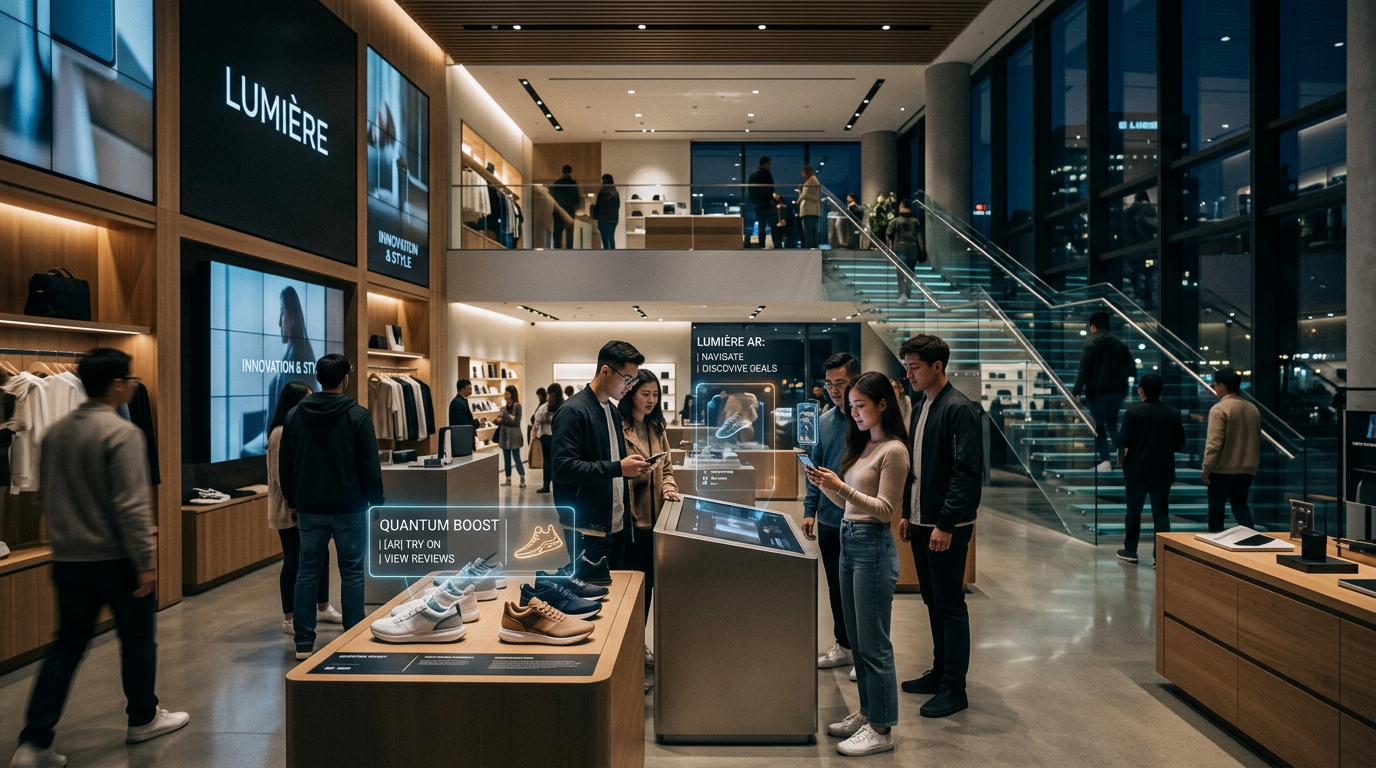
Immersive retail has evolved from the earliest window displays designed to stop passersby to contemporary environments that sense, respond, and personalize themselves to each visitor. Understanding this evolution reveals not merely a technological progression but a fundamental shift in the relationship between brands, spaces, and consumers.
The Origins: Display as Spectacle
The roots of immersive retail lie in the nineteenth-century department store, which introduced shopping as a leisure activity rather than a utilitarian errand. Emile Zola’s novel “Au Bonheur des Dames” (1883) captured the transformative power of the early department store, describing architecture designed to overwhelm the senses with abundance, light, and spectacle.
Window displays evolved from simple product arrangements to elaborate theatrical scenes. The introduction of electric lighting enabled displays visible at night, extending the retail day. Mechanical displays added motion. The goal was always the same: to create an experience that transcended the simple transaction.
The Brand as Environment: 1970s to 2000
The late twentieth century saw the emergence of retail environments designed to embody brand identity rather than merely display products. Niketown’s flagship stores (debuting in 1990) transformed sportswear retail into branded museums, with product displays integrated into atmospheric environments that communicated brand values.
Apple’s retail stores, launching in 2001, established a new paradigm for retail as experience. The open floor plans, hands-on product displays, and Genius Bar service model treated the store as a community space rather than a point of distribution. The architecture itself communicated brand values of clarity, innovation, and accessibility.
The Digital Layer: 2000 to 2015
The first wave of digital augmentation in retail was relatively crude: digital signage replacing static posters, video walls creating atmospheric backdrops, interactive kiosks providing product information. These early implementations added digital content to retail environments without fundamentally changing the relationship between customer and space.
Burberry’s Regent Street flagship (2012) marked a turning point. The store integrated RFID-tagged products with digital displays that activated when customers approached, creating a responsive environment that bridged physical and digital product discovery. The store set a new standard for technologically integrated retail.
The Immersive Turn: 2015 to 2026
The current era of immersive retail is characterized by full integration of digital and physical elements, real-time personalization, and experience-first design.
Flagship stores from Nike, Gucci, Louis Vuitton, and Samsung now feature projection-mapped environments, interactive product displays, augmented reality mirrors, and AI-driven personalization. The store is no longer primarily a point of transaction but a brand experience center where customers develop relationships that extend across digital and physical channels.
The spatial computing in retail market reached USD 11.26 billion in 2026, reflecting the scale of investment in immersive retail infrastructure. Luxury brands lead adoption, but the technology is rapidly moving downmarket as costs decline and consumer expectations rise.
The Post-Transaction Future
The trajectory of immersive retail points toward environments where the transaction becomes incidental to the experience. Future stores may not sell products at all but serve as experience centers where products are discovered, tried, and ordered for home delivery. The physical store becomes a brand embassy in the physical world, generating demand fulfilled through other channels.
FAQ
When did immersive retail begin? The roots extend to nineteenth-century department stores. The contemporary immersive retail era began around 2015 with the integration of responsive digital systems.
What technology drove the evolution of immersive retail? Key technologies include LED displays, projection mapping, sensor networks, RFID tagging, realtime rendering engines, and increasingly generative AI.
How has consumer behavior shaped immersive retail? Consumer expectations for personalized, engaging experiences — shaped by digital platforms — have driven retail investment in immersive technologies.
What is the next frontier for immersive retail?
Full personalization, where every visitor experiences a unique environment tailored to their preferences and behavior.
For the current business landscape of immersive retail, see The Business of Immersive Retail. The ethical implications are explored in The Ethics of Immersive Retail. For future trajectories, refer to The Next Era of Immersive Retail.
“Au Bonheur des Dames,” Emile Zola, 1883; “The Experience Economy,” Pine and Gilmore; “Spatial Computing in Retail Market Report,” Research and Markets, 2026.
—
Visual Alchemist creates immersive retail environments for leading brands. Contact us to explore how retail experience can evolve for your brand.
Leave a Reply